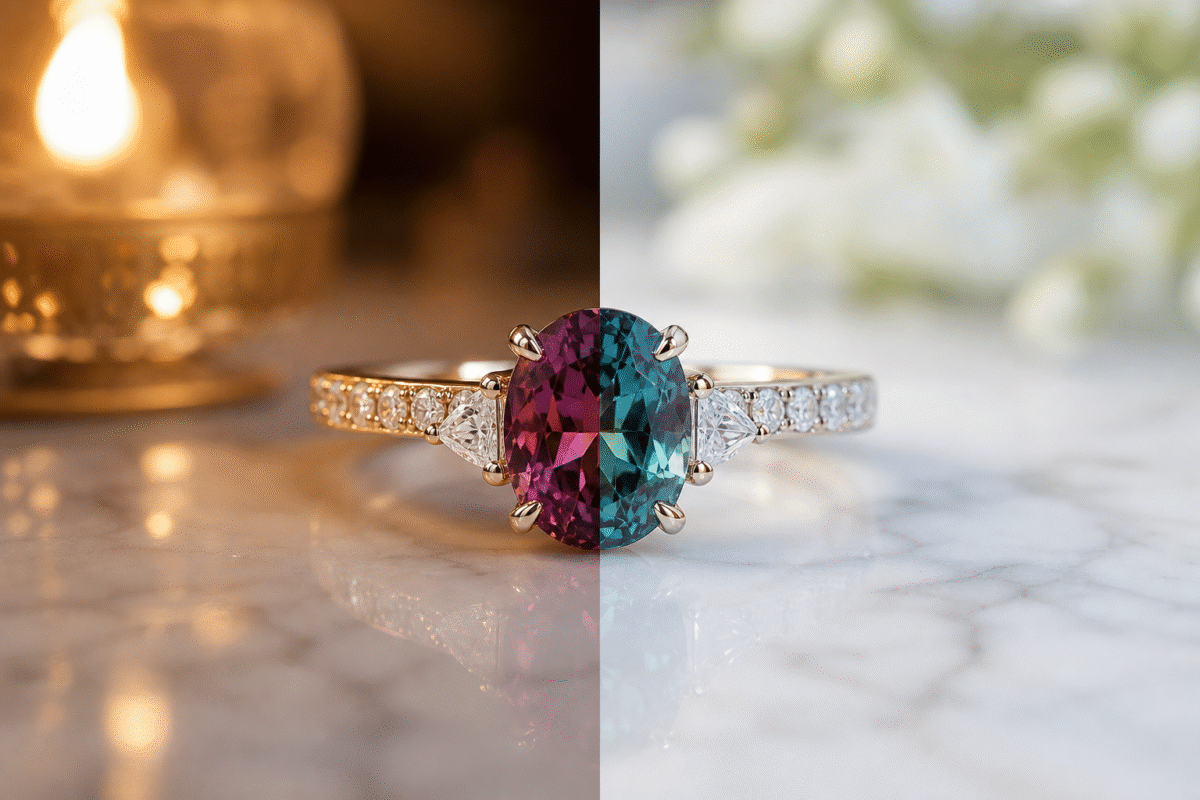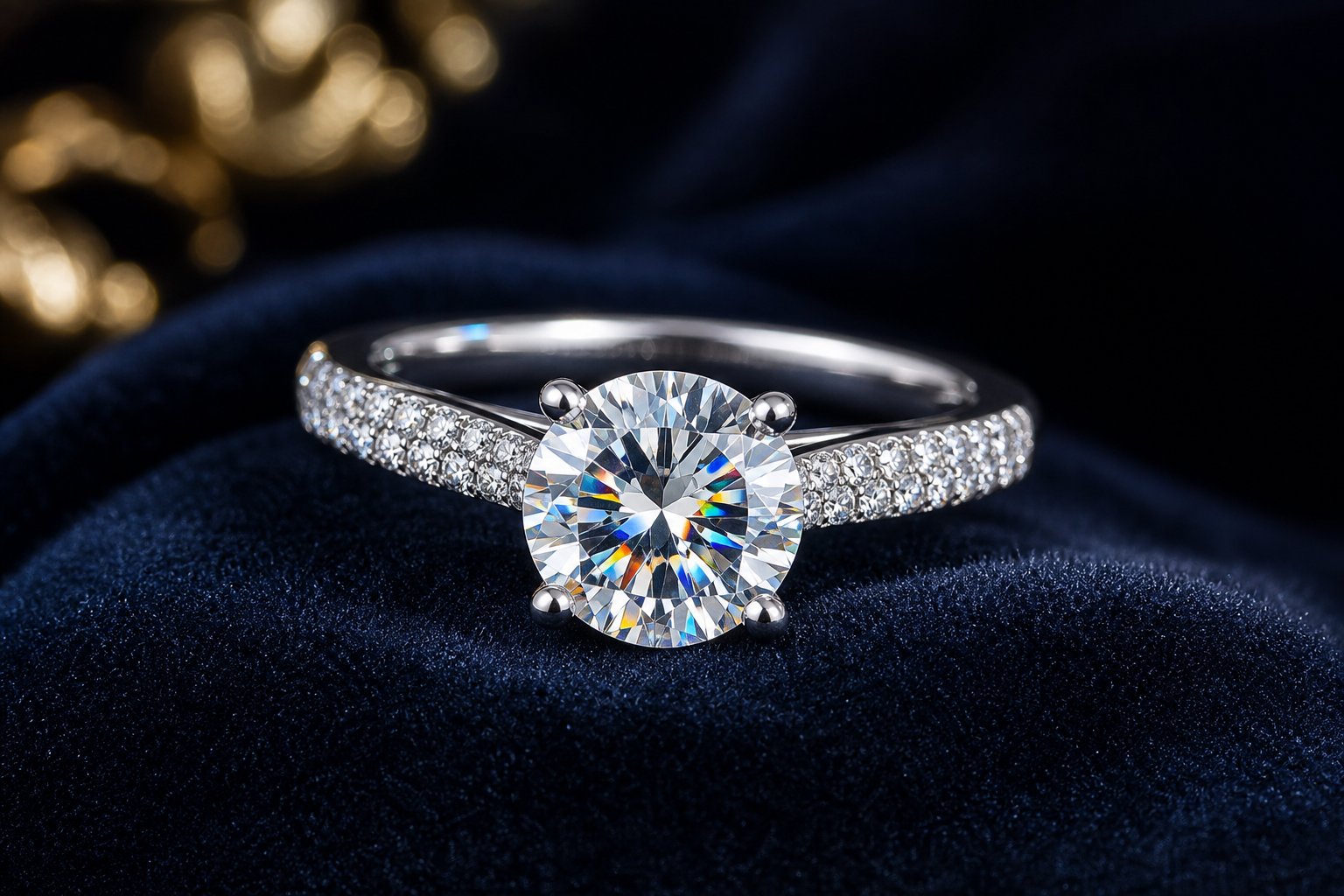
The Brilliant Allure of Moissanite Rings: A Sparkling Alternative to Traditional Diamonds
When it comes to celebrating love and life’s most special moments, choosing the perfect ring can feel like an adventure. For centuries, diamonds have held the crown as the go-to symbol of commitment, elegance, and everlasting beauty. However, in recent years, a dazzling alternative has been stealing the spotlight: moissanite rings. These gemstones offer a luminous, breathtaking sparkle that rivals diamonds, but with their own distinctive charm and advantages that are winning over modern couples worldwide.
According to the Gemological Institute of America (GIA), moissanite is a naturally occurring mineral (silicon carbide) first discovered in 1893 by French chemist Henri Moissan in a meteorite crater in Canyon Diablo, Arizona. The stone was initially mistaken for diamond due to its extraordinary brilliance—a testament to its remarkable optical properties that continue to captivate jewelry lovers today.
The Extraordinary Origins of Moissanite
Moissanite’s story begins in the stars—quite literally. The mineral was first identified in fragments of a meteorite that struck Earth approximately 50,000 years ago. Dr. Henri Moissan, who later won the Nobel Prize in Chemistry, spent years studying the microscopic crystals he found in the Arizona crater before correctly identifying them as silicon carbide in 1904.
Natural moissanite is extraordinarily rare on Earth—far rarer than diamond. The International Gem Society (IGS) notes that natural this diamond alternative crystals are typically too small for jewelry use, which is why all this brilliant stone available in today’s jewelry market is laboratory-created. This lab creation isn’t a limitation—it’s an advantage. Modern manufacturing processes (primarily the Lely method and chemical vapor deposition) produce gem-quality this lab-created gem with consistent clarity, precise color control, and optical properties that match or exceed natural specimens.
Research published in Gems & Gemology journal confirms that lab-created moissanite is chemically, physically, and optically identical to its natural counterpart—the same crystal structure, same hardness, same extraordinary fire and brilliance.
The Unique Optical Properties That Set Moissanite Apart
What makes moissanite truly enchanting is its measurably superior optical performance compared to diamond in several key categories:
Brilliance (Light Return)
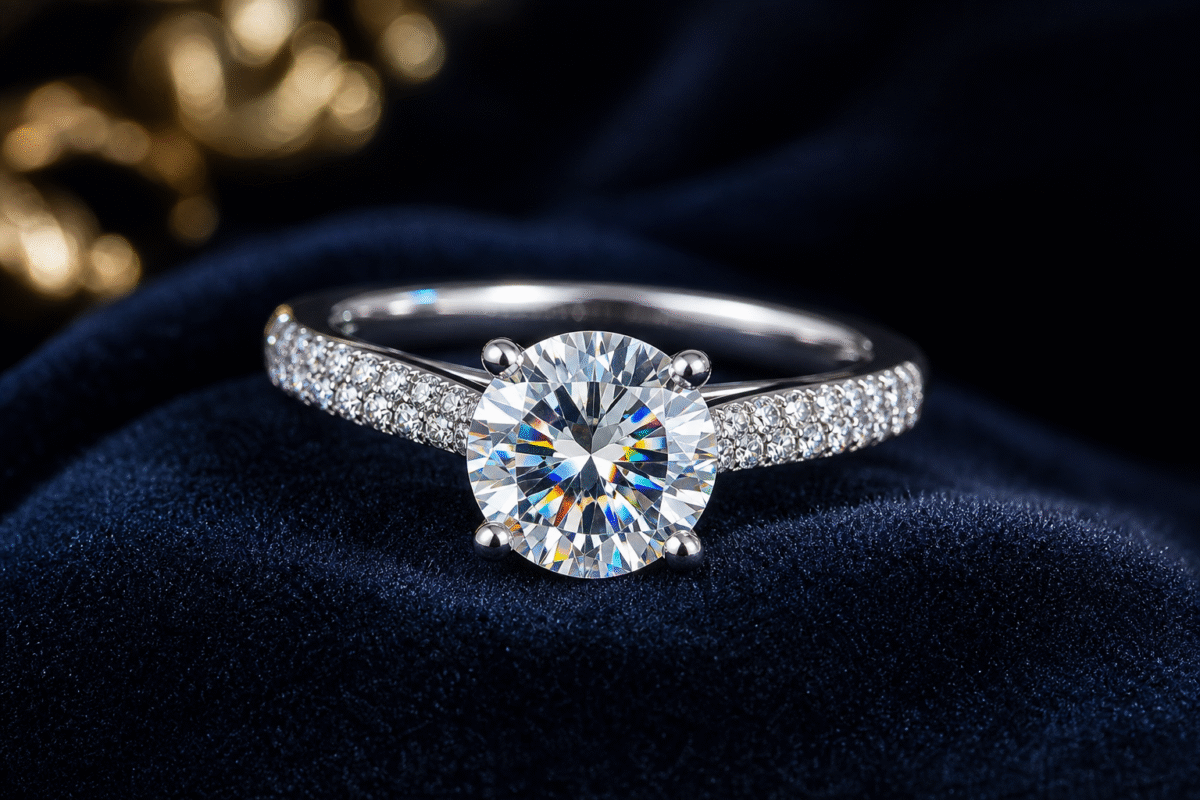
The GIA measures brilliance through refractive index—the degree to which a gemstone bends light. Moissanite’s refractive index of 2.65-2.69 significantly exceeds diamond’s 2.417. In practical terms, this means this lab-created gem returns more white light to the viewer’s eye, creating that coveted “sparkle” that catches attention from across a room. The IGS calculates SiC gemstone’s brilliance refractive index at 20.4% compared to diamond’s 17.2%.
Fire (Dispersion)
Fire refers to a gemstone’s ability to split white light into its component spectral colors—those mesmerizing rainbow flashes that dance across a stone’s surface. Moissanite’s dispersion rating of 0.104 is 2.4 times higher than diamond’s 0.044. Under direct sunlight or spotlighting, this brilliant stone produces dramatically more colorful flashes of red, blue, green, and orange than any diamond could achieve.
Luster
Surface luster (the quality of light reflected from the stone’s surface) is rated 20.4% for moissanite versus 17.2% for diamond. This contributes to this diamond alternative’s “wet” or “liquid” appearance that many find more visually dynamic than diamond’s more subdued surface reflection.
Scintillation
The pattern of light and dark areas visible when a stone moves is called scintillation. Moissanite’s higher refractive index creates more pronounced scintillation patterns, meaning the stone appears more “alive” and dynamic during movement—a quality particularly noticeable in engagement rings worn on active hands.
Durability: Built for a Lifetime of Daily Wear
The GIA emphasizes that durability encompasses three factors: hardness, toughness, and stability. Moissanite excels in all three:
- Hardness: 9.25 on the Mohs scale (diamond is 10, sapphire is 9). Only diamond can scratch moissanite—it’s harder than any other gemstone used in jewelry.
- Toughness: Rated “excellent” by the GIA. Moissanite resists chipping and breaking better than diamond, which has cleavage planes that can cause fracturing under sharp impact.
- Stability: Heat-stable up to 1,800°F (982°C) and resistant to all common chemicals. The stone will never cloud, fade, or change color over time.
The IGS confirms that moissanite’s combination of hardness and toughness makes it arguably the most durable gemstone for engagement ring use—even more so than diamond in terms of resistance to accidental damage during daily activities.
Moissanite vs. Diamond: A Detailed Comparison
Understanding the differences helps couples make informed decisions:
| Category | Moissanite | Diamond |
|---|---|---|
| Hardness | 9.25 Mohs | 10 Mohs |
| Refractive Index | 2.65-2.69 | 2.417 |
| Dispersion (Fire) | 0.104 | 0.044 |
| Specific Gravity | 3.21 | 3.52 |
| Price (1ct equivalent) | $300-$600 | $4,000-$20,000+ |
| Origin | Lab-created | Mined or lab-created |
| Ethical Concerns | None | Variable (conflict mining) |
| Environmental Impact | Minimal | Significant (mining) |
| Resale Value | Limited | Moderate to high |
| Color Stability | Permanent | Permanent |
The Ethical and Environmental Advantage
A significant reason many couples turn to moissanite is its ethical appeal. Diamond mining has historically involved environmental destruction, ethical concerns related to conflict diamonds (sometimes called “blood diamonds”), and labor exploitation. The IGS reports that diamond mining displaces an estimated 1,750 tons of earth per single carat of gem-quality diamond recovered.
In contrast, moissanite is created entirely in controlled laboratory environments, eliminating these concerns altogether. According to environmental impact assessments cited in Gems & Gemology:
- Zero conflict association: No connection to war financing, forced labor, or human rights abuses
- Minimal land disturbance: Laboratory production requires no open-pit mining or ecosystem destruction
- Reduced carbon footprint: Estimated 85% lower CO2 emissions per carat compared to mined diamonds
- Water conservation: Lab production uses a fraction of the water consumed in mining operations
- Full traceability: Complete supply chain transparency from creation to final setting
For environmentally and socially conscious couples, choosing a moissanite ring represents a meaningful alignment of personal values with one of life’s most significant purchases.
Cost-Effectiveness: Luxury Without Financial Strain
Perhaps the most practical advantage of moissanite rings is their affordability. Because they are lab-grown with consistent, scalable production processes, SiC gemstone costs a fraction of what natural diamonds typically fetch:
- A 1-carat equivalent moissanite: $300-$600
- A 1-carat natural diamond (comparable quality): $4,000-$12,000
- Savings: 80-95% for visually comparable or superior sparkle
This affordability means couples can:
- Choose a larger, more impressive center stone without budget constraints
- Invest in higher-quality metalwork and setting craftsmanship
- Allocate saved funds toward the wedding, honeymoon, or home purchase
- Own multiple rings for different occasions without financial strain
The GIA notes that high-grade moissanites come with quality certifications (typically from Charles & Colvard or independent gemological laboratories) confirming their color grade, clarity, and cut quality—ensuring buyers receive exactly what they pay for.
Popular Moissanite Ring Styles
Classic Solitaire
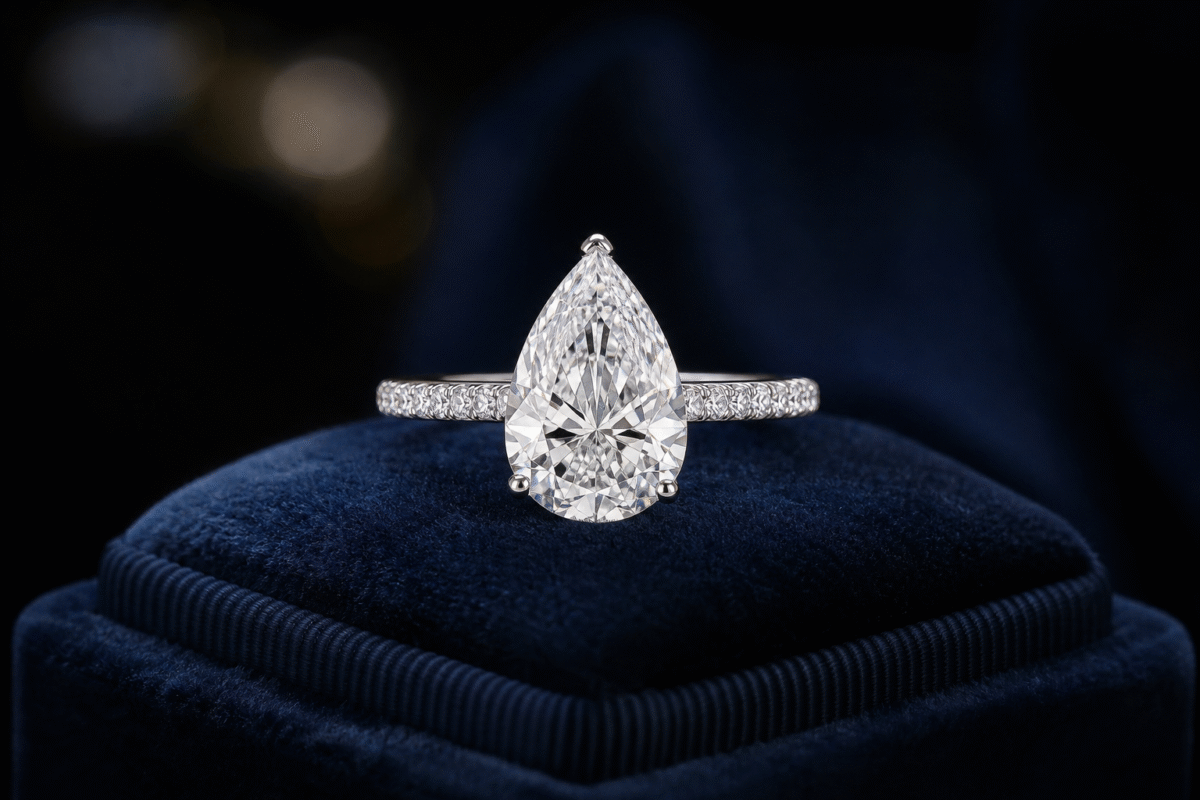
A single moissanite in a four or six-prong setting remains the most popular choice, accounting for approximately 40% of this lab-created gem engagement ring sales. The simplicity allows the stone’s natural brilliance to take center stage.
Halo Settings
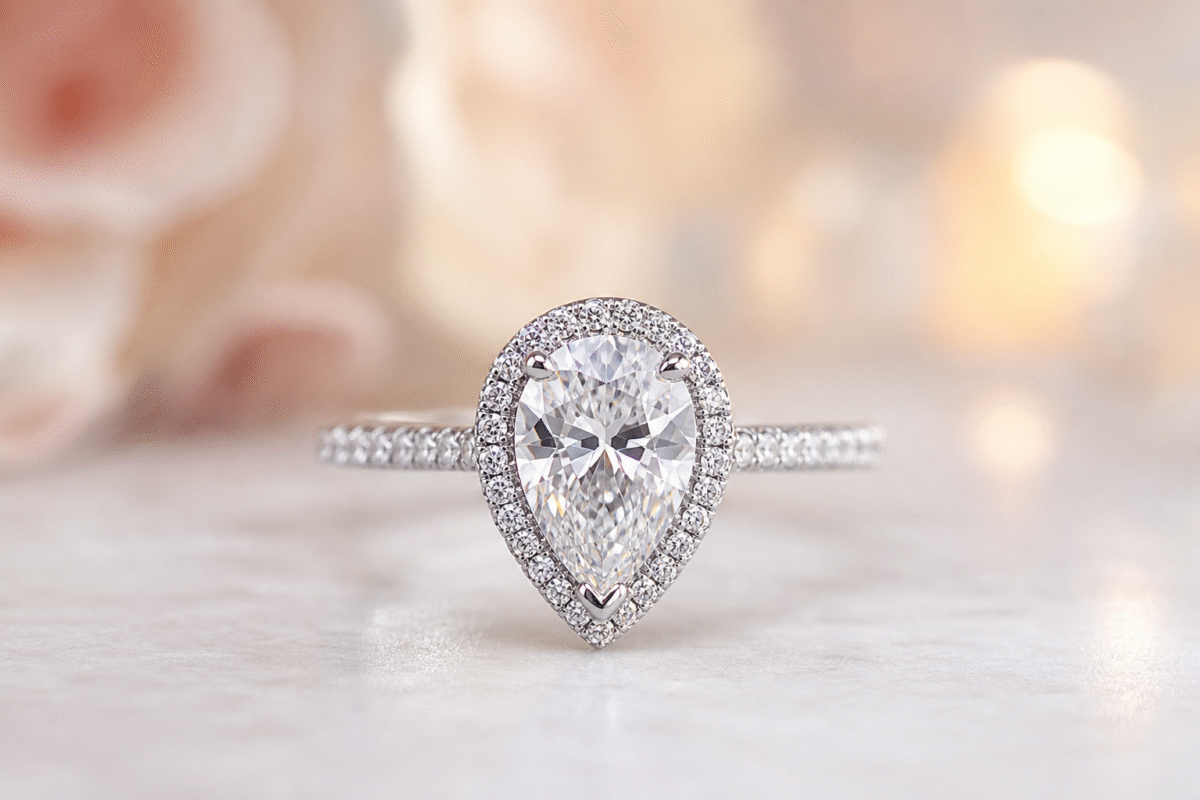
A circle of smaller moissanites surrounding the center stone amplifies sparkle and creates the appearance of a larger ring. Double halos and cushion halos are trending variations that add vintage-inspired glamour.
Three-Stone Designs
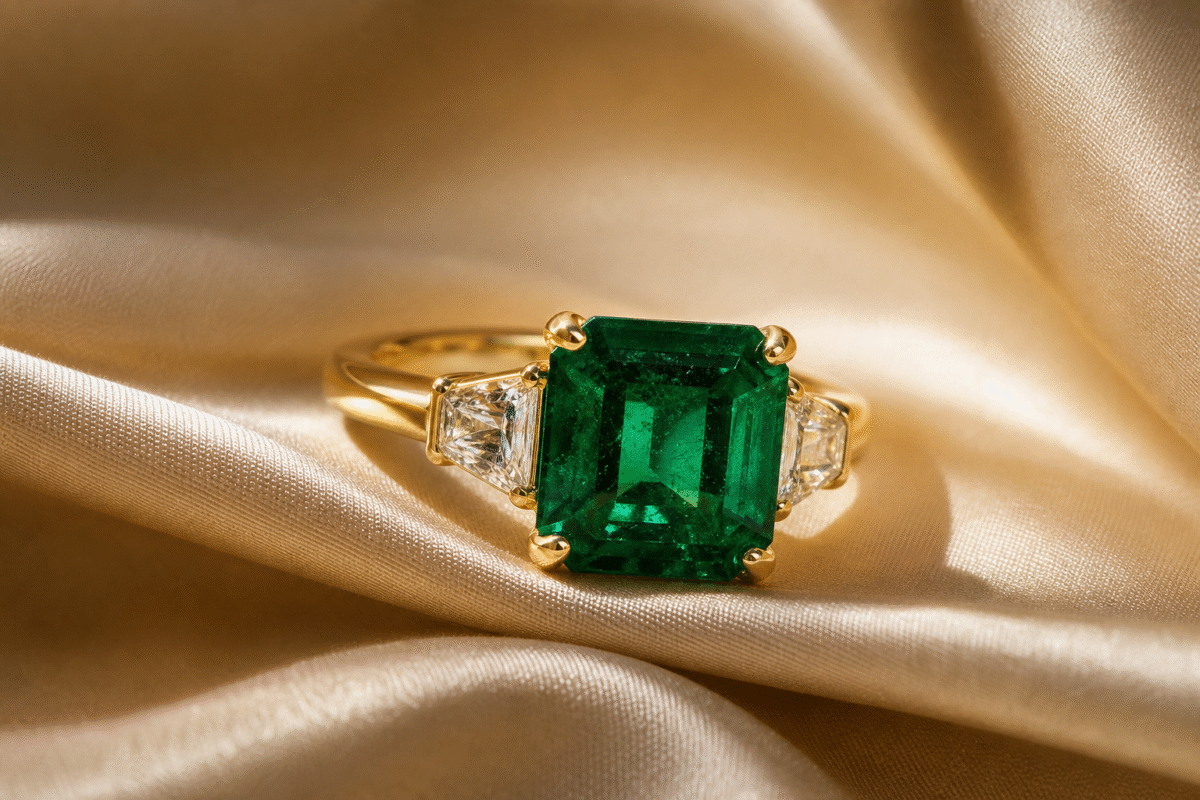
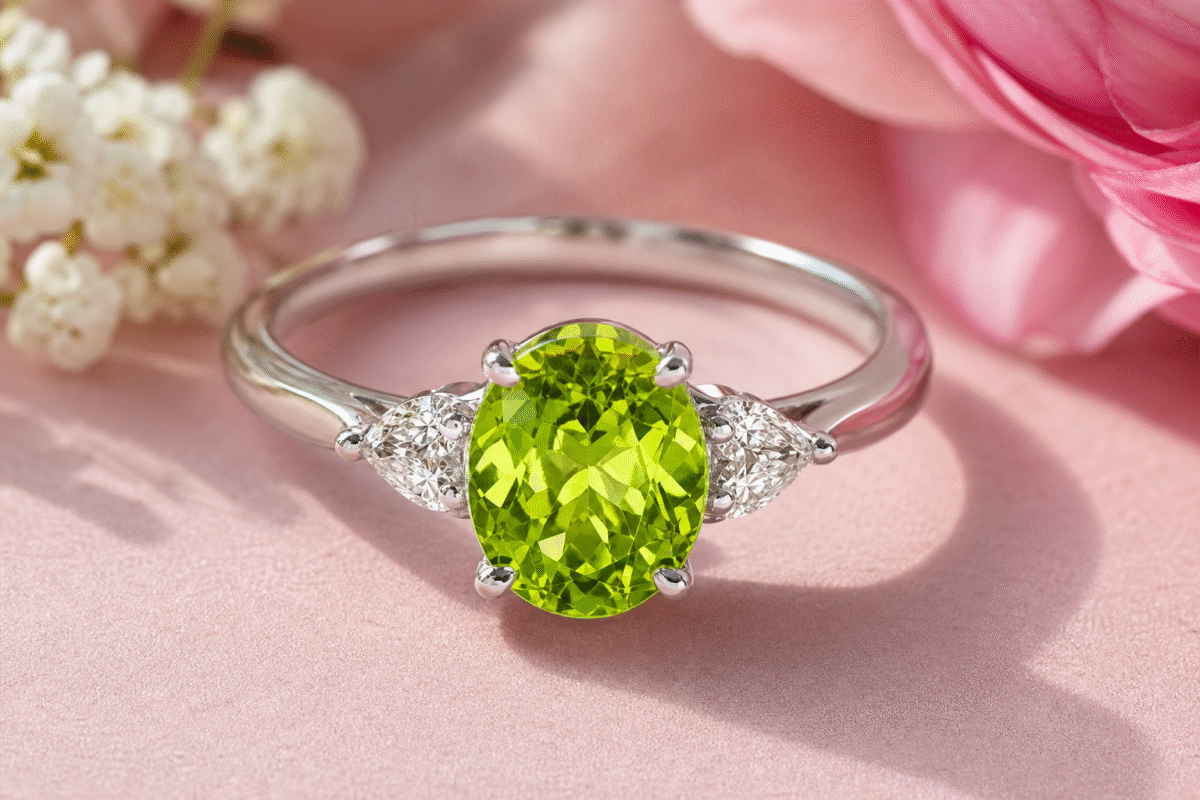
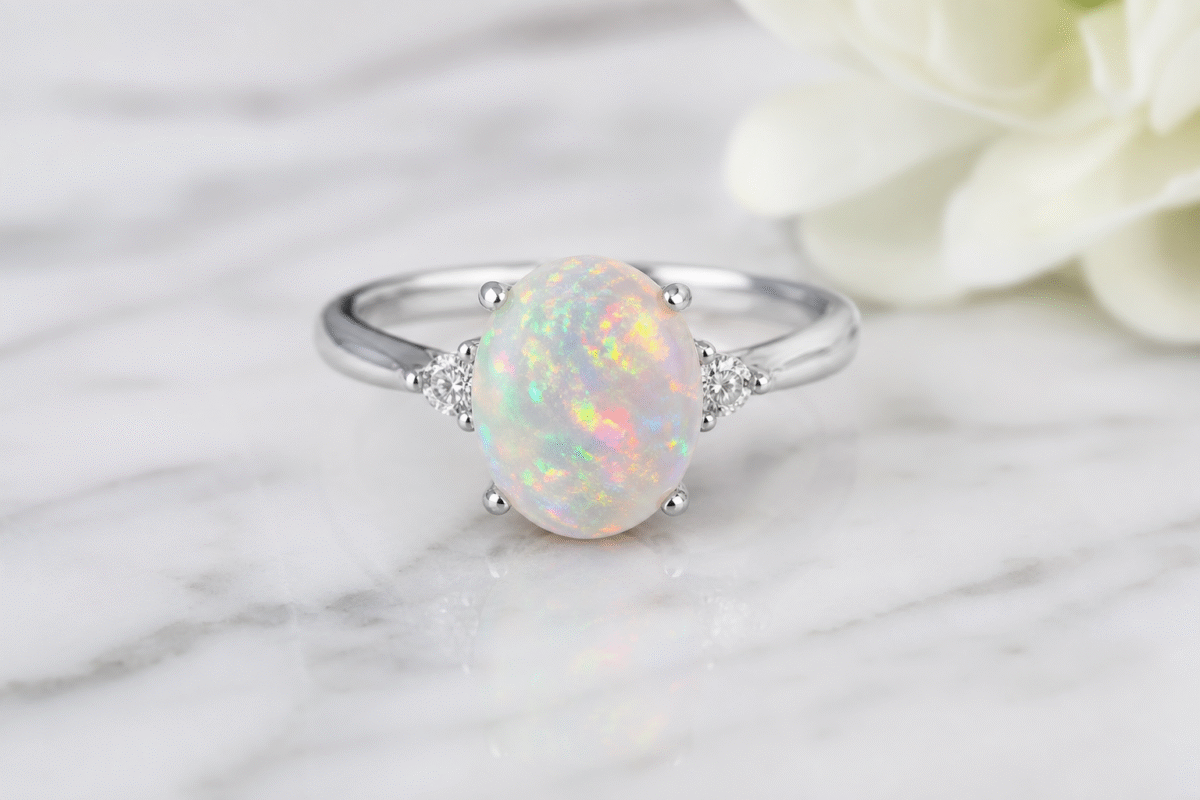
Representing past, present, and future, three-stone moissanite rings offer symbolic meaning alongside visual impact. Pear or trillion-shaped side stones complement round or oval centers beautifully.
Vintage and Art Deco
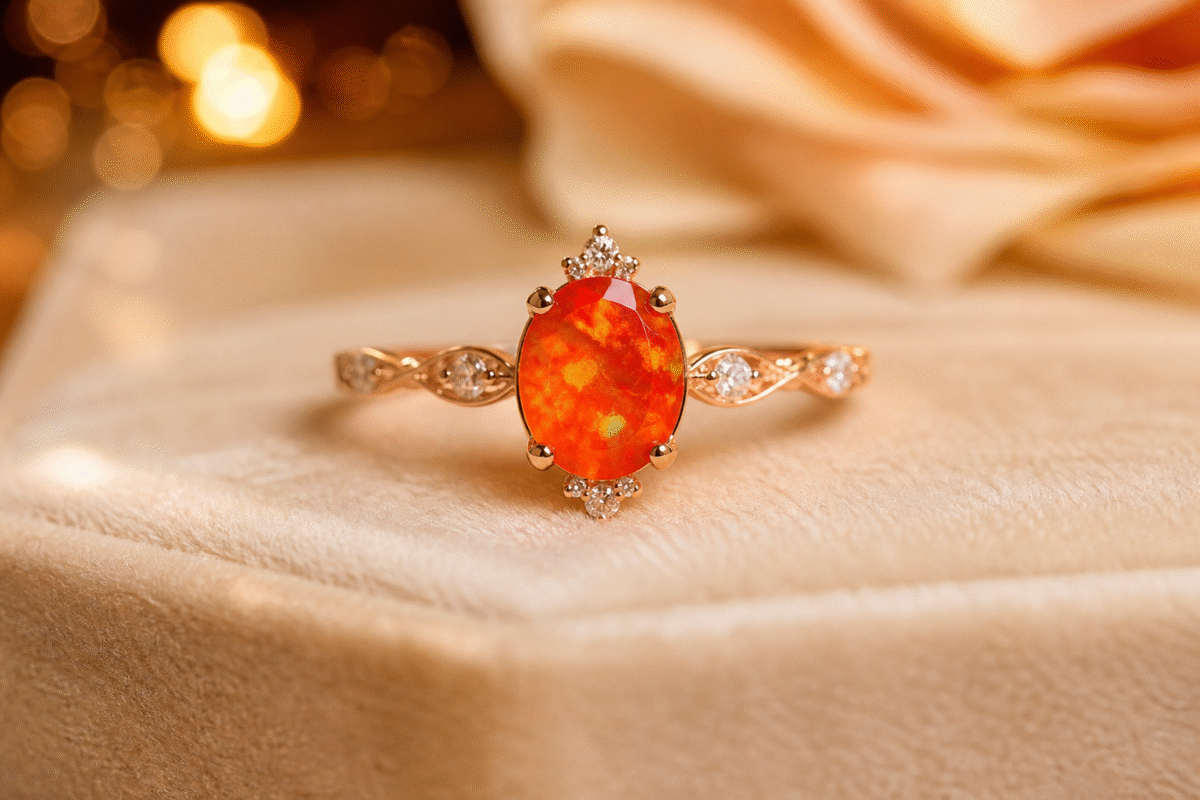
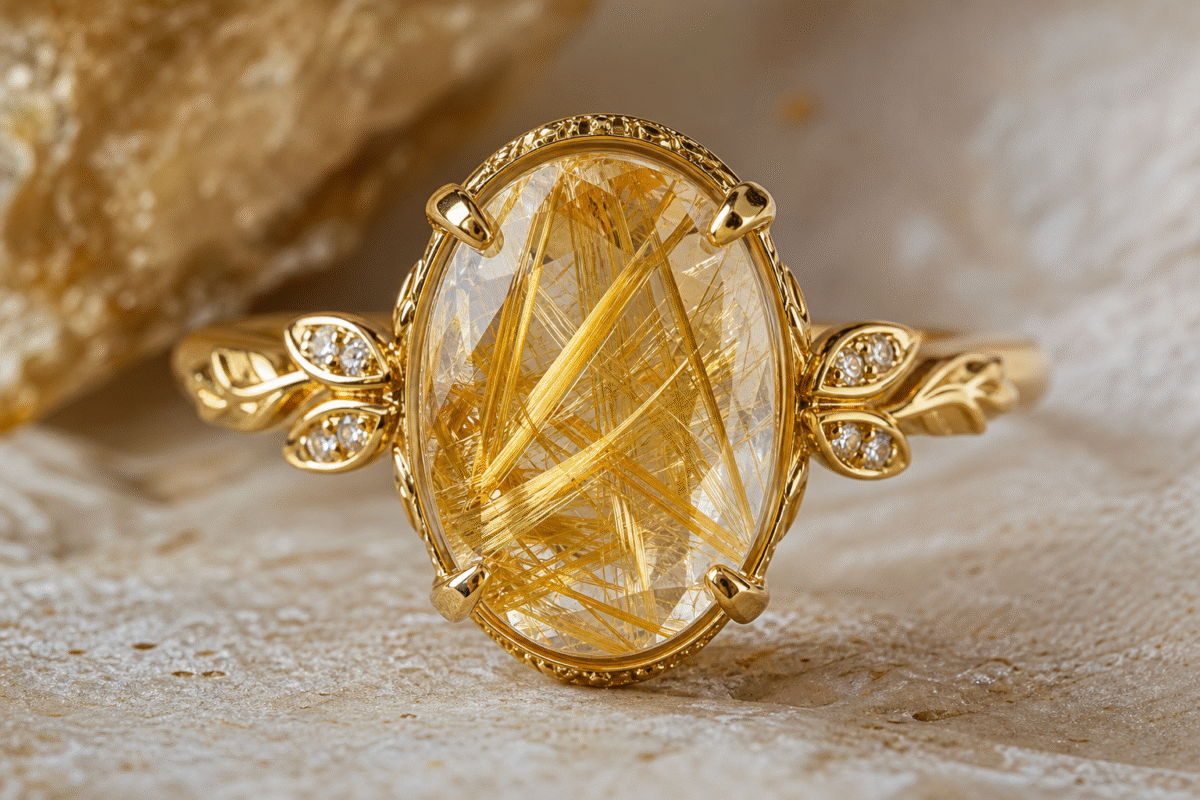
Intricate milgrain details, filigree work, and geometric patterns pair exceptionally well with moissanite’s fire. These designs appeal to couples who appreciate craftsmanship and historical aesthetics.
Modern Minimalist
Clean lines, bezel settings, and east-west orientations showcase moissanite in contemporary designs that feel fresh and fashion-forward. Brushed metal finishes and asymmetric designs are particularly popular in this category.
Selecting Your Perfect Moissanite Ring
The IGS recommends considering these factors when choosing your moissanite ring:
- Color grade: DEF (colorless) for white gold/platinum settings; GHI works beautifully in yellow/rose gold
- Cut quality: Prioritize “Excellent” or “Ideal” cuts—this is the single biggest factor in sparkle
- Size: 1-2 carat equivalents (6.5-8mm) are most popular for engagement rings
- Shape: Round brilliant for maximum fire; oval or cushion for a unique, elongated look
- Setting metal: 14K or 18K gold for durability; platinum for maximum longevity
- Certification: Ensure your stone comes with a quality certificate from a recognized laboratory
Long-Term Care and Maintenance
Moissanite is one of the lowest-maintenance gemstones available:
- Cleaning: Warm soapy water with a soft brush, or ultrasonic cleaners (safe for moissanite)
- Frequency: Clean every 2-4 weeks to maintain maximum sparkle
- Storage: Separate from other jewelry; only diamond can scratch moissanite
- Professional service: Annual prong/setting check by a jeweler
- Longevity: Moissanite will never cloud, fade, or lose brilliance—it’s permanent
Ready to find your perfect piece? Browse our handcrafted collection and discover gemstone jewelry that tells your unique story.
Frequently Asked Questions
Will moissanite lose its sparkle over time?
No. The GIA confirms that moissanite’s optical properties are inherent to its crystal structure and are permanent. Unlike cubic zirconia (which can cloud after 2-3 years), this diamond alternative will maintain its full brilliance and fire indefinitely. A this brilliant stone ring purchased today will sparkle identically in 50 or 100 years. The only maintenance needed is periodic cleaning to remove surface oils and dirt that temporarily reduce light return.
Is moissanite appropriate for an engagement ring?
Absolutely. With a Mohs hardness of 9.25, moissanite is the second-hardest gemstone used in jewelry—harder than sapphire, ruby, and emerald. The IGS rates it as “excellent” for daily wear in engagement rings. Its superior toughness (resistance to chipping) actually makes it more practical than diamond for active lifestyles, as diamond’s cleavage planes can cause fracturing under sharp impact.
How much should I budget for a moissanite engagement ring?
Quality moissanite engagement rings range from $400-$2,000 depending on stone size, metal choice, and setting complexity. A beautiful 1-carat equivalent solitaire in 14K gold typically costs $500-$800. For comparison, an equivalent diamond ring would cost $5,000-$15,000. The IGS suggests allocating your budget primarily toward cut quality and setting craftsmanship rather than maximizing carat size.
Can moissanite be used for wedding bands as well?
Yes. Moissanite is increasingly popular in wedding bands, eternity bands, and anniversary rings. Small moissanites (1-2mm) set in pavé or channel settings create continuous sparkle around the entire band. Because SiC gemstone is affordable, full-eternity bands (stones all the way around) cost $300-$600 compared to $2,000-$5,000 for diamond equivalents. The stone’s exceptional hardness ensures pavé-set moissanites won’t loosen or fall out with normal wear.
What’s the difference between moissanite and cubic zirconia (CZ)?
While both are diamond alternatives, they differ dramatically in quality and longevity. Moissanite (Mohs 9.25) is vastly harder than CZ (Mohs 8-8.5), meaning CZ scratches and clouds within 2-3 years of daily wear while SiC gemstone remains pristine indefinitely. This diamond alternative’s refractive index (2.65) also far exceeds CZ’s (2.15-2.18), producing significantly more brilliance and fire. The GIA classifies this brilliant stone as a genuine gemstone, while CZ is considered a simulant. Price reflects this quality difference: this lab-created gem costs $300-$600/carat versus $20-$50/carat for CZ.
Shop Moissanite Rings at ETYGEM
Explore our handcrafted collection in 925 sterling silver:
Free worldwide shipping. 6-month warranty. Hypoallergenic and nickel-free.