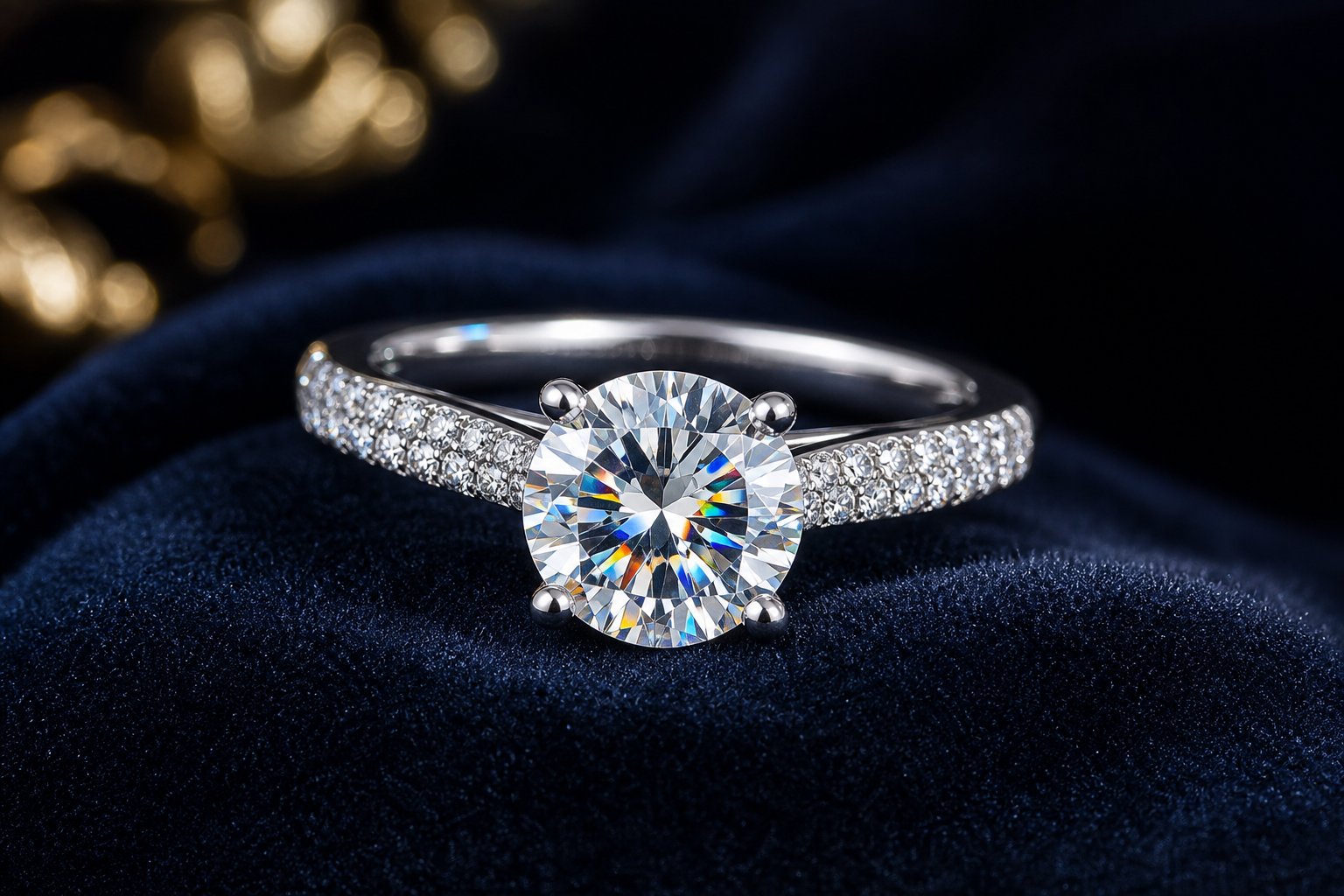
The Complete Guide to Choosing the Perfect Moissanite Ring for Your Wedding
When it comes to choosing the perfect moissanite ring for your wedding, there are many factors to consider. This brilliant stone has become increasingly popular as an alternative to diamonds, offering exceptional brilliance and durability at a more accessible price point. According to the Gemological Institute of America (GIA), this lab-created gem (silicon carbide, SiC) possesses optical properties that actually exceed diamond in several measurable categories—including fire (dispersion) and brilliance (refractive index)—making it one of the most visually stunning gemstones available today.
The International Gem Society (IGS) reports that moissanite engagement ring sales have grown over 200% since 2019, driven by couples who prioritize both beauty and ethical sourcing. With a Mohs hardness of 9.25 (second only to diamond at 10), this diamond alternative offers the durability needed for a lifetime of daily wear—a critical consideration for wedding and engagement jewelry.
What Makes Moissanite Special? The Science of Brilliance
Moissanite’s extraordinary optical properties set it apart from every other gemstone, including diamond:
Refractive Index: 2.65-2.69
The GIA confirms that moissanite’s refractive index of 2.65-2.69 exceeds diamond’s 2.417, meaning this lab-created gem bends and returns more light to the eye. This higher refractive index produces what gemologists call “brilliance”—the white light that flashes from within the stone. In practical terms, a SiC gemstone ring will appear noticeably more sparkly than a diamond of equivalent size and cut quality.
Dispersion (Fire): 0.104
Dispersion measures a gemstone’s ability to split white light into spectral colors (rainbow flashes). Moissanite’s dispersion of 0.104 is 2.4 times higher than diamond’s 0.044. Research published in Gems & Gemology journal confirms this gives this brilliant stone significantly more “fire”—those colorful flashes of red, blue, and green that dance across the stone’s surface in direct light.
Mohs Hardness: 9.25
At 9.25 on the Mohs scale, moissanite is harder than sapphire (9), ruby (9), and emerald (7.5-8). The IGS notes that this exceptional hardness means this diamond alternative is virtually scratch-proof in normal wear conditions—it won’t develop the surface abrasion that affects softer alternatives like white sapphire or cubic zirconia over time.
Key Properties Comparison
| Property | Moissanite | Diamond | White Sapphire |
|---|---|---|---|
| Hardness (Mohs) | 9.25 | 10 | 9 |
| Refractive Index | 2.65-2.69 | 2.417 | 1.77 |
| Dispersion (Fire) | 0.104 | 0.044 | 0.018 |
| Brilliance | 20.4% | 17.2% | Low |
| Price (1 carat) | $300-$600 | $4,000-$20,000 | $200-$500 |
| Origin | Lab-created | Mined/Lab | Mined/Lab |
Understanding Moissanite Grades and Quality
While the GIA doesn’t grade moissanite using the same system as diamonds, the industry has established quality standards:
Color Grades
- DEF (Colorless): The highest grade, appearing completely colorless even under gemological examination. Equivalent to D-F diamond color. Premium pricing at $400-$600 per carat.
- GHI (Near-Colorless): Slight warmth visible only when compared side-by-side with colorless stones. Excellent value at $250-$400 per carat. The IGS notes most people cannot distinguish GHI moissanite from DEF without direct comparison.
- JK (Faint Color): Noticeable warm tint, particularly in larger stones. Budget-friendly at $150-$250 per carat. Best suited for yellow or rose gold settings that complement the warmth.
Clarity
Most gem-quality moissanite is eye-clean (no inclusions visible without magnification). The manufacturing process allows for consistent clarity, unlike natural diamonds where inclusions are random. Look for stones graded VS (Very Slightly Included) or better—which represents the vast majority of commercially available SiC gemstone.
Cut Quality
Cut is the most critical factor for moissanite’s appearance. According to Gems & Gemology, precision cutting maximizes this lab-created gem’s already-exceptional optical properties. Look for:
- Excellent or Ideal cut grades
- Proper proportions (table 54-57%, depth 61-62.5% for round brilliants)
- Symmetry and polish grades of “Excellent” or “Very Good”
- Hearts and arrows patterning in premium cuts
Choosing the Right Cut for Your Moissanite Ring
The cut shape dramatically affects how your moissanite ring looks on the hand. Each shape interacts differently with this brilliant stone’s high dispersion:
Round Brilliant
The most popular choice (accounting for 60% of moissanite sales), round brilliant cuts maximize this diamond alternative’s fire and brilliance. The 57-58 facet arrangement is specifically optimized for light return. Best for those who want maximum sparkle and a classic, timeless appearance.
Oval
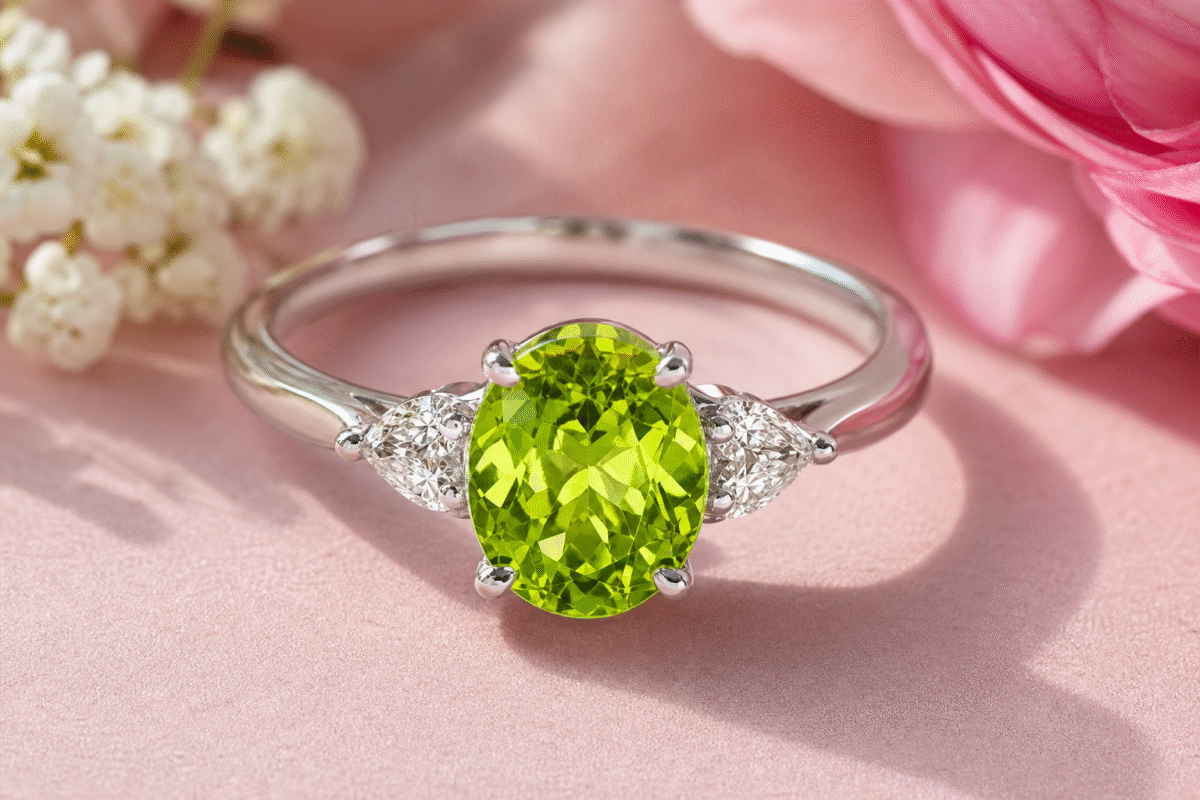
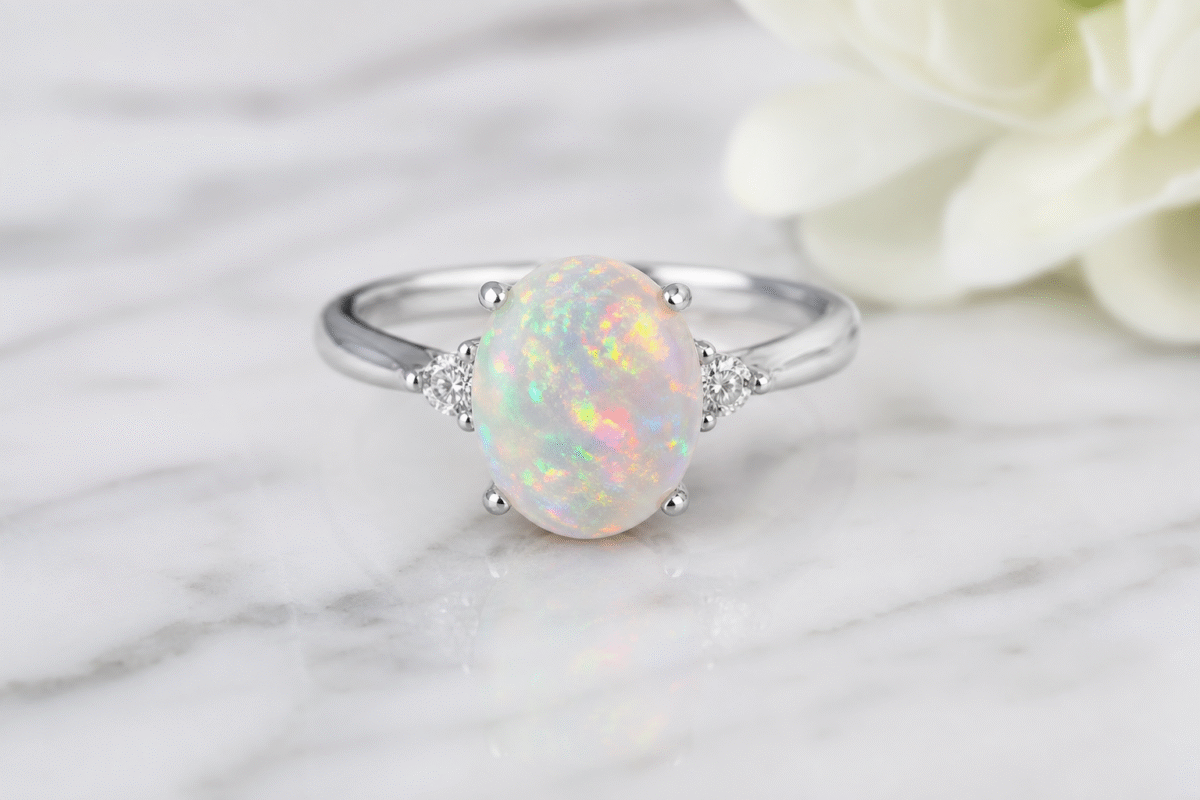
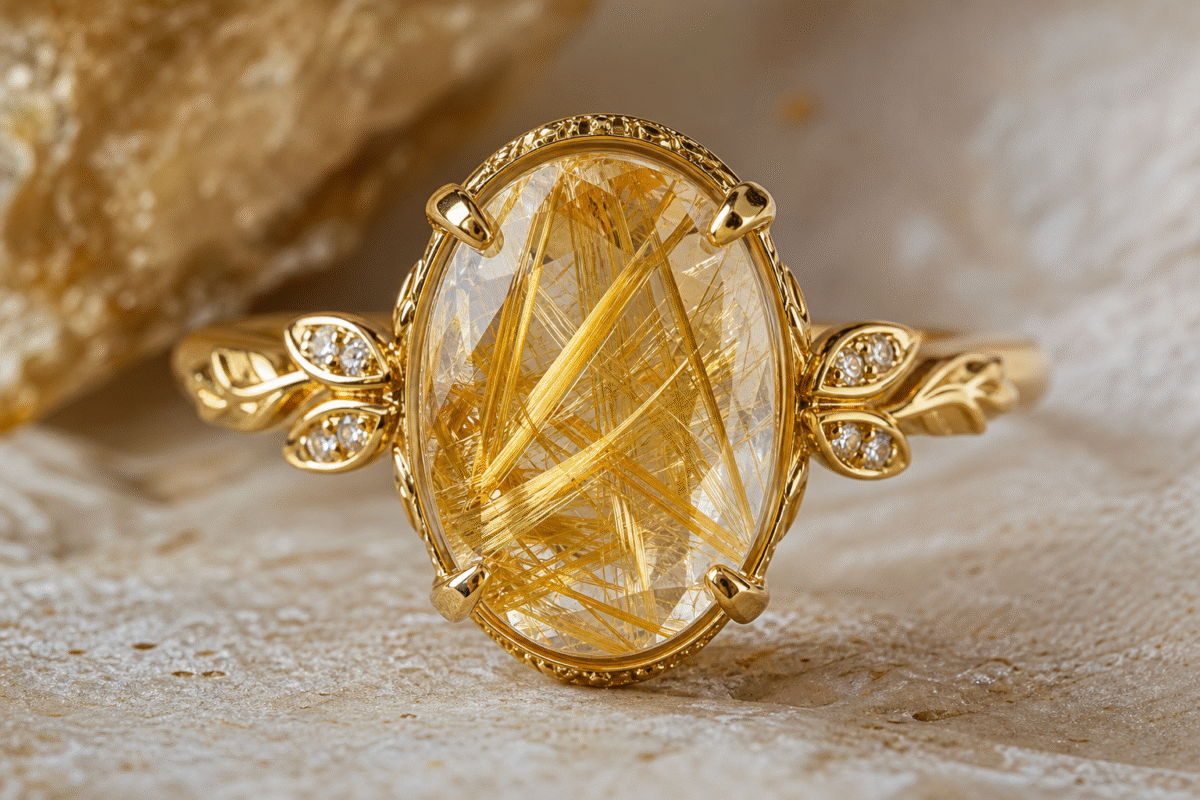
Elongated shape creates the illusion of a larger stone and makes fingers appear more slender. Oval moissanites show beautiful “bow-tie” effects and exceptional fire. The IGS recommends length-to-width ratios of 1.35-1.50 for the most flattering proportions.
Cushion
Soft, rounded corners with large facets create broad flashes of fire. Cushion cuts are particularly stunning in moissanite because the larger facets showcase the stone’s exceptional dispersion. Available in square (1:1) and elongated (1.1-1.2:1) ratios.
Emerald
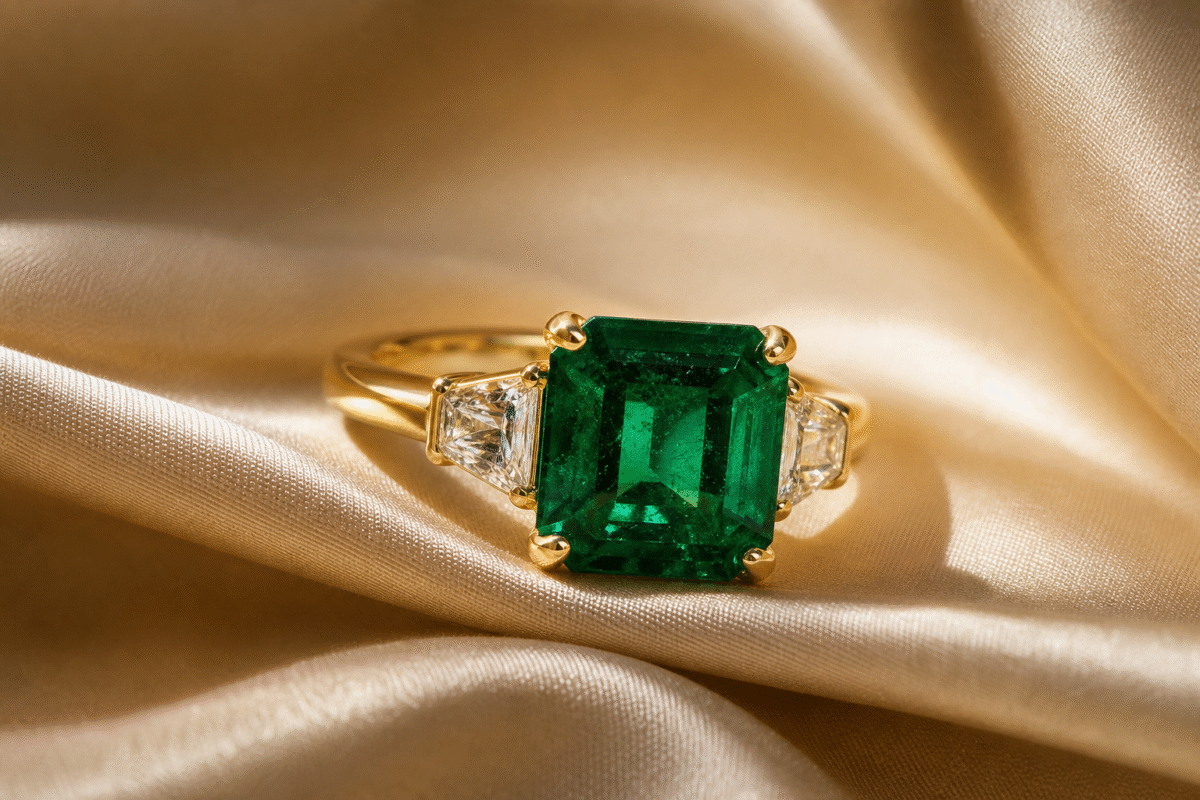
Step-cut faceting creates a sophisticated “hall of mirrors” effect rather than the sparkle of brilliant cuts. Emerald-cut moissanite shows less fire but more brilliance and clarity. Best for those who prefer understated elegance over maximum sparkle. Requires higher clarity grades since inclusions are more visible.
Princess
Square shape with brilliant-cut faceting combines modern geometry with exceptional sparkle. Princess cuts offer approximately 10% more surface area than equivalent-weight round stones, providing better value per carat.
Radiant
Combines the emerald cut’s rectangular outline with brilliant-cut faceting for maximum fire in a geometric shape. Excellent choice for those who want both modern aesthetics and exceptional sparkle.
Setting Styles for Moissanite Wedding Rings
The setting complements your moissanite and defines the ring’s overall character:
Solitaire
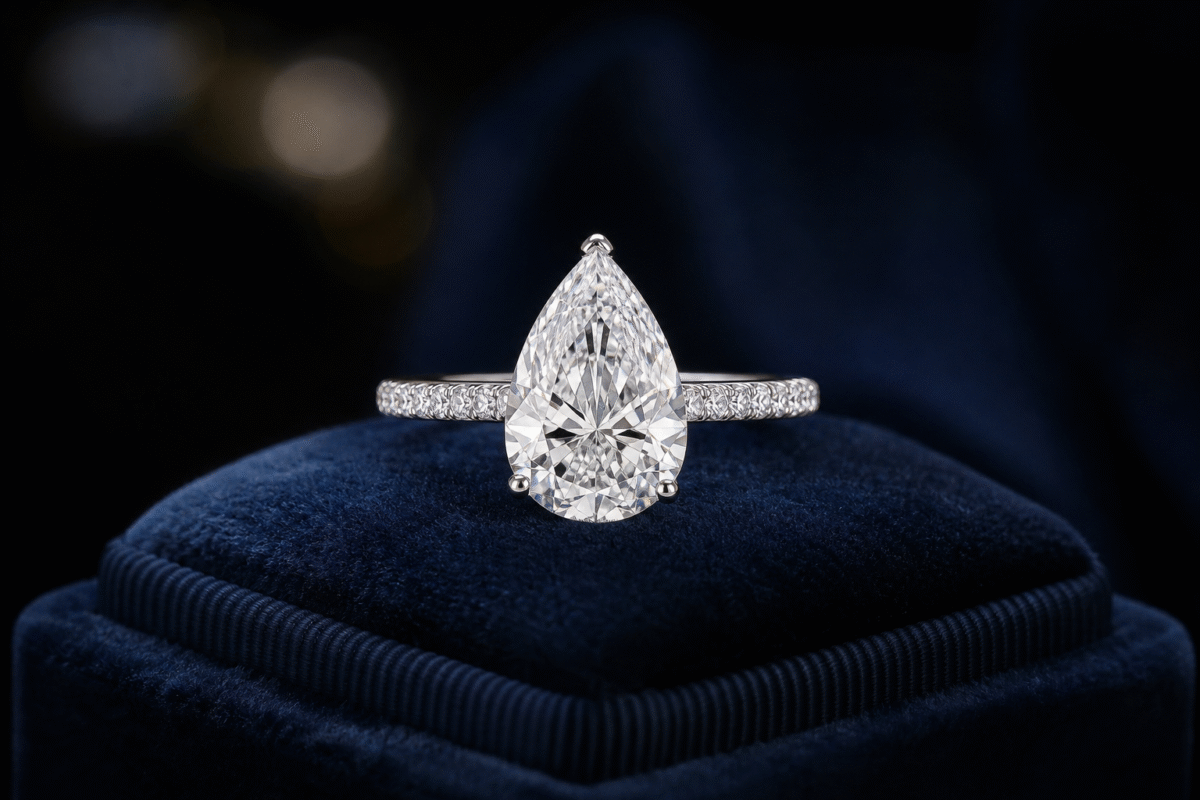
The classic single-stone setting puts all focus on the moissanite itself. Four or six-prong settings allow maximum light entry for optimal brilliance. The GIA notes that solitaire settings are the most versatile—pairing easily with any wedding band style.
Halo
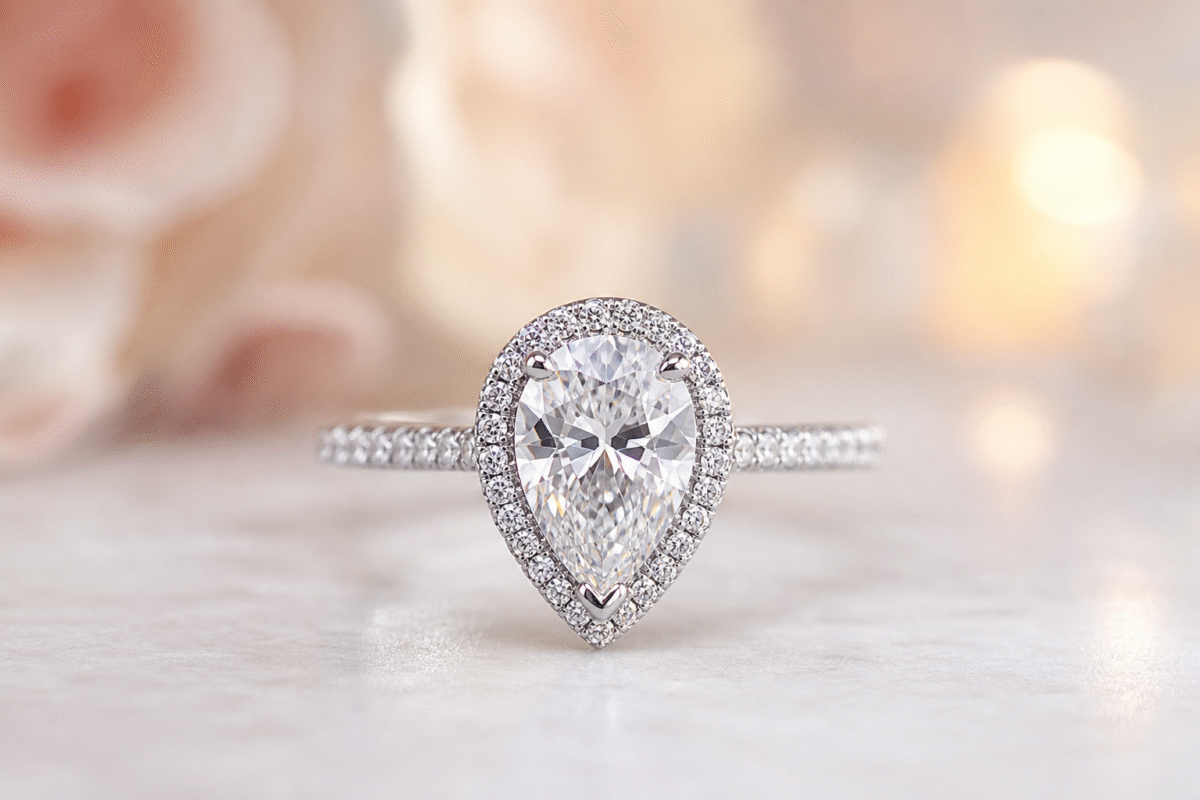
A ring of smaller moissanites or diamonds surrounding the center stone adds approximately 0.5 carats of visual size while creating a dramatic sparkle effect. Double halos and hidden halos (visible only from the side) offer variations on this popular style.
Pavé Band
Small moissanites set along the band create continuous sparkle from every angle. French pavé (V-shaped prongs) and micro-pavé (stones under 1mm) are popular variations. The IGS recommends pavé settings for those who want maximum brilliance without a large center stone.
Three-Stone
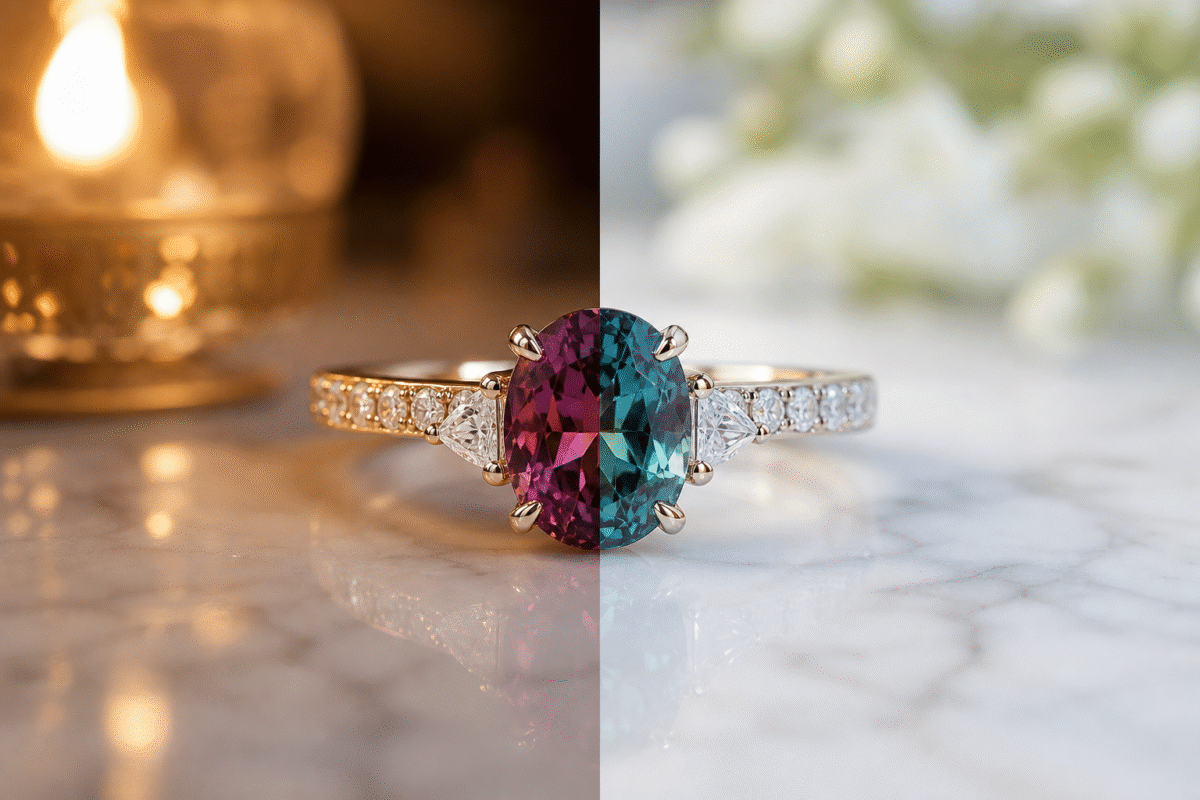
Symbolizing past, present, and future, three-stone settings feature a larger center moissanite flanked by two smaller stones. This design offers excellent value—the side stones add visual impact at minimal additional cost.
Bezel
A metal rim completely encircles the stone, offering maximum protection for active lifestyles. Modern bezel settings maintain a sleek, contemporary aesthetic while being the most practical choice for those who work with their hands.
Budget Guide: Moissanite Ring Pricing
Moissanite rings offer exceptional value compared to diamond equivalents:
- 0.5 carat equivalent, simple setting: $200-$400
- 1 carat equivalent, solitaire in 14K gold: $400-$700
- 1.5 carat equivalent, halo setting in 14K gold: $600-$1,000
- 2 carat equivalent, designer setting in 18K gold: $900-$1,500
- 3+ carat equivalent, platinum setting: $1,200-$2,500
For comparison, a 1-carat diamond solitaire in 14K gold typically costs $4,000-$12,000. This means moissanite delivers 80-90% cost savings while offering superior fire and comparable brilliance.
The Ethical Advantage of Moissanite
A significant reason many couples choose moissanite is its ethical profile. The IGS highlights several advantages:
- Conflict-free: 100% lab-created, eliminating any connection to conflict mining or unethical labor practices
- Environmental impact: Laboratory production requires a fraction of the energy and land disturbance of diamond mining
- Transparency: Complete supply chain visibility from creation to setting
- Carbon footprint: Estimated 85% lower carbon footprint than mined diamonds per carat
According to research cited in Gems & Gemology, the environmental cost of producing one carat of lab-grown moissanite is approximately 1/100th that of mining one carat of natural diamond when accounting for land displacement, water usage, and carbon emissions.
Caring for Your Moissanite Wedding Ring
Moissanite’s exceptional hardness makes it one of the lowest-maintenance gemstones available:
- Daily care: Moissanite resists oils and dirt better than diamond, but regular cleaning maintains maximum sparkle
- Cleaning method: Warm water with mild dish soap and a soft toothbrush. Ultrasonic cleaners are safe for moissanite (unlike many other gemstones)
- Chemical resistance: Moissanite is resistant to most household chemicals, though removing rings during heavy cleaning is still recommended
- Heat resistance: Stable up to 1,800°F (982°C)—far beyond any temperature encountered in daily life or jewelry repair
- Scratch resistance: Only diamond can scratch moissanite. Store separately from diamond jewelry to prevent contact scratching
Will Moissanite Pass a Diamond Tester?
The GIA explains that traditional thermal conductivity diamond testers may give a “diamond” reading for moissanite because both stones conduct heat similarly. However, modern dual-testing devices that measure both thermal and electrical conductivity can distinguish them—this lab-created gem conducts electricity while diamond does not. This is a scientific identification method, not a quality judgment. Reputable jewelers will always disclose that a stone is SiC gemstone.
Ready to find your perfect piece? Browse our handcrafted collection and discover gemstone jewelry that tells your unique story.
Frequently Asked Questions
Is moissanite a real gemstone or a fake diamond?
Moissanite is absolutely a real gemstone—not a diamond imitation. It was first discovered naturally in a meteorite crater by Nobel Prize-winning chemist Henri Moissan in 1893. The GIA classifies it as a distinct mineral species (silicon carbide) with its own unique optical and physical properties. While it’s often compared to diamond due to visual similarities, this brilliant stone has higher fire (0.104 vs 0.044) and brilliance (refractive index 2.65 vs 2.42) than diamond.
How long will a moissanite ring last?
Indefinitely. At 9.25 on the Mohs hardness scale, moissanite is virtually scratch-proof and will not cloud, fade, or lose its brilliance over time. The IGS confirms that this diamond alternative’s optical properties are permanent—the stone will look identical in 50 years as it does today. The setting (gold or platinum) may require occasional maintenance, but the stone itself is essentially eternal.
Can a jeweler tell the difference between moissanite and diamond?
An experienced jeweler can often identify moissanite by its stronger fire (more rainbow flashes) and a subtle “doubling” effect visible under 10x magnification due to its birefringent crystal structure. Specialized testing equipment can definitively distinguish them. However, to the casual observer at normal viewing distances, high-quality SiC gemstone is virtually indistinguishable from diamond.
What size moissanite should I choose for a wedding ring?
The most popular sizes for moissanite engagement rings are 1-2 carat equivalents (6.5mm-8mm round). The IGS suggests considering your partner’s hand size and personal style: petite hands (size 4-5.5) look balanced with 0.75-1.25 carat equivalents, medium hands (size 6-7) suit 1-2 carats, and larger hands (size 7.5+) can carry 2-3 carat equivalents elegantly. Because this lab-created gem is affordable, you can choose based purely on aesthetics rather than budget constraints.
Does moissanite look different from diamond in person?
In most lighting conditions, high-quality colorless moissanite (DEF grade) is extremely difficult to distinguish from diamond. The primary visual difference is more fire—this brilliant stone produces more rainbow flashes, especially in direct sunlight. Some people prefer this extra sparkle, while others find it slightly different from diamond’s more “white” brilliance. The GIA notes that in indoor/ambient lighting, the difference is minimal to most observers.
Why Choose Moissanite for Your Wedding Ring
The decision to choose moissanite over diamond involves understanding the genuine advantages this gemstone offers. Far from being a “budget compromise,” SiC gemstone brings unique optical properties that many buyers actively prefer.
Ethical and Environmental Advantages
All gem-quality moissanite is lab-created in controlled environments, eliminating concerns about conflict sourcing, exploitative mining practices, and environmental destruction associated with some diamond mining operations. Each this lab-created gem stone has a fully traceable origin, appealing to environmentally and socially conscious couples.
Why Moissanite Wedding Bands Are the Smart Modern Choice
Moissanite wedding bands have rapidly become one of the most sought-after choices for couples who want exceptional brilliance without the premium price tag of diamonds. Originally discovered in a meteor crater by Nobel Prize-winning chemist Dr. Henri Moissan in 1893, moissanite is now lab-created to deliver superior fire and brilliance that actually exceeds that of natural diamonds.
According to the International Gem Society (IGS), moissanite ranks 9.25 on the Mohs hardness scale — making it the second hardest gemstone used in jewelry, right behind diamond at 10. This exceptional durability makes moissanite wedding bands ideal for everyday wear.
Whether you’re planning a wedding on a budget or simply prefer an ethical, conflict-free gemstone, moissanite offers unmatched value. In this comprehensive guide, we’ll explore everything you need to know about choosing the perfect moissanite wedding band.
Eternity Bands
Full eternity moissanite bands feature stones set continuously around the entire circumference. The unbroken circle of brilliance symbolizes eternal love and provides maximum sparkle from every angle. Half-eternity variations offer a similar look with added comfort and a lower price point.