

Sapphire vs Ruby vs Emerald: Which Gemstone Ring Is Right for You?
When it comes to classic gemstone rings, three names dominate the conversation: sapphire, ruby, and emerald. All three are precious gemstones — members of the same mineral families as some of the world’s most beloved stones — and all three have been worn by royalty, celebrated by poets, and coveted by collectors for millennia.
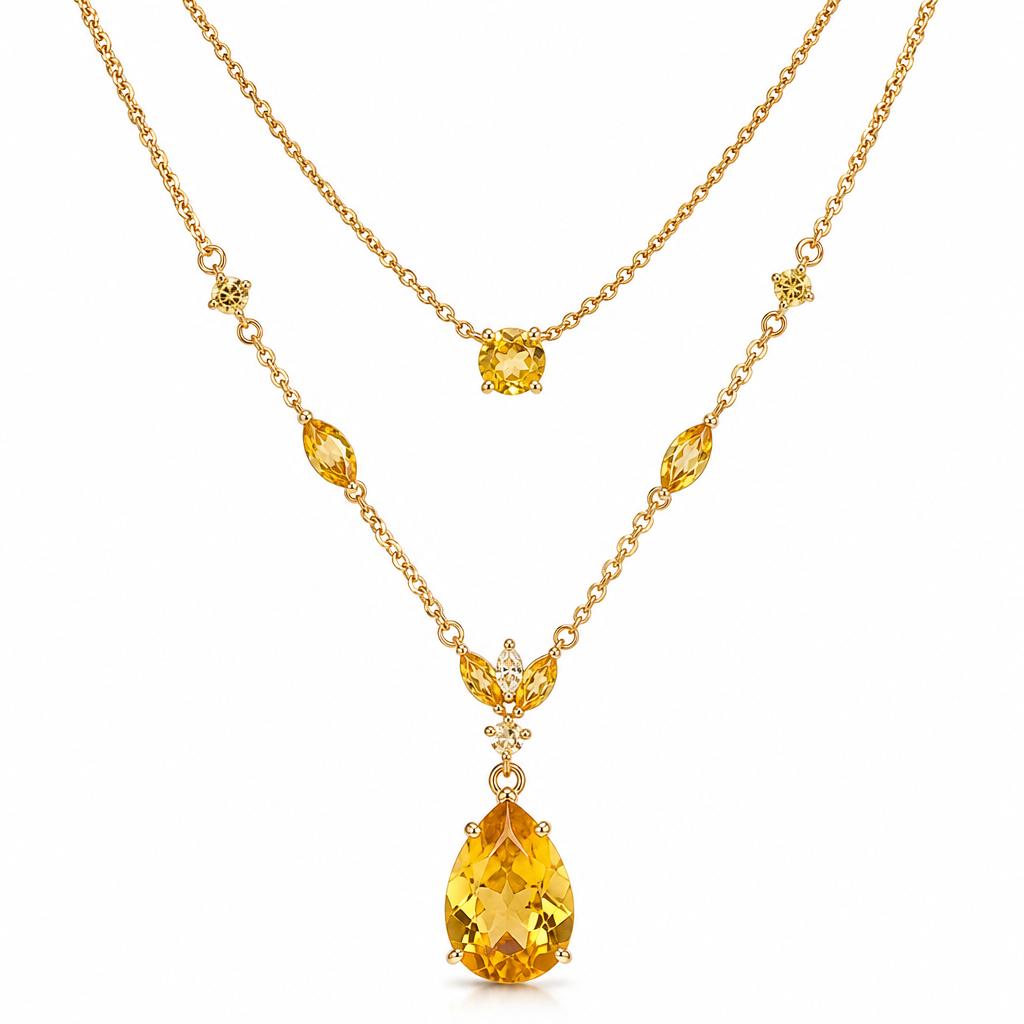
But they’re also very different from each other, in color, durability, price, symbolism, and the kind of lifestyle they suit. Choosing between them isn’t just about which color you prefer (though that matters). It’s about understanding how each stone performs in real-world wear, what it costs, and what story you want your ring to tell.
This guide compares sapphire, ruby, and emerald across every dimension that matters, so you can make a confident choice.
Color: The Most Obvious Difference
Sapphire
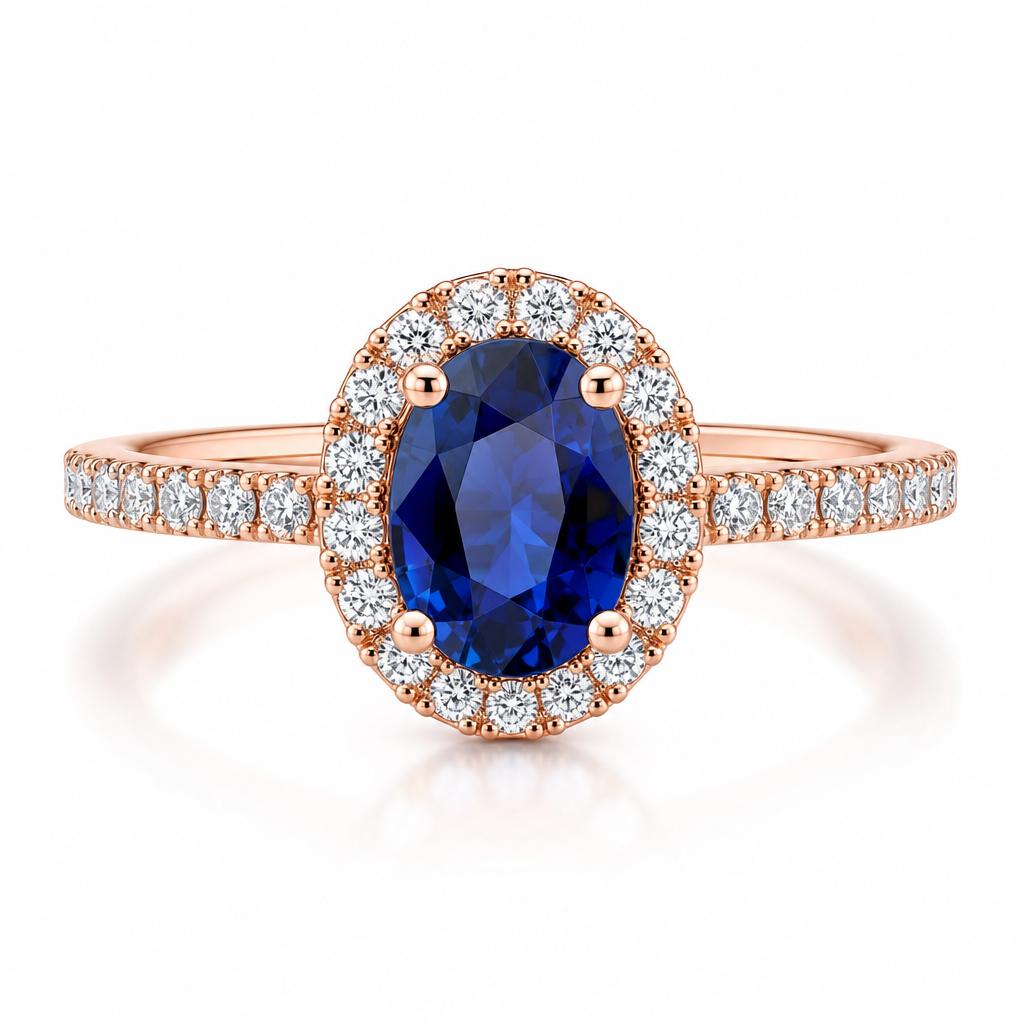
Despite the popular association of sapphire with blue, sapphire comes in every color except red. (If it’s red, it’s a ruby.) Blue sapphires range from pale sky blue to deep, velvety cornflower blue to near-black “padparadscha” hues. But sapphires also come in pink, yellow, green, purple, orange, and even colorless. The most valuable blue sapphires display a vivid, saturated cornflower or royal blue with excellent clarity and even color distribution.
Most popular colors: Royal blue, cornflower blue, pink, yellow
Color zoning: Many natural sapphires show color zoning (visible bands or patches of different color intensity), which is natural and doesn’t reduce value unless it creates an unappealing appearance.
Ruby
Ruby is the red variety of the mineral corundum (the same mineral family as sapphire). The most prized rubies display a vivid “pigeon’s blood” red — a saturated, slightly purplish-red that glows with intensity. Rubies range from pale pinkish-red to deep, dark burgundy. The finest rubies have a fluorescence effect: they absorb ultraviolet light and re-emit it as visible red light, making them appear to glow from within.
Most popular colors: Pigeon’s blood red, vivid red, slightly purplish-red
Color zoning: Rubies commonly show color zoning, often visible as lighter or darker bands. This is natural and expected in most natural rubies.
Emerald
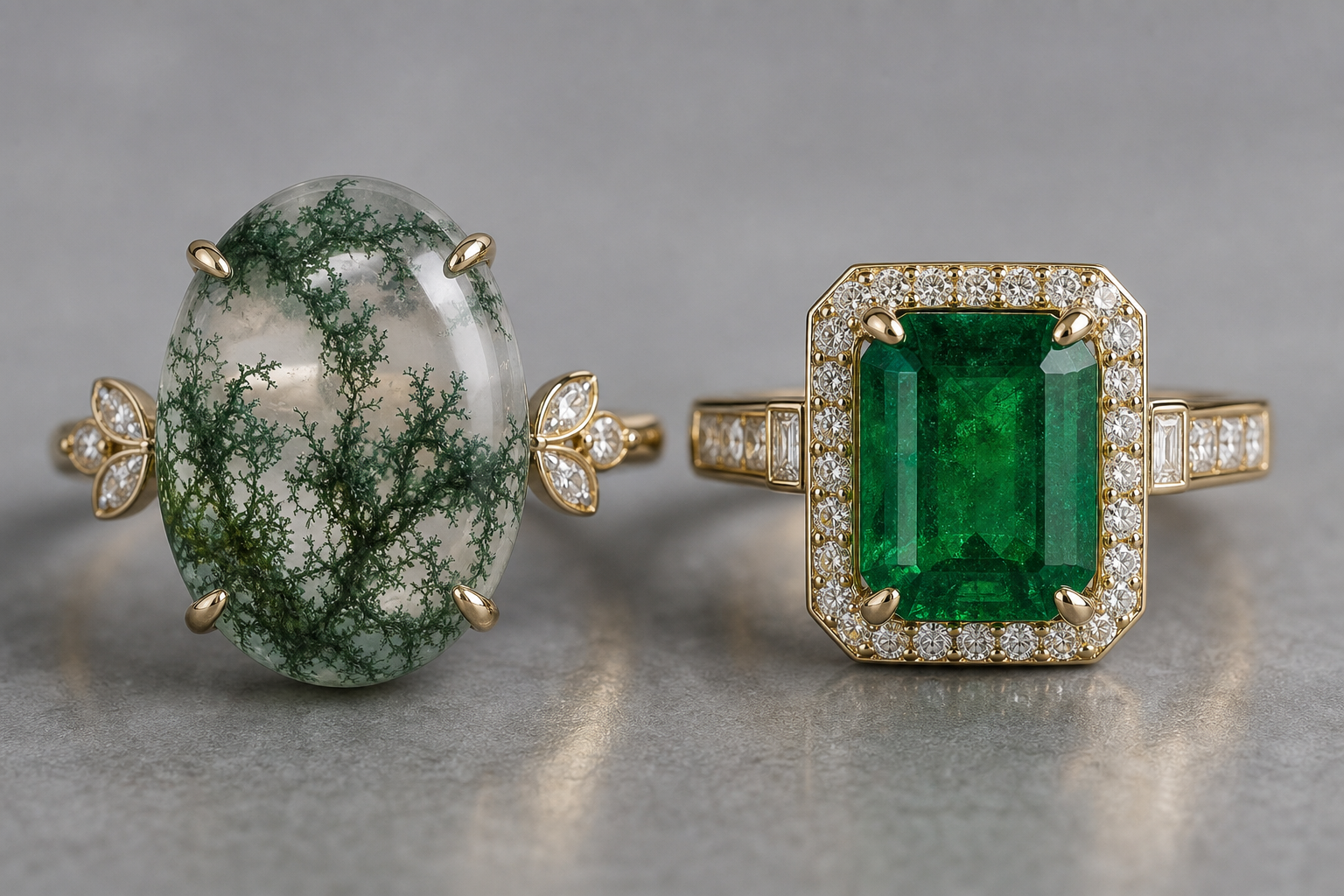
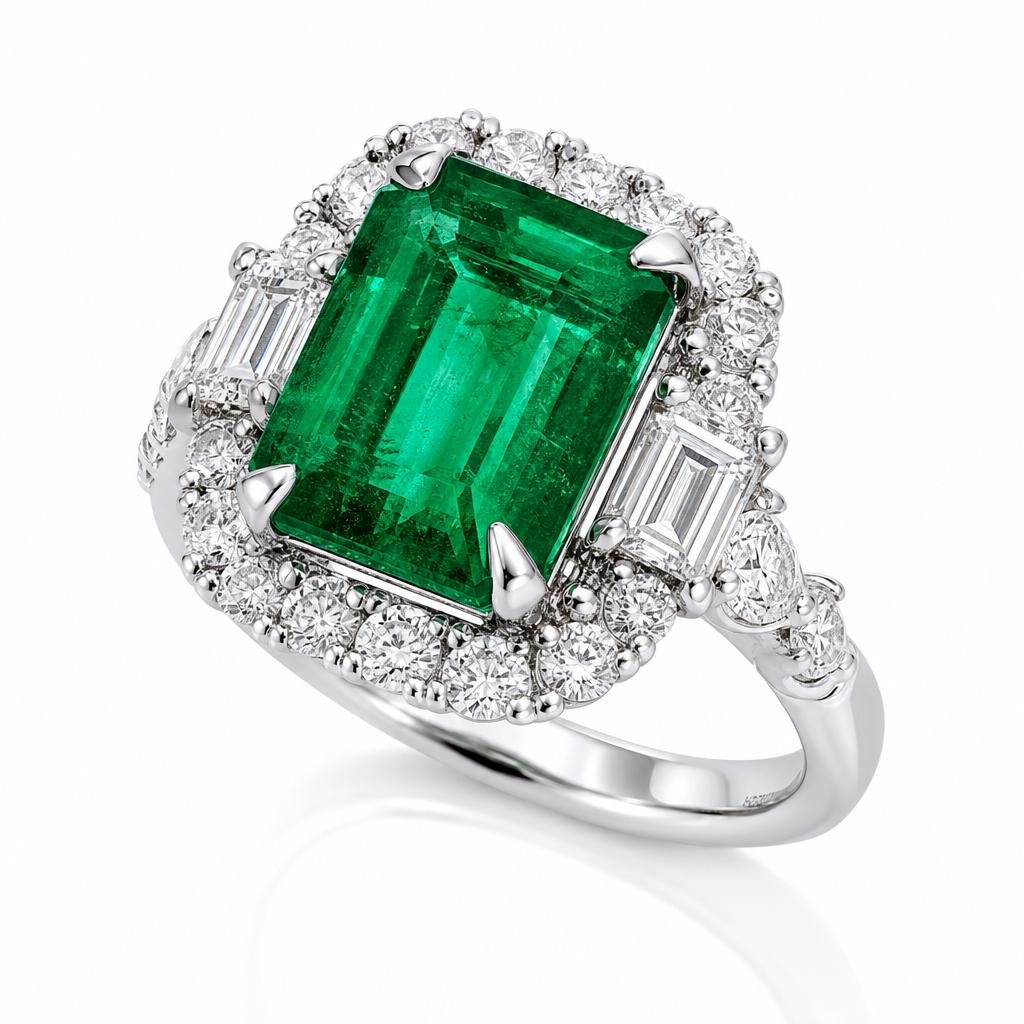
Emerald is the green variety of the mineral beryl (the same family as aquamarine and morganite). The most valued emeralds display a vivid, slightly bluish-green to pure green color with excellent saturation. The color should be lively and bright, not dull or overly dark. Overly dark emeralds can look black in low light; overly light ones can look pale and unimpressive.
Most popular colors: Vivid bluish-green, pure vivid green, slightly yellowish-green
Color zoning: Emeralds commonly show color variation within a single stone, which is natural and expected.
Hardness and Durability: Can You Wear It Every Day?
This is where the comparison gets interesting — and where durability matters most for ring wear.
| Property | Sapphire | Ruby | Emerald |
|---|---|---|---|
| Mohs hardness | 9 | 9 | 7.5–8 |
| Toughness | Excellent | Excellent | Fair to Poor |
| Daily wear suitability | Excellent | Excellent | Good (with caution) |
| Best setting for daily wear | Prong, bezel, halo | Prong, bezel, halo | Bezel, semi-bezel |
Sapphire and Ruby: The Durability Champions
Sapphire and ruby are tied for second place on the Mohs hardness scale at 9, behind only diamond (10). This means they’re extremely resistant to scratching from everyday materials. Dust, which contains quartz particles at hardness 7, cannot scratch a sapphire or ruby. They’re also very tough — meaning they resist chipping and breaking — due to their crystalline structure.
For daily wear, sapphire and ruby are essentially the best choices available (aside from diamond). An engagement ring or wedding band with a sapphire or ruby will hold up beautifully for decades with minimal care.
Emerald: Beautiful but Delicate
Emerald ranks 7.5–8 on the Mohs scale, which sounds good until you consider that common dust (hardness 7) can slowly scratch it over time. More importantly, emeralds have fair to poor toughness. Almost all natural emeralds contain internal fractures and inclusions (called “jardin” — Spanish for “garden,” because these inclusions resemble a garden when viewed under magnification). These natural fractures make emeralds susceptible to chipping and cracking, especially at the edges.
For daily wear, emeralds require more care:
– A bezel or semi-bezel setting is strongly recommended to protect the stone’s edges
– Remove the ring during manual work, sports, or activities with impact risk
– Be aware that emeralds can develop new fractures over time, especially if exposed to sudden temperature changes
Price Comparison
Price is one of the most significant factors in choosing between these three stones. Here’s a general overview of jewelry-quality stones in common sizes:
Sapphire Price Ranges
| Quality | 1 carat | 2 carat | 3 carat |
|---|---|---|---|
| Good (lighter blue, visible inclusions) | $300–$800 | $600–$1,500 | $900–$2,200 |
| Very Good (medium blue, minor inclusions) | $800–$2,000 | $1,500–$3,500 | $2,200–$5,000 |
| Excellent (vivid cornflower/royal blue, eye-clean) | $2,000–$5,000 | $4,000–$9,000 | $6,000–$14,000 |
| Exceptional (top-grade Kashmir/Myanmar blue) | $5,000–$15,000+ | $10,000–$30,000+ | $15,000–$50,000+ |
Note: Sapphire prices vary enormously by color. Blue sapphires are the most expensive. Pink, yellow, and purple sapphires are generally more affordable. Padparadscha (a rare pink-orange color) can command prices comparable to the finest blue sapphires.
Ruby Price Ranges
| Quality | 1 carat | 2 carat | 3 carat |
|---|---|---|---|
| Good (lighter red, visible inclusions) | $500–$1,500 | $1,000–$2,500 | $1,500–$4,000 |
| Very Good (vivid red, minor inclusions) | $1,500–$4,000 | $3,000–$7,000 | $4,500–$10,000 |
| Excellent (pigeon’s blood, eye-clean) | $4,000–$10,000 | $8,000–$20,000 | $12,000–$30,000 |
| Exceptional (top-grade Burmese pigeon’s blood) | $10,000–$30,000+ | $20,000–$60,000+ | $30,000–$100,000+ |
Note: Rubies are generally more expensive than sapphires of comparable quality, especially in sizes over 2 carats. Large, high-quality rubies are extremely rare. Burmese rubies (from Myanmar) command the highest prices, followed by Mozambican rubies.
Emerald Price Ranges
| Quality | 1 carat | 2 carat | 3 carat |
|---|---|---|---|
| Good (lighter green, visible inclusions) | $300–$1,000 | $600–$2,000 | $900–$3,000 |
| Very Good (vivid green, moderate inclusions) | $1,000–$3,000 | $2,000–$6,000 | $3,000–$9,000 |
| Excellent (vivid bluish-green, minor inclusions) | $3,000–$8,000 | $6,000–$15,000 | $9,000–$25,000 |
| Exceptional (top-grade Colombian vivid green) | $8,000–$20,000+ | $15,000–$40,000+ | $25,000–$70,000+ |
Note: Emerald prices are highly variable because nearly all emeralds have visible inclusions. “Eye-clean” emeralds (no visible inclusions to the naked eye) are rare and command significant premiums. Colombian emeralds are generally the most expensive, followed by Zambian emeralds.
Price Summary
- Most affordable entry point: Sapphire (especially non-blue colors)
- Mid-range: Emerald (good quality stones are accessible, but top grades are expensive)
- Highest potential prices: Ruby (especially large, high-quality stones)
- Best value for size: Sapphire — you can get a larger, more colorful stone for your budget
- Highest price per carat at top grades: Ruby > Emerald > Sapphire
Symbolism and Meaning
Sapphire
- Birthstone: September
- Traditional meanings: Wisdom, loyalty, nobility, truth
- Historical significance: Medieval European clergy wore sapphires to symbolize heaven. Kings wore sapphire rings to ward off envy and poison. The famous “Princess Diana sapphire” (now worn by Prince William’s wife, Catherine) brought sapphires into modern celebrity culture.
- Modern associations: Trust, commitment, mental clarity, spiritual insight
- Best for: Engagement rings (a classic alternative to diamond), anniversary rings (45th anniversary), birthstone gifts for September babies
Ruby
- Birthstone: July
- Traditional meanings: Passion, courage, vitality, love
- Historical significance: Ancient Hindus believed rubies protected them from harm. In the Middle Ages, rubies were thought to ensure success in battle. The “Black Prince’s Ruby” (actually a spinel, but historically classified as ruby) is set in the British Crown Jewels.
- Modern associations: Romance, energy, confidence, strength
- Best for: Engagement rings (for someone who wants bold color), anniversary rings (15th and 40th anniversaries), birthstone gifts for July babies, statement pieces
Emerald
- Birthstone: May
- Traditional meanings: Rebirth, love, hope, fertility
- Historical significance: Cleopatra was famous for her emerald mines. The Inca civilization considered emeralds sacred and offered them to their gods. In ancient Egypt, emeralds were associated with Venus and symbolized eternal youth.
- Modern associations: Renewal, emotional balance, compassion, growth
- Best for: Engagement rings (for someone who loves green), anniversary rings (20th and 35th anniversaries), birthstone gifts for May babies, spring-themed jewelry
Best Ring Settings
Sapphire
Sapphire’s durability means it works well in virtually any setting:
- Prong settings — Showcase the stone’s color and allow maximum light entry
- Halo settings — A diamond halo makes even a modest sapphire look dramatic
- Three-stone settings — Sapphire flanked by diamonds is a classic engagement ring style
- Bezel settings — Great for active lifestyles; protects the stone’s edges
- Vintage and Art Deco — Sapphire’s history makes it a natural fit for vintage-inspired designs
Ruby
Ruby’s durability is comparable to sapphire, so settings are similarly versatile:
- Prong settings — The classic choice; showcases the stone’s fiery color
- Halo settings — A diamond or white sapphire halo enhances the ruby’s red
- Pavé bands — A ruby solitaire on a diamond-pavé band is a romantic, classic combination
- Cluster settings — Multiple small rubies create a bold, colorful effect
- Bezel settings — Recommended for daily-wear rings, especially for larger stones
Emerald
Emerald’s relative fragility means settings matter more:
- Bezel settings — Strongly recommended for daily wear; protects the stone’s edges
- Semi-bezel (partial bezel) — Offers protection while showcasing more of the stone
- Halo settings — A diamond halo provides edge protection and makes the emerald appear larger
- Three-stone settings — Emerald flanked by diamonds or sapphires is a classic and elegant combination
- Avoid high prong settings — Tall prongs leave the emerald vulnerable to impacts
- Vintage and Art Deco — Emerald’s association with the Art Deco era makes geometric, stepped settings particularly striking
Care Requirements
Sapphire
- Clean with warm, soapy water and a soft brush
- Ultrasonic and steam cleaners are safe (unless the stone is fracture-filled)
- Virtually maintenance-free for daily wear
- Store separately from diamond to prevent scratching (diamond can scratch sapphire, though it’s unlikely in normal wear)
Ruby
- Clean with warm, soapy water and a soft brush
- Ultrasonic and steam cleaners are safe (unless the stone is fracture-filled)
- Virtually maintenance-free for daily wear
- Same care as sapphire (they’re the same mineral, after all)
Emerald
- Clean with warm, soapy water and a soft brush only
- Never use ultrasonic or steam cleaners
- Avoid sudden temperature changes
- Have oil treatment refreshed every 2–3 years
- Store separately from harder gemstones
- Remove during activities with impact risk
Historical Significance
Sapphire
Sapphire’s history stretches back over 2,500 years. Ancient Persians believed the earth rested on a giant sapphire, which is why the sky appears blue. In medieval Europe, sapphires were associated with divine favor — bishops wore sapphire rings to signal their closeness to God. The British Crown Jewels include several historic sapphires, including the St. Edward’s Sapphire, which has been set in every British coronation ring since 1661.
Ruby
Ruby has been prized since ancient times. The word “ruby” comes from the Latin ruber, meaning “red.” Ancient Indian texts describe rubies as the “king of precious stones.” In Burma (Myanmar), ruby mines have been operated for over 2,000 years. The most famous ruby deposits — Mogok, in central Myanmar — have produced some of the world’s finest rubies since the 12th century.
Emerald
Emerald has been mined for over 3,000 years. Cleopatra’s emerald mines in Egypt (the Cleopatra Mines near the Red Sea) were some of the world’s first and most productive. The Inca civilization valued emeralds so highly that they offered them as sacrifices to their gods. Spanish conquistadors brought emeralds from Colombia to Europe in the 16th century, where they were immediately recognized as among the world’s most beautiful gemstones.
Which Occasion Is Each Best For?
Sapphire
- Engagement rings — An excellent diamond alternative; durable, beautiful, and increasingly popular
- Anniversary gifts — 45th anniversary traditional stone
- Birthstone gifts — September babies
- Everyday wear — Excellent durability makes it ideal for daily rings
- Formal occasions — Blue sapphires pair beautifully with evening wear
- Milestone celebrations — A sapphire ring makes a meaningful gift for graduations, promotions, and major life events
Ruby
- Engagement rings — For someone who wants bold, passionate color; a statement alternative to diamond
- Anniversary gifts — 15th and 40th anniversary traditional stones
- Birthstone gifts — July babies
- Statement pieces — Rubies are eye-catching and dramatic; perfect for those who love bold jewelry
- Romantic occasions — Ruby’s association with passion makes it ideal for Valentine’s Day, anniversaries, and proposals
- Formal occasions — A ruby ring is a showstopper at galas, weddings, and black-tie events
Emerald
- Engagement rings — For someone who loves green and doesn’t mind extra care; a unique, sophisticated choice
- Anniversary gifts — 20th and 35th anniversary traditional stones
- Birthstone gifts — May babies
- Spring-themed jewelry — Emerald’s green evokes renewal and new beginnings
- Elegant occasions — Emeralds have a refined, understated luxury that suits formal events
- Heirloom pieces — Emeralds have a timeless quality that makes them excellent for passing down through generations
Side-by-Side Comparison Table
| Feature | Sapphire | Ruby | Emerald |
|---|---|---|---|
| Mineral family | Corundum | Corundum | Beryl |
| Mohs hardness | 9 | 9 | 7.5–8 |
| Toughness | Excellent | Excellent | Fair to Poor |
| Best for daily wear | ✅ Excellent | ✅ Excellent | ⚠️ Good (with care) |
| Most iconic color | Royal blue | Pigeon’s blood red | Vivid bluish-green |
| Other colors | Pink, yellow, purple, green, orange, colorless | Only red (pink is a different stone) | Only green (yellow-green is “green emerald,” pale is aquamarine) |
| Birthstone month | September | July | May |
| Typical price (1ct, good quality) | $800–$2,000 | $1,500–$4,000 | $1,000–$3,000 |
| Top-grade price (1ct) | $5,000–$15,000+ | $10,000–$30,000+ | $8,000–$20,000+ |
| Ultrasonic cleaner safe | ✅ Yes | ✅ Yes | ❌ No |
| Steam cleaner safe | ✅ Yes | ✅ Yes | ❌ No |
| Needs special maintenance | No | No | Oil treatment every 2–3 years |
| Best setting for daily wear | Any (prong, bezel, halo) | Any (prong, bezel, halo) | Bezel or semi-bezel |
| Historical association | Divine favor, loyalty, wisdom | Passion, courage, vitality | Rebirth, love, fertility |
| Most famous source | Kashmir, Myanmar, Sri Lanka | Myanmar (Burma), Mozambique | Colombia, Zambia |
Making Your Choice: Questions to Ask Yourself
1. What’s your budget?
If you want the largest, most colorful stone for your money, sapphire is the clear winner. For the same budget, a sapphire will typically be larger and more vivid than a ruby or emerald. If budget is less of a concern and you want the most prestigious stone, ruby (especially a top-grade Burmese ruby) is the most exclusive.
2. How will you wear it?
For a ring worn every single day with minimal maintenance, sapphire or ruby are the best choices. If you’re willing to take extra care and remove your ring during certain activities, emerald is a beautiful and meaningful option.
3. What color speaks to you?
This is the most important question. Look at each color in natural light:
- Blue (sapphire) — Calm, classic, versatile
- Red (ruby) — Bold, passionate, attention-grabbing
- Green (emerald) — Rich, sophisticated, unique
4. What’s the occasion?
- Engagement ring — All three work; sapphire and ruby for durability, emerald for uniqueness
- Anniversary gift — All three have traditional anniversary associations
- Birthstone gift — Choose based on the recipient’s birth month
- Personal purchase — Choose the color and style that resonates with you
5. Do you want something unique?
Sapphire is the most popular colored gemstone for engagement rings (after diamond), so it’s increasingly common. Ruby is less common but still well-known. Emerald is the rarest choice for engagement rings, making it the most distinctive option if you want something truly different.
Final Thoughts
There’s no wrong choice among sapphire, ruby, and emerald — they’re all extraordinary gemstones with deep histories, stunning beauty, and enduring appeal. The “right” choice depends on your priorities:
- Choose sapphire if you want durability, versatility, and the best value for your budget
- Choose ruby if you want bold color, passionate symbolism, and don’t mind paying a premium for rarity
- Choose emerald if you love green, appreciate unique beauty, and are willing to care for a more delicate stone
Whatever you choose, you’re selecting a gemstone that has captivated humans for thousands of years. That’s not just jewelry — that’s history, art, and nature, all set in metal and worn close to the heart.
Frequently Asked Questions
Q: Which gemstone is most durable for an engagement ring?
A: Sapphire and ruby are the most durable colored gemstones for everyday wear at 9 on the Mohs scale, second only to diamond. Emerald is more included and requires more care.
Q: What is the difference between sapphire and ruby?
A: Both are corundum gemstones. Ruby is the red variety of corundum, while sapphire includes all other corundum colors including blue, pink, yellow, and green.
Q: Which gemstone holds the most value?
A: Among the three, rubies typically command the highest per-carat prices, especially Burmese rubies. Emeralds rank second, with sapphires being more accessible while still holding significant value.
{
“@context”: “https://schema.org”,
“@type”: “FAQPage”,
“mainEntity”: [
{
“@type”: “Question”,
“name”: “Which is harder: sapphire, ruby, or emerald?”,
“acceptedAnswer”: {
“@type”: “Answer”,
“text”: “Sapphire and ruby both rank 9 on the Mohs scale (corundum). Emerald ranks 7.5-8 (beryl). Sapphires and rubies are significantly more durable for everyday wear.”
}
},
{
“@type”: “Question”,
“name”: “Which gemstone is most expensive?”,
“acceptedAnswer”: {
“@type”: “Answer”,
“text”: “Top-quality Burmese rubies and Kashmir sapphires typically command the highest prices per carat. Colombian emeralds also fetch premium prices. Generally rubies are rarest.”
}
},
{
“@type”: “Question”,
“name”: “Can these gemstones be worn together?”,
“acceptedAnswer”: {
“@type”: “Answer”,
“text”: “Yes. Sapphire (blue), ruby (red), and emerald (green) create a vibrant combination. They are often found together in jewelry sets as the \”holy trinity\” of colored gemstones.”
}
}
]
}
Related Articles
Continue reading for more gemstone guides:
- The Ultimate Guide to Opal Rings: Types, Colors, and Meaning
- How to Care for Your Gemstone Jewelry
- Sapphire vs Ruby vs Emerald
- The Complete Guide to Moissanite Rings
Shop Sapphire Rings at ETYGEM
Explore our handcrafted collection in 925 sterling silver:
Free worldwide shipping. 6-month warranty. Hypoallergenic and nickel-free.