10 Unique Opal Rings Under $500: Expert Buying Guide for 2025
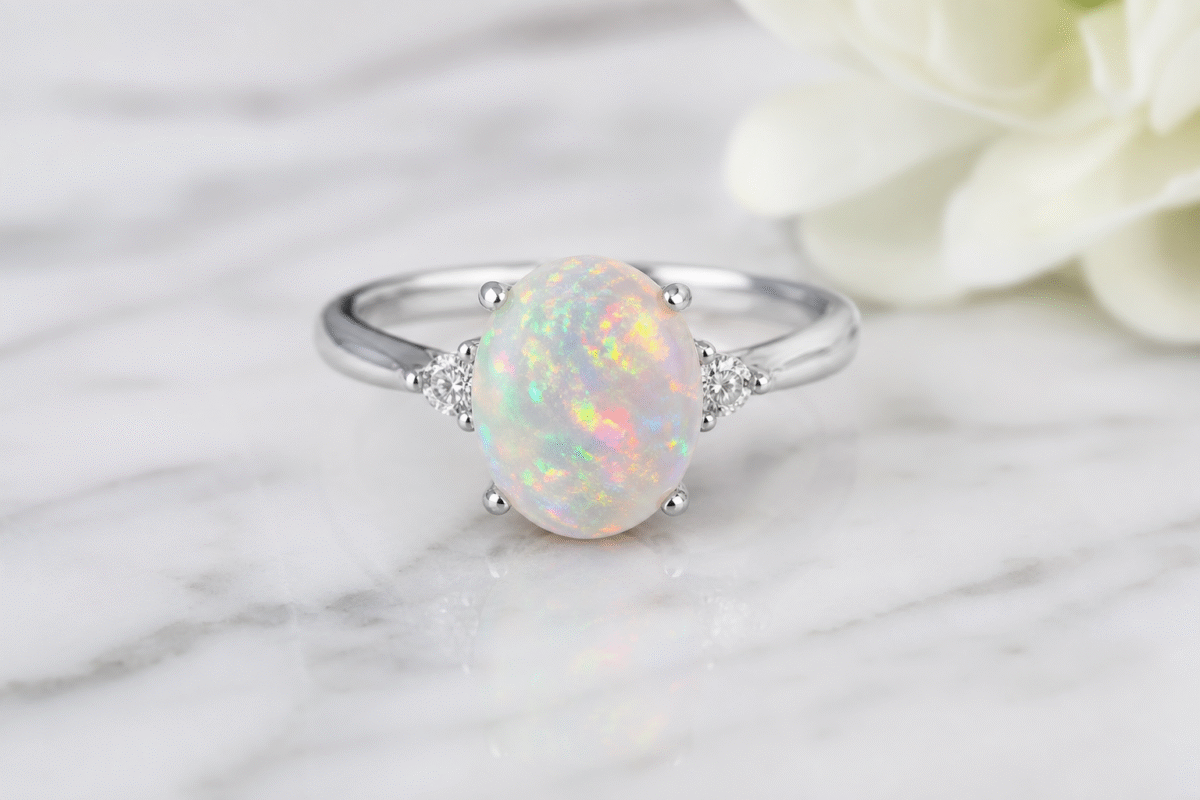
Opal rings captivate jewelry lovers with their mesmerizing play-of-color—a phenomenon where spectral hues dance across the stone’s surface as light interacts with its internal silica structure. Unlike diamonds or sapphires that display a single color, opals offer an ever-changing kaleidoscope that makes each stone truly one-of-a-kind. The good news? You don’t need to spend thousands to own a breathtaking opal ring. With informed selection, stunning pieces are available well under $500.
As gemstone experts with over a decade of experience in opal evaluation, we’ve curated this guide to help you navigate the market confidently. Whether you’re shopping for an opal wedding ring or a statement piece for everyday wear, understanding what determines opal quality is your first step toward a smart purchase.
Understanding Opal Quality: What Determines Value Under $500
Before exploring our curated selections, it’s essential to understand the factors that determine an opal’s value. According to the Gemological Institute of America (GIA), opal quality is assessed based on several key criteria:
Play-of-Color Intensity
The most critical factor in opal valuation is the brilliance and pattern of its play-of-color. Stones displaying broad, vivid flashes of red, orange, and green command higher prices than those with muted or pinpoint patterns. In the under-$500 range, you can find opals with excellent color play—particularly Ethiopian Welo opals, which offer remarkable fire at accessible price points.
Body Tone and Transparency
Body tone refers to the background color of the opal, ranging from colorless (crystal) to black. Darker body tones typically enhance the visibility of play-of-color, which is why dark-toned gemstones often appear more dramatic. For budget-conscious buyers, semi-crystal and white opals provide beautiful color displays without the premium of black opals.
Setting and Metal Quality
The International Gem Society (IGS) recommends protective settings for opals due to their relative softness (5.5-6.5 on the Mohs scale). Sterling silver and gold vermeil offer excellent durability and value, while bezel settings provide superior stone protection compared to prong settings.
Our Curated Selection: 10 Unique Opal Rings Under $500
Each ring in this collection was selected based on design uniqueness, material quality, stone authenticity, and overall value. Here are our expert picks:
1. The Celestial Cascade — $120-$150
Material: Sterling Silver | Stone: Australian White Opal (8x6mm oval) with Blue Opal accents
This celestial-inspired design features a central white opal flanked by two smaller blue opals, creating a cascading effect reminiscent of starlight. The sterling silver setting complements the cool tones beautifully, making it ideal for those who prefer understated elegance.
2. Art Deco Majesty — $180-$220
Material: Sterling Silver | Stone: Ethiopian Welo Opal (10x8mm emerald cut)
Geometric Art Deco lines frame a vibrant Ethiopian Welo opal in this statement piece. The emerald cut is unusual for opals and maximizes the stone’s broad-flash play-of-color pattern. Perfect for vintage jewelry enthusiasts seeking something distinctive.
3. Vintage Bloom Halo — $250-$300
Material: Gold Vermeil | Stone: Australian Boulder Opal (7x5mm cabochon)
A floral halo of micro-pavé lab-created white sapphires surrounds a fiery boulder opal in this romantic design. Boulder opals are prized for their natural ironstone backing, which provides structural stability and enhances color contrast. This ring pairs beautifully with rose quartz accessories for a layered look.
4. Modernist Twist — $90-$120
Material: Sterling Silver | Stone: Peruvian Blue Opal (9mm round cabochon)
A contemporary twisted band leads to a bezel-set Peruvian blue opal—a variety known for its calming, translucent blue-green hue rather than traditional play-of-color. This minimalist design is perfect for daily wear and stacks well with other bands.
5. Ethereal Constellation — $140-$170
Material: Oxidized Sterling Silver | Stone: Ethiopian Welo Opal (8mm round)
The dark oxidized silver band creates a star-scattered effect that dramatically contrasts with the opal’s brilliant play-of-color. This design mimics the night sky and appeals to those seeking jewelry with celestial symbolism.
6. Classic Solitaire Elegance — $200-$240
Material: 14k Gold Filled | Stone: Lab-Created Opal (9x7mm oval)
A timeless solitaire setting in warm gold showcases a high-quality lab-created opal with consistent, vivid color play. Lab-created opals share the same chemical composition (SiO₂·nH₂O) as natural opals, offering remarkable beauty with enhanced durability—ideal for engagement ring consideration.
7. The Guardian Twist — $110-$140
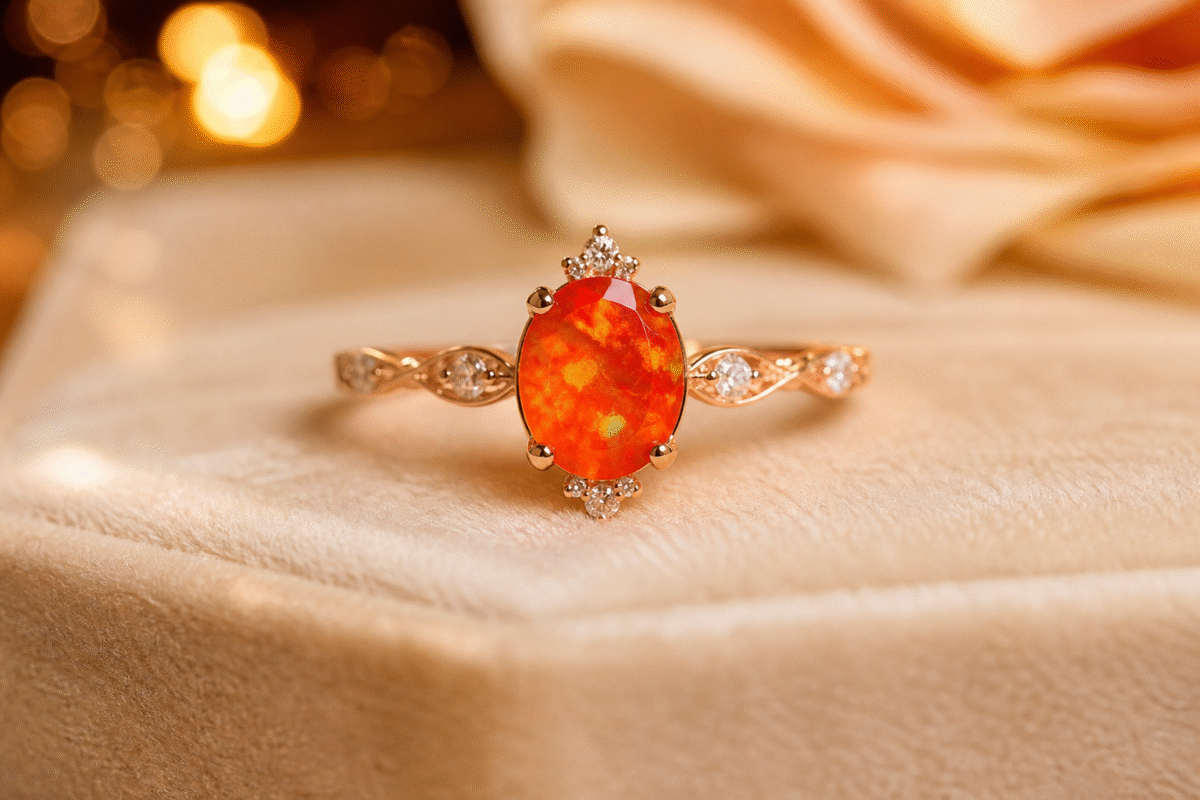
Material: Sterling Silver | Stone: Mexican Fire Opal (6mm round)
Two sterling silver ropes twist protectively around a bezel-set Mexican fire opal. Fire opals display a warm orange-to-red body color that differs from traditional play-of-color opals. The protective setting makes this one of the most durable options for everyday wear.
8. Enchanted Forest Cluster — $160-$190
Material: Sterling Silver | Stone: Australian Crystal & Green Opals (cluster)
Multiple small green and white opals are arranged in a nature-inspired cluster resembling a forest canopy. This organic design appeals to nature lovers and pairs exceptionally well with moss agate rings for a botanical jewelry collection.
9. Mid-Century Marquise — $220-$260
Material: Gold Vermeil | Stone: Lab-Created Opal (10x5mm marquise)
The elongated marquise cut creates a finger-lengthening effect while the minimalist yellow gold vermeil band adds retro-modern sophistication. This shape maximizes perceived size, making the stone appear larger than its carat weight suggests.
10. The Stackable Wave — $70-$90
Material: Sterling Silver | Stone: Mixed Opal Chips
A thin, wavy band embedded with colorful opal chips offers the most affordable entry point into opal jewelry. Perfect for stacking with other rings or wearing as a subtle everyday piece. The mixed varieties create an unpredictable, playful color effect.
Opal Types Compared: Natural vs. Lab-Created vs. Synthetic
Understanding the differences between opal types helps you make an informed purchasing decision:
| Feature | Natural Opal | Lab-Created Opal | Opal Doublet/Triplet |
|---|---|---|---|
| Origin | Mined from earth | Grown in laboratory | Natural opal layered with backing |
| Chemical Composition | SiO₂·nH₂O | SiO₂·nH₂O (identical) | Natural opal + adhesive + backing |
| Durability | 5.5-6.5 Mohs | 5.5-6.5 Mohs | Varies; avoid water exposure |
| Price Range (under $500) | Small to medium stones | Larger stones possible | Larger appearance at lower cost |
| Play-of-Color | Unique, natural patterns | Consistent, vivid patterns | Natural but enhanced by dark backing |
The American Gem Society (AGS) recommends always requesting disclosure of opal type and any treatments when purchasing. Reputable sellers will clearly state whether an opal is natural, lab-created, or a composite (doublet/triplet).
Expert Tips for Buying Opal Rings Under $500
Prioritize Setting Protection
Opals rank 5.5-6.5 on the Mohs hardness scale, making them softer than many popular gemstones. Choose bezel settings or protective designs that shield the stone from impacts. This is especially important if you plan to wear your opal ring daily rather than as an occasional piece.
Consider Your Lifestyle
If you lead an active lifestyle, opt for Australian boulder opals or lab-created opals, which tend to be more resistant to crazing (surface cracking from dehydration). Ethiopian opals, while stunningly beautiful, are hydrophane—they absorb water—and require more careful handling.
Verify Seller Credentials
Purchase from sellers who provide detailed information about opal origin, type, and any treatments. Look for certifications or memberships in recognized gemological organizations. When buying online, ensure the seller offers a return policy, as opal play-of-color can appear differently in person than in photographs.
Caring for Your Opal Ring
Proper care ensures your opal ring maintains its beauty for generations:
- Avoid extreme temperatures — sudden changes can cause crazing
- Remove before water activities — especially for Ethiopian opals and doublets/triplets
- Store separately — opals can be scratched by harder gemstones
- Clean gently — use a soft, damp cloth; never ultrasonic cleaners
- Wear regularly — natural body oils help maintain opal hydration
For more detailed care instructions, explore our comprehensive opal ring care guide which covers long-term maintenance strategies.
Why Choose an Opal Ring Over Traditional Gemstones?
Compared to diamonds or moissanite alternatives, opal rings offer several distinct advantages:
- Uniqueness: No two natural opals are identical, guaranteeing a one-of-a-kind piece
- Color variety: A single opal can display the entire visible spectrum
- Affordability: Exceptional beauty at a fraction of diamond prices
- Symbolism: Opals represent creativity, inspiration, and emotional expression
- Conversation starter: The play-of-color phenomenon naturally draws attention and curiosity
Ready to Find Your Perfect Opal Ring?
Finding a unique opal ring under $500 is absolutely achievable when you know what to look for. Focus on play-of-color quality, protective settings, and reputable sellers to ensure your investment brings lasting joy. Whether you prefer the fiery warmth of a Mexican fire opal or the ethereal glow of an Australian white opal, there’s a perfect piece waiting for you.
Browse our complete gemstone ring collection to discover more stunning options, or explore our opal necklaces and earrings to build a coordinated set.
Frequently Asked Questions
Are opal rings under $500 durable enough for daily wear?
Yes, with the right selection. Australian boulder opals and lab-created opals offer the best durability for everyday wear. Choose protective bezel settings over prong settings, and avoid exposing your ring to harsh chemicals or extreme temperature changes. Rings like sterling silver designs with bezel-set stones can last decades with proper care.
What is the difference between natural and lab-created opals?
Natural opals form over millions of years underground, while lab-created opals are grown in controlled environments. Both share identical chemical composition (SiO₂·nH₂O) and display genuine play-of-color. The primary differences are origin, price, and consistency—lab-created opals offer more uniform patterns at lower prices, while natural opals have unique, unrepeatable patterns.
Which opal type offers the best value under $500?
Ethiopian Welo opals offer exceptional value in this price range, providing vivid play-of-color with broad flash patterns at significantly lower prices than comparable Australian opals. For maximum durability combined with beauty, lab-created opals provide the best overall value, allowing larger stone sizes within budget.
How can I verify an opal ring’s authenticity before purchasing?
Request documentation of the opal’s origin and type from the seller. Genuine opals display play-of-color that shifts with viewing angle—if colors remain static, it may be glass or plastic. Check for seller memberships in organizations like GIA or AGS. For purchases over $200, consider requesting a gemological certificate.
Can opal rings be resized without damaging the stone?
Opal rings can be resized, but the process requires an experienced jeweler familiar with heat-sensitive stones. The opal must be protected from torch heat during soldering. Bezel-set opals are generally easier to resize than prong-set stones. Always inform your jeweler that the ring contains an opal before any repair work.