Moonstone Engagement Rings: The Complete Guide to Ethereal Beauty
Moonstone engagement rings offer a captivating alternative to traditional diamond rings, enchanting wearers with their signature adularescence—a mystical, floating glow that appears to move beneath the stone’s surface. This optical phenomenon, caused by light scattering between microscopic layers of feldspar minerals, creates an effect reminiscent of moonlight on water. The Gemological Institute of America (GIA) describes moonstone as one of the most visually distinctive gemstones, prized for its otherworldly beauty and rich cultural significance.
What Is a Moonstone Engagement Ring?
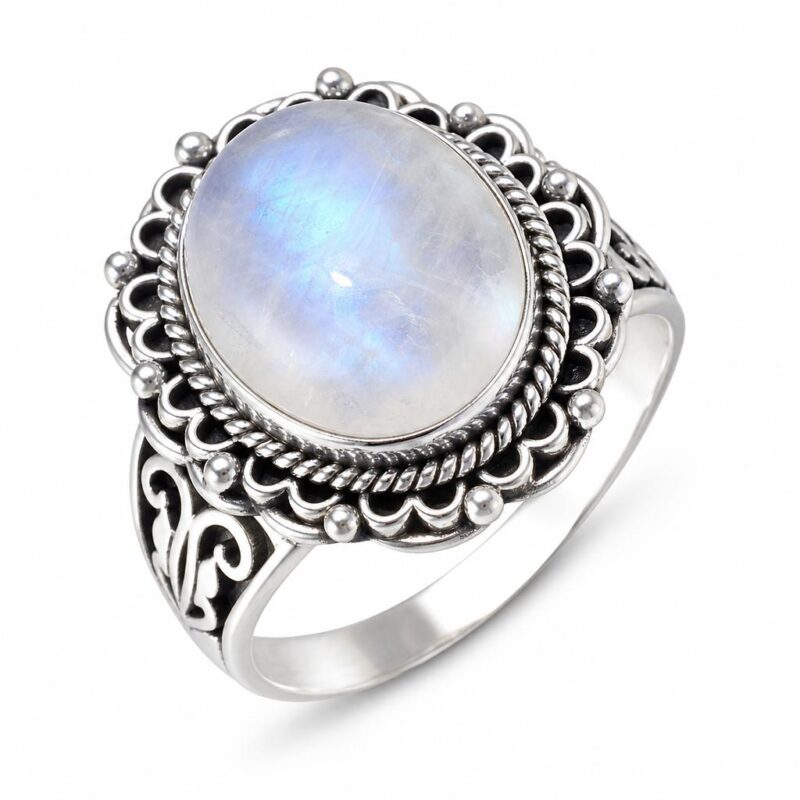
A moonstone engagement ring features moonstone—a variety of the mineral feldspar—as its center stone or primary decorative element. What sets moonstone apart from other gemstones is its adularescence: a billowy, light-blue to white sheen that appears to float just below the surface when the stone is moved under light.
Definition: Adularescence is the optical phenomenon unique to moonstone, created by light diffraction between alternating layers of orthoclase and albite feldspar within the gem’s structure. This effect produces a glowing, moon-like luminescence that gives the stone its name.
Moonstone belongs to the feldspar mineral group, which accounts for nearly 60% of the Earth’s crust. However, gem-quality moonstone with strong adularescence is relatively rare, making fine specimens genuinely precious. The most valued moonstones display a blue sheen against a colorless, transparent body—these command premium prices in the gemstone market.
History and Cultural Significance
Moonstone carries thousands of years of cultural meaning across civilizations worldwide. Understanding this rich heritage adds depth to the choice of a moonstone engagement ring.
Ancient Civilizations
The Romans believed moonstone was formed from solidified rays of moonlight, a belief reflected in the stone’s Latin name “adularia.” Ancient Indian mythology held that moonstone was embedded in the forehead of Ganesh, the moon god, and that the gem was a sacred gift carrying divine energy. Hindu tradition considers moonstone a dream stone that brings beautiful visions during sleep.
Medieval and Renaissance Periods
During the Middle Ages, moonstone was believed to reconcile estranged lovers and cure insomnia when placed under the pillow. Renaissance jewelers prized it for its association with lunar cycles and feminine energy. The Art Nouveau movement (1890-1910) elevated moonstone to high jewelry status, with master craftsmen like René Lalique featuring it prominently in their designs.
Modern Symbolism
Today, moonstone symbolizes new beginnings, intuition, and inner growth—qualities that align beautifully with the commitment of engagement. It’s the birthstone for June and is associated with the zodiac signs Cancer and Libra. The International Gem Society (IGS) notes that moonstone’s popularity has surged among couples seeking meaningful alternatives to conventional engagement stones.
Types of Moonstone for Engagement Rings
Rainbow Moonstone
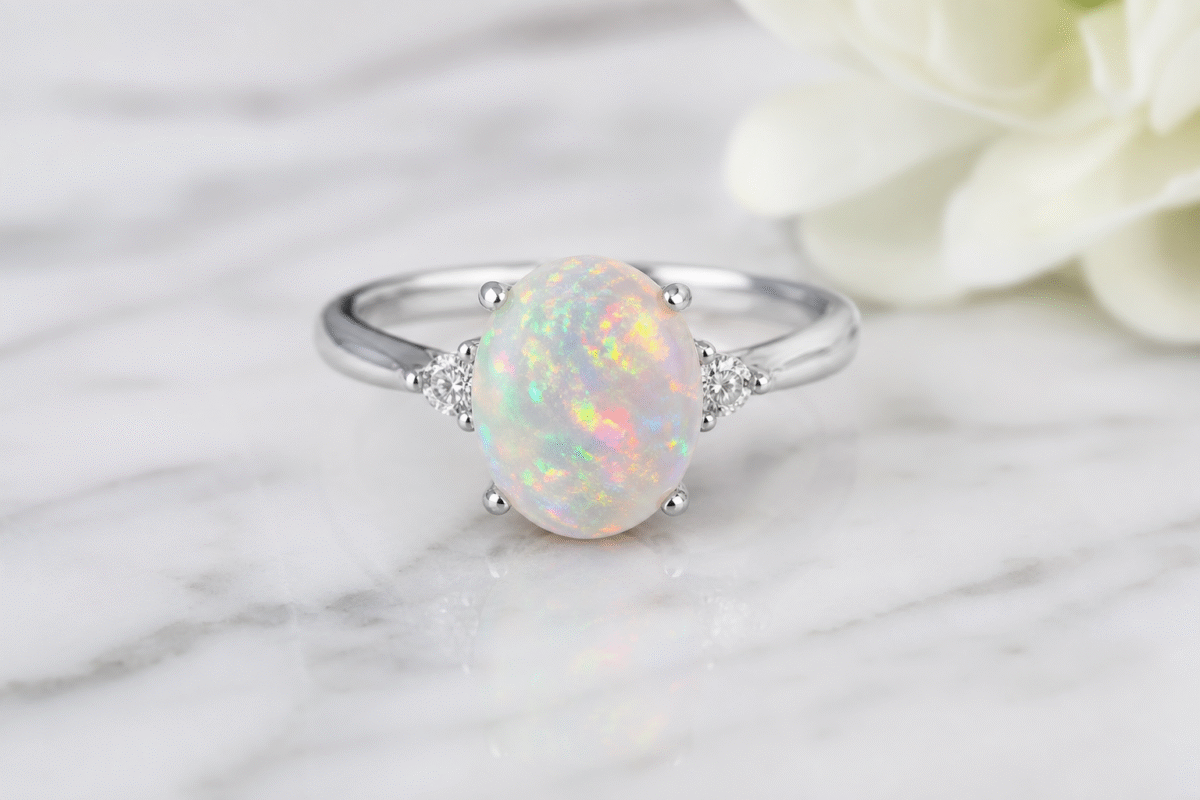
Despite its name, rainbow moonstone is technically a variety of labradorite rather than true moonstone. It displays multicolored flashes—blue, purple, green, and gold—against a milky white or transparent body. Rainbow moonstone offers dramatic visual impact and is popular for bohemian and artistic ring designs.
Blue Moonstone
The most prized variety, blue moonstone displays a floating blue adularescence against a near-colorless body. Fine specimens from Sri Lanka are considered the gold standard. Blue moonstone evokes calmness, serenity, and emotional depth—ideal symbolism for a harmonious partnership.
Peach and Pink Moonstone
Warm-toned moonstones in peach, pink, and champagne hues offer a romantic alternative. These varieties pair beautifully with rose gold settings and appeal to those who prefer warmer color palettes. They symbolize warmth, compassion, and nurturing love.
Cat’s Eye Moonstone
Rare specimens display chatoyancy—a single band of light across the surface resembling a cat’s eye. These exceptional stones combine adularescence with this additional optical effect, creating truly unique engagement ring centerpieces.
Moonstone vs. Diamond: A Detailed Comparison
Understanding how moonstone compares to traditional diamonds helps couples make informed decisions about their engagement ring choice:
| Factor | Moonstone | Diamond |
|---|---|---|
| Hardness (Mohs) | 6-6.5 | 10 |
| Optical Effect | Adularescence (floating glow) | Brilliance and fire |
| Symbolism | Intuition, new beginnings, mystery | Strength, eternity, clarity |
| Price Range | $50-$1,000 per carat | $2,000-$20,000+ per carat |
| Uniqueness | Each stone displays unique glow patterns | Graded to standardized criteria |
| Care Requirements | Moderate—avoid impacts and chemicals | Low maintenance |
| Best Setting | Bezel or protective prong | Any setting style |
Moonstone offers exceptional value—a stunning, high-quality moonstone engagement ring typically costs a fraction of a comparable diamond ring while delivering equal emotional impact and greater visual uniqueness.
Choosing the Perfect Moonstone Engagement Ring
Quality Factors to Evaluate
When selecting a moonstone, prioritize these quality indicators according to the American Gem Society (AGS) guidelines:
- Adularescence strength: The most important factor—look for a strong, well-defined blue or white sheen that moves fluidly across the surface
- Body transparency: Higher transparency allows better light interaction, producing stronger adularescence
- Color consistency: Even body color without cloudy patches or dark spots indicates quality
- Clarity: Minimal visible inclusions, particularly centipede-like stress fractures that can weaken the stone
- Cut quality: Proper cabochon cutting maximizes adularescence display—the dome should be well-proportioned
Ideal Settings for Moonstone
Because moonstone rates 6-6.5 on the Mohs hardness scale (compared to diamond’s 10), protective settings are essential for daily wear:
Bezel settings encircle the stone’s edge with metal, providing maximum protection against impacts. This is the most recommended setting for active lifestyles.
Low-profile prong settings keep the stone close to the finger, reducing snag risk while still allowing light to enter from the sides for enhanced adularescence.
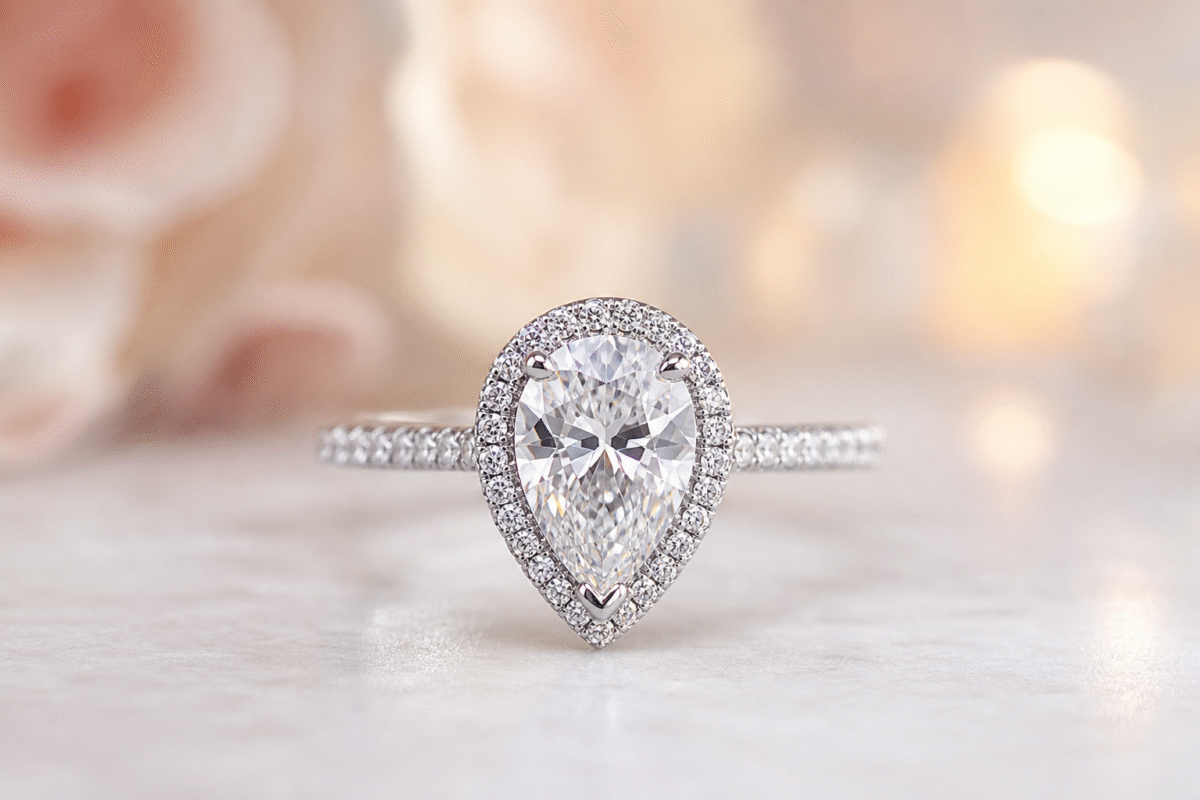
Halo settings surround the moonstone with smaller accent stones (often diamonds), adding protection while amplifying the center stone’s visual presence.
Metal Pairings
The metal choice dramatically affects a moonstone ring’s overall aesthetic:
- Rose gold: Creates warmth that enhances peach and rainbow moonstones—perfect for romantic, feminine designs
- White gold or platinum: Provides cool contrast that emphasizes blue adularescence—ideal for modern, elegant styles
- Yellow gold: Offers vintage warmth that complements all moonstone varieties—suits bohemian and Art Nouveau designs
- Mixed metals: Two-tone designs combining gold and silver create sophisticated, contemporary appeal
Design Inspiration for Moonstone Rings
Celestial and Cosmic Themes
Moonstone’s lunar associations make it natural for celestial-themed designs. Star-studded bands, crescent moon accents, and constellation engravings complement the stone’s ethereal quality. These designs appeal to couples who find meaning in the cosmos and the mysteries of the night sky.
Nature-Inspired Settings
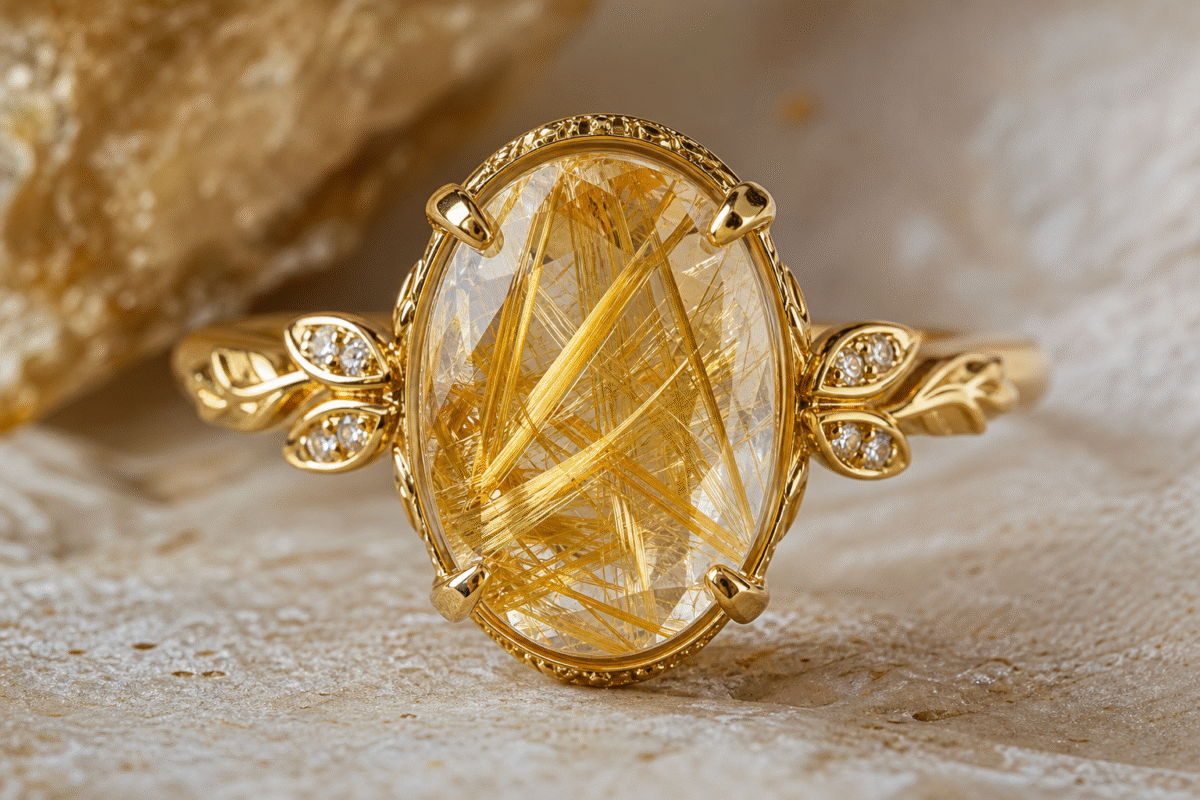
Organic designs featuring leaves, vines, and floral elements amplify moonstone’s connection to the natural world. A moonstone nestled among delicate branch-like prongs or surrounded by leaf-shaped accents creates a woodland fairy-tale aesthetic. For more nature-inspired options, explore our guide to moss agate rings.
Vintage and Art Nouveau Styles
Moonstone enjoyed peak popularity during the Art Nouveau era, making vintage-inspired settings historically authentic. Intricate filigree, flowing organic lines, and oxidized silver details create rings that feel like heirloom treasures. These designs honor moonstone’s artistic heritage while remaining thoroughly wearable.
Modern Minimalist
Clean, geometric settings let moonstone’s natural beauty speak for itself. Simple bezel settings on sleek bands, tension-set designs, and asymmetric placements reflect contemporary design philosophy. These rings prove that moonstone doesn’t need elaborate settings to captivate.
Caring for Your Moonstone Engagement Ring
Daily Wear Guidelines
Moonstone requires mindful care to maintain its beauty over years of daily wear:
- Remove before heavy physical activity, gardening, or cleaning
- Avoid exposure to harsh chemicals, including household cleaners and chlorine
- Put your ring on last—after applying lotions, perfumes, and cosmetics
- Avoid sudden temperature changes that can cause internal stress fractures
- Be mindful of impacts—moonstone has two cleavage planes that make it vulnerable to sharp blows
Cleaning Your Moonstone Ring
Clean moonstone gently with lukewarm water, mild soap, and a soft brush. Never use ultrasonic or steam cleaners—these can damage the stone’s internal structure. Pat dry with a soft, lint-free cloth. For stubborn buildup around settings, a soft toothbrush works well.
Long-Term Storage
Store moonstone rings separately from harder gemstones that could scratch the surface. A soft cloth pouch or individual compartment in a jewelry box prevents contact damage. Unlike pearls, moonstones don’t require humidity—just protection from abrasion.
Moonstone Engagement Ring Styling Tips
Moonstone’s versatility allows beautiful pairing with various jewelry styles. Stack a moonstone engagement ring with a simple diamond band for contrast, or pair it with an opal wedding ring for a dreamy, iridescent combination. For those who love color-changing stones, an alexandrite ring makes a stunning companion piece.
Consider your wardrobe and personal style when choosing your moonstone ring design. Bohemian dressers gravitate toward ornate, nature-inspired settings. Minimalists prefer clean bezels on simple bands. Vintage lovers choose Art Nouveau filigree. The beauty of moonstone is that it complements virtually any aesthetic.
Frequently Asked Questions
Is moonstone durable enough for an engagement ring worn daily?
Moonstone rates 6-6.5 on the Mohs hardness scale, making it softer than sapphire or diamond but suitable for daily wear with proper precautions. Choose protective settings like bezels, remove during heavy activities, and avoid impacts. Many moonstone rings last decades with mindful care. Consider having a simpler band for high-activity days.
How much does a moonstone engagement ring cost?
Moonstone engagement rings typically range from $200 for simple sterling silver designs to $5,000+ for premium blue moonstone in platinum settings with diamond accents. Most couples find beautiful options between $500 and $2,000. Moonstone offers exceptional value compared to diamonds of similar visual impact.
What does a moonstone engagement ring symbolize?
Moonstone symbolizes new beginnings, intuition, inner growth, and emotional harmony—all qualities that resonate with the commitment of engagement. Its connection to lunar cycles represents the natural rhythms of a relationship, while its ethereal glow symbolizes the mystery and depth of love that grows over time.
Can moonstone be paired with other gemstones in a ring?
Absolutely. Moonstone pairs beautifully with diamonds (for contrast), sapphires (complementary hardness and color), opals (shared iridescent quality), and rose quartz (romantic pink tones). Accent stones should be set to protect the softer moonstone from contact damage.
How can I tell if a moonstone is genuine?
Genuine moonstone displays adularescence—a floating, billowy glow that moves as you rotate the stone. Imitations often show a static, painted-on sheen. Real moonstone also has a characteristic layered internal structure visible under magnification. For valuable purchases, request certification from GIA or another accredited gemological laboratory.
Discover Your Moonstone Ring
A moonstone engagement ring is a choice that speaks to the soul—a declaration that your love is as mysterious, beautiful, and ever-changing as moonlight itself. Whether you’re drawn to the serene blue glow of classic moonstone or the dramatic flashes of rainbow varieties, this gemstone transforms an engagement ring into a piece of wearable poetry.
Ready to find your perfect moonstone ring? Browse ETYGEM’s gemstone ring collection featuring handcrafted moonstone designs in protective settings built for daily wear. Each piece celebrates the stone’s natural magic while ensuring lasting beauty. Explore our full moonstone ring guide for even more inspiration.