

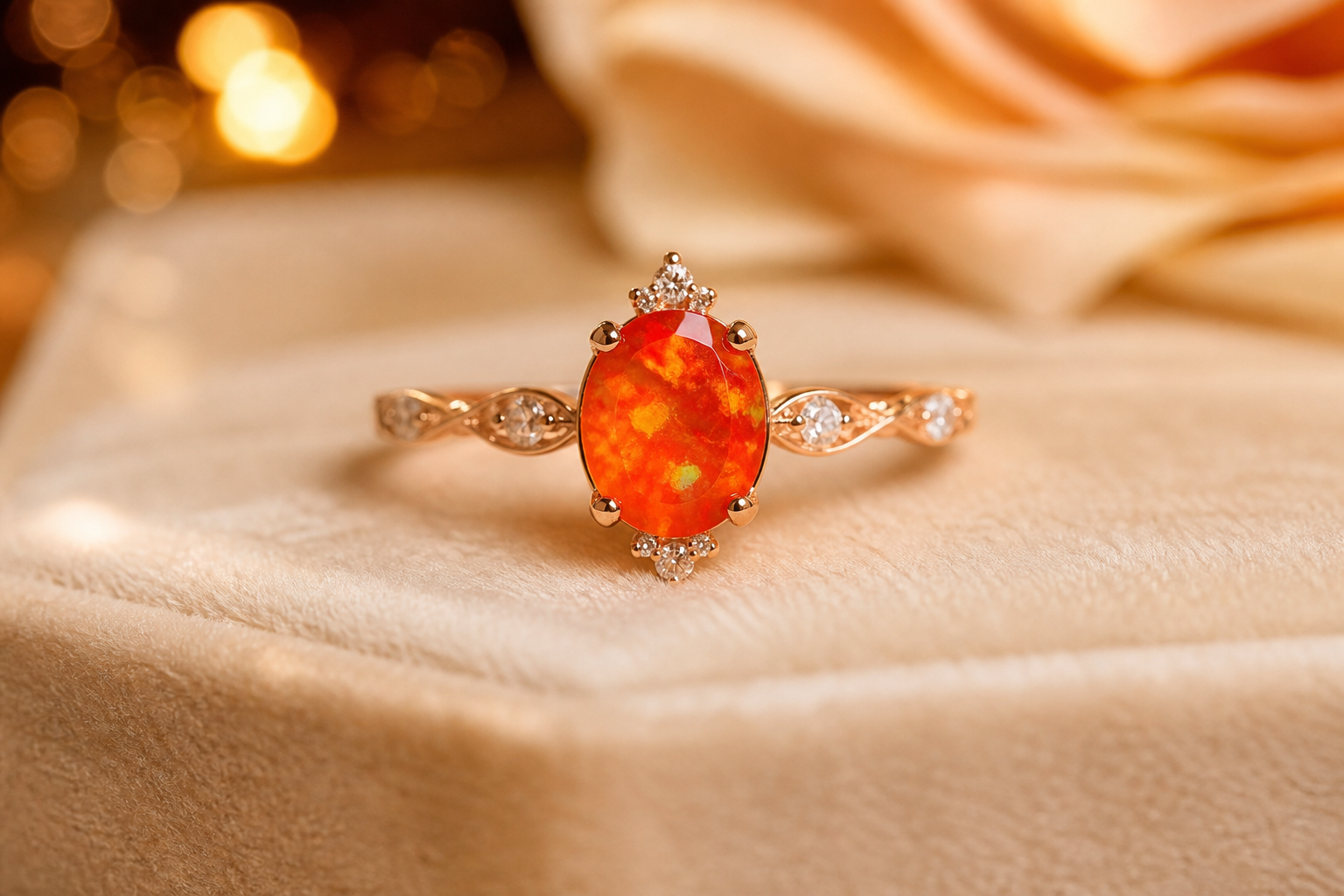
What Is a Fire Opal?
Fire opals are among the most visually striking gemstones on earth. Unlike common opals with their milky play-of-color, fire opals display a warm, transparent body color ranging from vivid yellow to deep cherry red. Some show flashes of spectral color within their fiery base, while others captivate with pure, intense warmth.
For couples seeking something beyond the conventional diamond, a fire opal engagement ring offers a bold statement of individuality. These gems have been treasured since the Aztec civilization, who called them “the stone of the bird of paradise” for their resemblance to flames.
Why Choose a Fire Opal Engagement Ring?
Visual Impact
No other gemstone captures light quite like a fire opal. The warm orange-red glow seems to come from within the stone itself, creating a living, breathing quality that diamonds simply cannot replicate. When you buy a fire opal engagement ring, you are choosing a gem that commands attention without needing facets to sparkle.
Symbolism
- Passion: The fiery colors represent deep love and desire
- Creativity: Associated with artistic expression and inspiration
- Transformation: Symbolizes personal growth and new chapters
- Energy: Believed to bring vitality and enthusiasm to the wearer
Uniqueness
Every fire opal is genuinely one-of-a-kind. The internal color patterns, transparency levels, and exact hue vary from stone to stone. Your ring will never have an identical twin sitting in someone else jewelry box.
Understanding Fire Opal Durability
This is the most important consideration when choosing a fire opal for daily wear. Let us be straightforward about what you are working with:
Hardness and Toughness
- Mohs hardness: 5.5-6.5 (softer than quartz at 7)
- Toughness: Fair to good — can chip if struck sharply
- Water content: 3-10% water trapped in the silica structure
What This Means for Daily Wear
A fire opal engagement ring requires more care than a diamond or sapphire ring. It is not fragile — people wear opal rings daily for decades — but it demands awareness:
- Remove before manual labor, sports, or heavy lifting
- Avoid sudden temperature changes (hot to cold quickly)
- Keep away from harsh chemicals and ultrasonic cleaners
- Choose a protective setting (bezel or halo) over exposed prongs
Protective Setting Options
The right setting makes all the difference for opal durability:
- Bezel setting: Metal surrounds the entire stone edge — maximum protection
- Halo setting: Surrounding smaller stones absorb impacts before reaching the opal
- Low-profile mount: Keeps the stone close to the finger, reducing snag risk
- Cathedral setting: Arched metal supports protect the stone sides
How to Select the Perfect Fire Opal
Color
Fire opals range across a warm spectrum:
- Cherry red: The most prized and valuable — deep, saturated red
- Orange-red: Classic fire opal color, vibrant and eye-catching
- Tangerine orange: Bright and cheerful, excellent for statement pieces
- Golden yellow: Subtle warmth, pairs beautifully with yellow gold
Clarity and Transparency
- Transparent: Most valuable — you can see through the stone clearly
- Semi-transparent: Light passes through with some diffusion
- Translucent: Glows from within but is not see-through
Play-of-Color
Some fire opals display play-of-color (spectral flashes) in addition to their body color. These are rarer and more expensive, but a fire opal without play-of-color is still stunning — the body color alone is the main attraction.
Origin
- Mexico: The classic source — produces the finest transparent fire opals
- Ethiopia: Newer source with excellent quality and competitive pricing
- Brazil: Known for deeper red specimens
Price Guide for Fire Opal Engagement Rings
Fire opals offer excellent value compared to many traditional engagement ring stones:
- $100-$400: Silver settings with quality 1-2ct fire opals
- $400-$1,000: 14K gold settings with vivid, well-cut stones
- $1,000-$3,000: Premium transparent Mexican fire opals in designer settings
- $3,000+: Exceptional specimens with play-of-color in platinum or custom designs
For comparison, a diamond of similar visual impact would cost 3-10x more. Fire opals give you a show-stopping ring at a price that leaves room in your budget.
Caring for Your Fire Opal Ring
Daily Habits
- Put your ring on last (after lotions, perfume, hairspray)
- Remove before washing dishes, showering, or swimming
- Take off during exercise or any activity with impact risk
- Store in a soft cloth pouch away from other jewelry
Cleaning
- Use only lukewarm water and mild soap
- Gently wipe with a soft, damp cloth
- Never use ultrasonic or steam cleaners
- Avoid soaking — brief contact with water only
Long-Term Care
- Store in a humid environment (not airtight) to prevent dehydration
- Some jewelers recommend occasional light oiling with mineral oil
- Have settings checked every 6-12 months
- Consider insurance for high-value pieces
Fire Opal vs Other Engagement Ring Alternatives
- Fire Opal vs Diamond: Opal offers unique warmth and individuality; diamond offers maximum durability. Different priorities entirely.
- Fire Opal vs Sapphire: Sapphire (9 Mohs) is much harder but lacks opal mystical glow. Sapphire is safer for rough daily wear.
- Fire Opal vs Morganite: Both are softer stones. Morganite offers pink sparkle; fire opal offers warm, glowing intensity.
- Fire Opal vs Moss Agate: Moss agate (6.5-7 Mohs) is slightly harder. Both offer nature-inspired uniqueness in different color palettes.
Is a Fire Opal Right for You?
A fire opal engagement ring is perfect if you:
- Value uniqueness over convention
- Are willing to treat your ring with care
- Love warm colors and organic beauty
- Want a conversation-starting piece
- Appreciate gemstone symbolism and history
It may not be ideal if you work extensively with your hands, prefer zero-maintenance jewelry, or want something you never need to remove.
Find Your Fire Opal Ring
Ready to explore? Browse our curated selection of opal engagement rings featuring hand-selected fire opals in protective settings designed for daily wear.
Each ring comes with a detailed care guide, sizing assistance, and our quality guarantee. Find the flame that speaks to your love story.
Shop Our Opal Ring Collection →
Frequently Asked Questions
Are fire opal engagement rings durable enough for daily wear?
Fire opals rate 5.5-6.5 on the Mohs hardness scale, making them softer than diamonds or sapphires. They can be worn daily with proper care — use a protective bezel or halo setting, remove before heavy work, and avoid sudden temperature changes. Many people wear opal rings for decades with mindful habits.
How much does a fire opal engagement ring cost?
Fire opal engagement rings range from $100-$400 for silver settings with 1-2ct stones, $400-$1,000 for 14K gold with vivid stones, $1,000-$3,000 for premium Mexican fire opals in designer settings, and $3,000+ for exceptional specimens with play-of-color. They offer 3-10x better value than diamonds of similar visual impact.
What is the best setting for a fire opal engagement ring?
A bezel setting offers maximum protection by surrounding the entire stone edge with metal. Halo settings with surrounding smaller stones absorb impacts, low-profile mounts reduce snag risk, and cathedral settings protect the stone sides. Avoid tall prong settings that leave the opal exposed.
Where do the best fire opals come from?
Mexico is the classic source producing the finest transparent fire opals. Ethiopia offers excellent quality at competitive prices and is a newer source. Brazil is known for deeper red specimens. Mexican fire opals are generally considered the most valuable due to their superior transparency and color saturation.
How do you clean a fire opal ring?
Clean fire opal rings with lukewarm water and mild soap only. Gently wipe with a soft, damp cloth. Never use ultrasonic or steam cleaners, and avoid soaking. Store in a soft cloth pouch in a slightly humid environment to prevent dehydration of the stone’s natural water content.
{“@context”: “https://schema.org”, “@type”: “FAQPage”, “mainEntity”: [{“@type”: “Question”, “name”: “Are fire opal engagement rings durable enough for daily wear?”, “acceptedAnswer”: {“@type”: “Answer”, “text”: “Fire opals rate 5.5-6.5 on the Mohs hardness scale, making them softer than diamonds or sapphires. They can be worn daily with proper care — use a protective bezel or halo setting, remove before heavy work, and avoid sudden temperature changes. Many people wear opal rings for decades with mindful habits.”}}, {“@type”: “Question”, “name”: “How much does a fire opal engagement ring cost?”, “acceptedAnswer”: {“@type”: “Answer”, “text”: “Fire opal engagement rings range from $100-$400 for silver settings with 1-2ct stones, $400-$1,000 for 14K gold with vivid stones, $1,000-$3,000 for premium Mexican fire opals in designer settings, and $3,000+ for exceptional specimens with play-of-color. They offer 3-10x better value than diamonds of similar visual impact.”}}, {“@type”: “Question”, “name”: “What is the best setting for a fire opal engagement ring?”, “acceptedAnswer”: {“@type”: “Answer”, “text”: “A bezel setting offers maximum protection by surrounding the entire stone edge with metal. Halo settings with surrounding smaller stones absorb impacts, low-profile mounts reduce snag risk, and cathedral settings protect the stone sides. Avoid tall prong settings that leave the opal exposed.”}}, {“@type”: “Question”, “name”: “Where do the best fire opals come from?”, “acceptedAnswer”: {“@type”: “Answer”, “text”: “Mexico is the classic source producing the finest transparent fire opals. Ethiopia offers excellent quality at competitive prices and is a newer source. Brazil is known for deeper red specimens. Mexican fire opals are generally considered the most valuable due to their superior transparency and color saturation.”}}, {“@type”: “Question”, “name”: “How do you clean a fire opal ring?”, “acceptedAnswer”: {“@type”: “Answer”, “text”: “Clean fire opal rings with lukewarm water and mild soap only. Gently wipe with a soft, damp cloth. Never use ultrasonic or steam cleaners, and avoid soaking. Store in a soft cloth pouch in a slightly humid environment to prevent dehydration of the stone’s natural water content.”}}]}