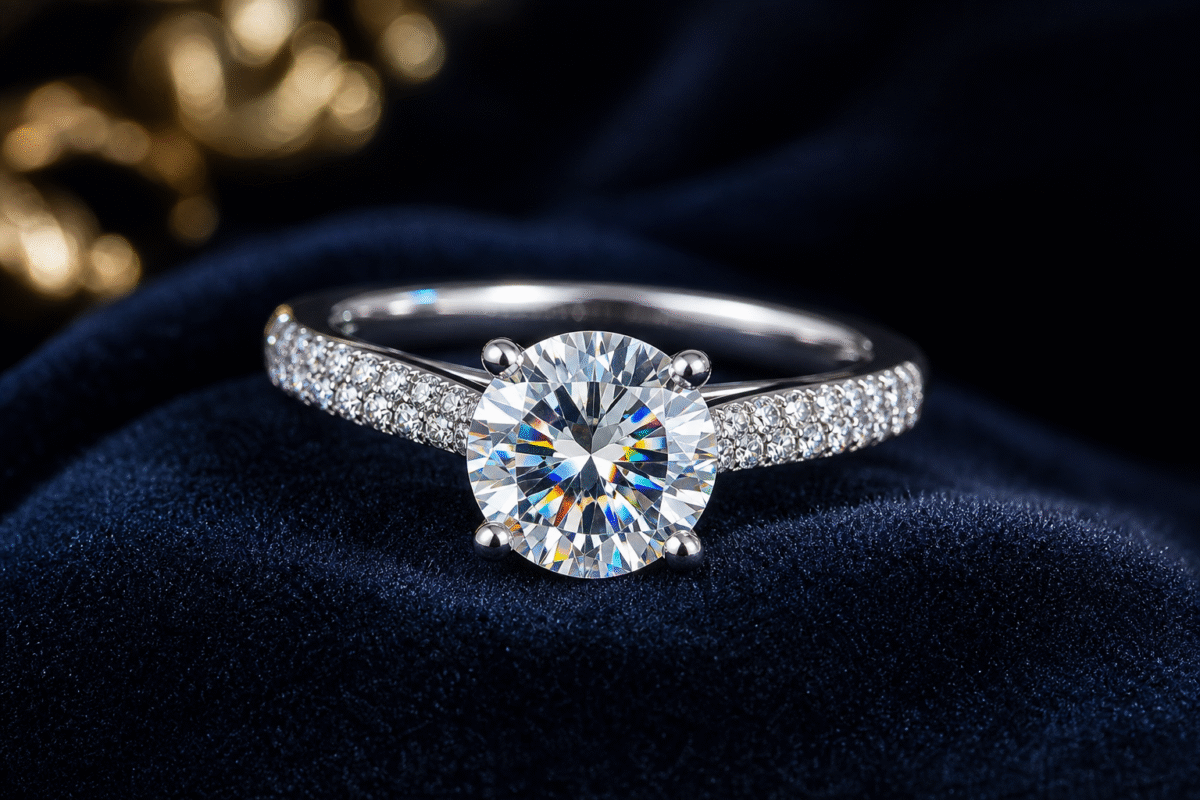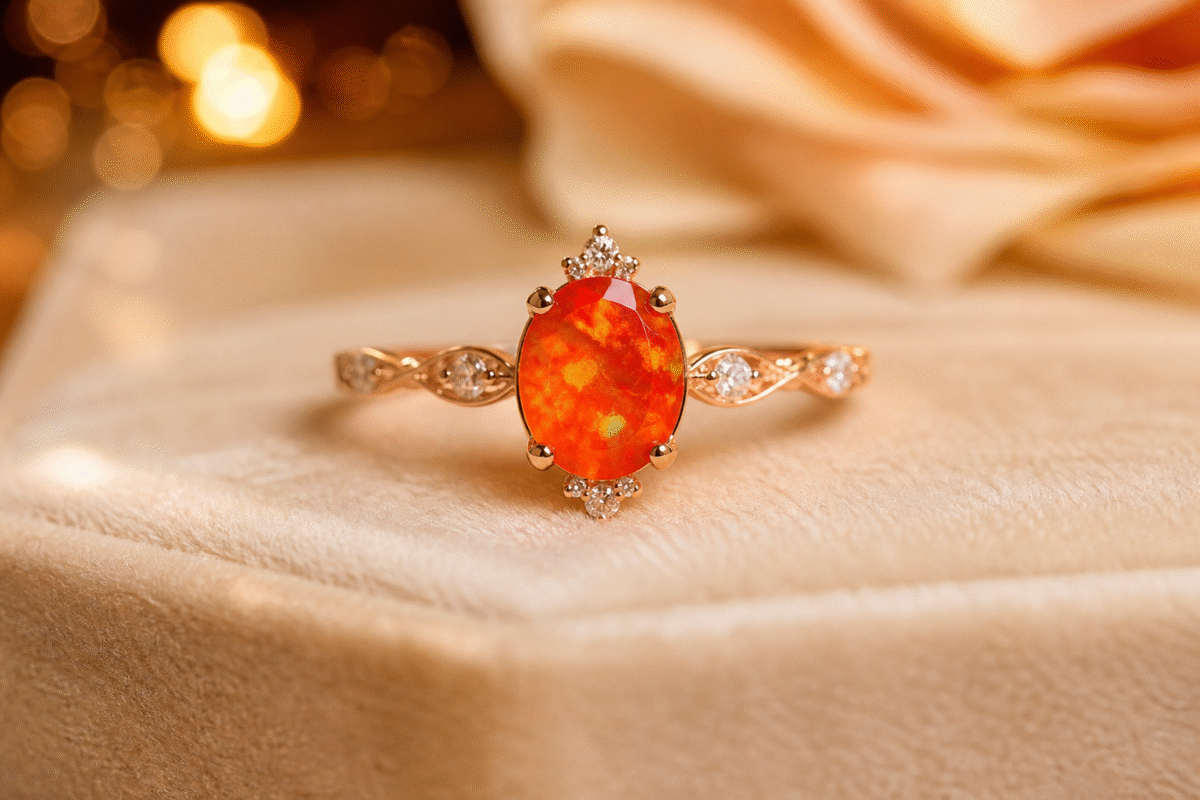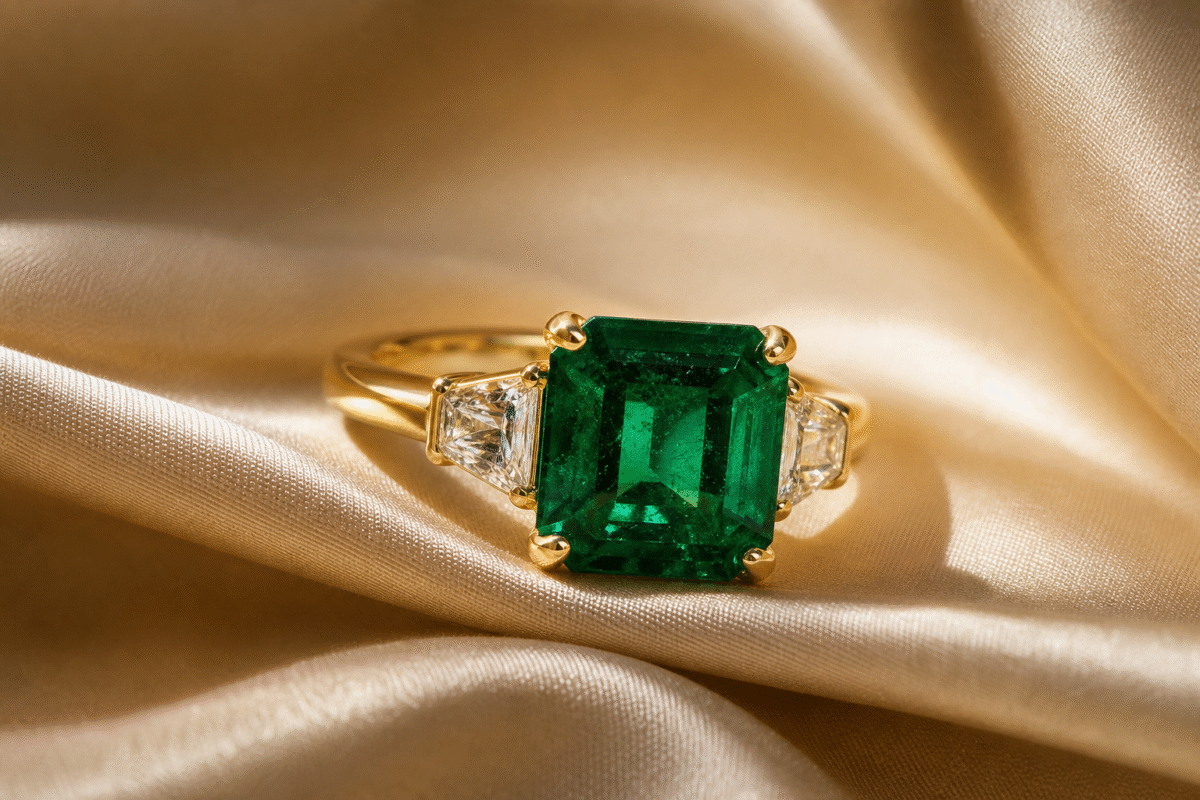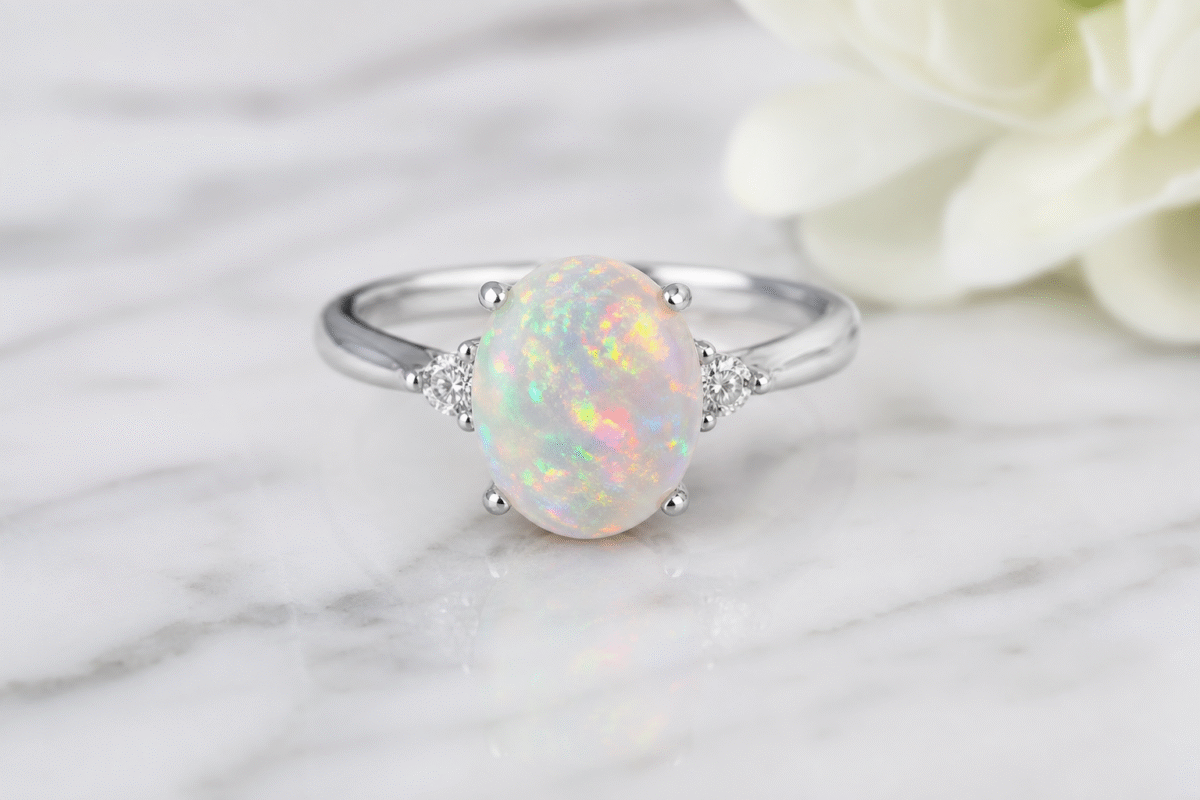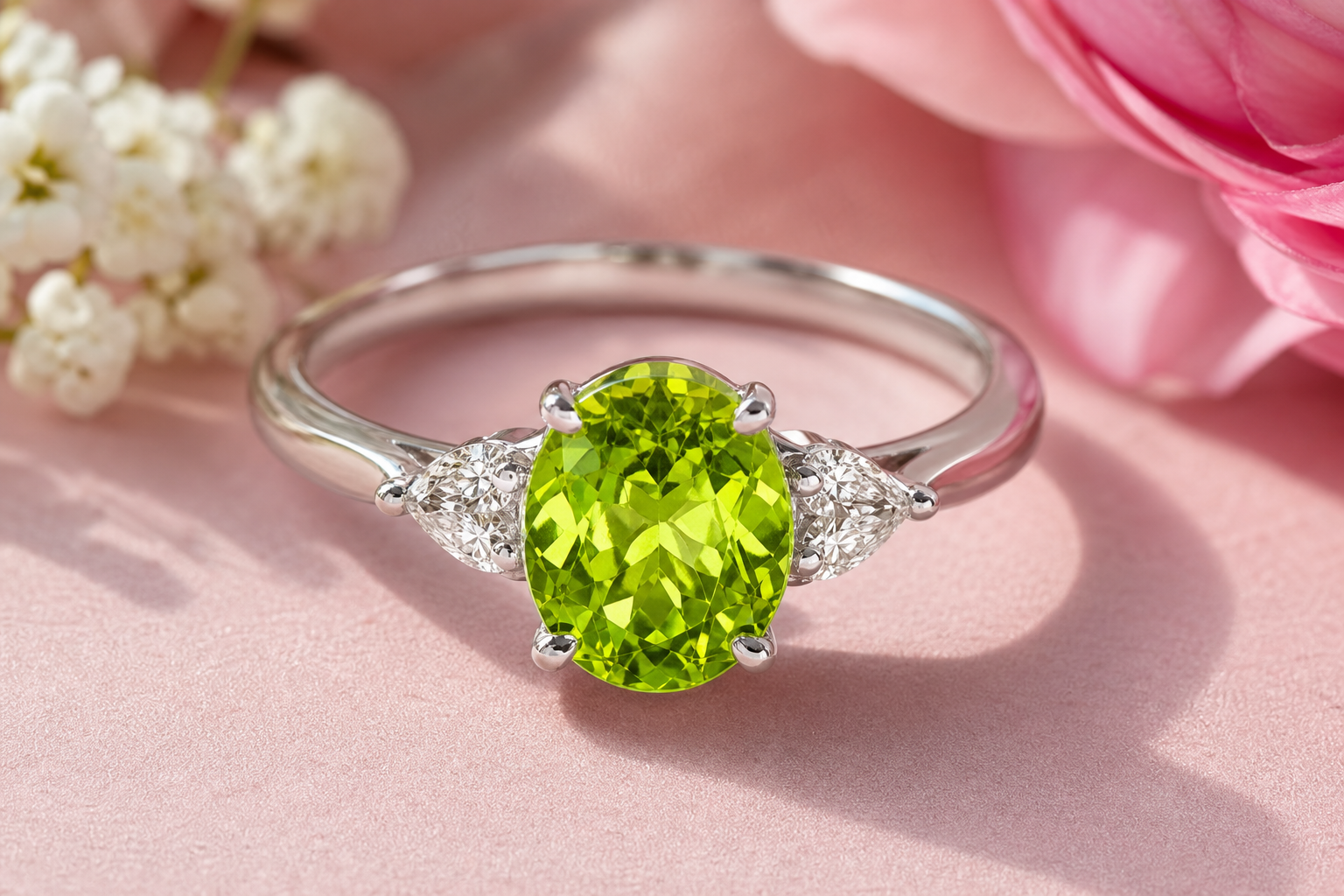
Peridot offer something truly rare in the gemstone world — a vivid, lime-green color that comes from iron within the crystal structure rather than trace impurities. As one of the few gemstones that occurs in only one color (green, ranging from yellow-green to olive to brownish-green), this olive gem delivers a distinctive brightness that sets it apart from emerald, tourmaline, and other green stones.
The Gemological Institute of America (GIA) classifies peridot as the gem-quality variety of the mineral olivine, with a chemical composition of (Mg,Fe)₂SiO₄. Its characteristic green comes from iron — unlike emerald (chromium) or tsavorite (vanadium) — giving it a unique warmth and liveliness that has earned it the nickname “evening this green beryl” for its ability to glow under artificial light.
Why Choose a Peridot Engagement Ring?
Distinctive Color That Stands Out
Peridot’s yellow-green to olive-green hue is unmistakable. While emeralds offer deep, cool greens and moss agate provides organic patterns, this green stone delivers a bright, cheerful green with golden undertones that catches light beautifully. The finest specimens display a pure grass-green without brown or yellow overtones — a color no other gemstone replicates exactly.
According to the International Gem Society (IGS), peridot’s strong birefringence (0.036) creates a distinctive doubling effect visible in larger stones — you can see doubled facet edges when looking through the stone, adding visual depth and interest.
Excellent Durability for Daily Wear
Peridot rates 6.5–7 on the Mohs hardness scale with good toughness, placing it in the same practical range as moss agate and garnet. Key durability specs:
- Mohs hardness: 6.5–7
- Toughness: Fair to good
- Cleavage: Poor (meaning it doesn’t split easily along crystal planes)
- Refractive index: 1.654–1.690
- Specific gravity: 3.27–3.37
This makes peridot suitable for engagement ring wear with appropriate care — comparable to tanzanite and slightly below sapphire in practical durability.
Rich History and Symbolism
Peridot carries thousands of years of symbolic meaning:
- Ancient Egypt: Called the “gem of the sun,” mined on Zabargad Island in the Red Sea since 1500 BCE
- Medieval Europe: Believed to ward off evil spirits and nightmares when set in gold
- Hawaiian tradition: Considered the tears of the goddess Pele, found in volcanic rock
- Modern symbolism: Associated with renewal, growth, prosperity, and marital happiness
- August birthstone: The primary birthstone for August, making it especially meaningful for August-born partners
Exceptional Value
Peridot offers remarkable beauty at accessible prices compared to other green gemstones:
- Commercial quality (1–3 ct): $50–$200 per carat
- Fine quality (1–3 ct): $200–$500 per carat
- Exceptional quality (3+ ct): $400–$1,500 per carat
- Rare large stones (10+ ct, fine color): $1,000–$5,000+ per carat
Compare this to emerald ($1,000–$50,000/ct for fine quality) and the value proposition becomes clear. A stunning 2-carat peridot engagement ring in 14k gold typically costs $800–$2,500 — a fraction of comparable the gemstone or sapphire rings.
Selecting the Perfect Peridot for Your Ring
Color: The Primary Value Factor
The most desirable peridot color is a rich, saturated green without excessive yellow or brown modifiers. The American Gem Society grades the August birthstone color on three axes:
- Best: Pure green to slightly yellowish-green, medium tone, vivid saturation
- Good: Yellow-green with moderate saturation, medium-light to medium tone
- Commercial: Olive or brownish-green, lighter saturation
Larger peridots (over 3 carats) tend to display richer, more saturated color — one reason bigger stones command premium prices beyond simple size scaling.
Clarity Expectations
Fine peridot should be eye-clean — free of visible inclusions when viewed without magnification. Common inclusions include:
- Tiny black chromite crystals (called “lily pads” when surrounded by stress fractures)
- Needle-like inclusions of ludwigite
- Disk-shaped inclusions
Unlike emerald, where inclusions are expected and accepted, peridot is available eye-clean in most sizes, so there’s no reason to compromise on clarity for engagement ring stones.
Best Cuts for Peridot Engagement Rings
Peridot’s strong birefringence means cut orientation matters significantly:
- Round brilliant: Maximizes sparkle and light return — classic engagement ring choice
- Oval: Elongates the finger and showcases color beautifully
- Cushion: Vintage appeal with excellent color saturation
- Emerald cut: Clean, sophisticated look that highlights peridot’s clarity
- Pear: Dramatic and unique — makes a statement
Best Settings for Peridot Engagement Rings
Protective Settings (Recommended)
Given peridot’s moderate hardness, protective settings extend the ring’s lifespan:
- Bezel setting: Metal rim fully surrounds the stone — maximum protection, modern aesthetic
- Half-bezel: Partial metal rim protects vulnerable edges while showing more of the stone
- Low-profile prong: Keeps the stone close to the finger, reducing snag and impact risk
- Halo setting: Surrounding accent stones create a protective buffer while adding visual size
Metal Pairing Guide
The metal choice dramatically affects peridot’s appearance:
- Yellow gold: Enhances peridot’s warm golden-green undertones — the most traditional and harmonious pairing
- Rose gold: Creates beautiful warm contrast, romantic and contemporary
- White gold/platinum: Provides cool contrast that makes the green appear more vivid and pure
- Sterling silver: Budget-friendly option, though less durable for lifetime daily wear
Accent Stone Options
Peridot pairs beautifully with various accent stones:
- Diamonds: Classic sparkle contrast that elevates the peridot’s color
- White sapphires: Budget-friendly diamond alternative with clean brilliance
- Moissanite: Maximum fire and brilliance at accessible prices
- Amethyst: Purple and green create a striking complementary color combination
Caring for a Peridot Engagement Ring
Proper care ensures your peridot engagement ring remains beautiful for decades. Research published in Gems & Gemology confirms these maintenance guidelines:
Daily Wear Practices
- Remove before exercise, gardening, cleaning, or any activity with impact risk
- Apply lotions, perfumes, and sunscreen before putting on your ring
- Remove before cooking — acids (citrus, vinegar) can etch peridot’s surface over time
- Take off before bed to prevent accidental impacts during sleep
Cleaning Your Peridot Ring
- Use warm (never hot) water with mild dish soap
- Gently clean with a soft-bristle toothbrush
- Rinse thoroughly and pat dry with a lint-free cloth
- Clean every 1–2 weeks for best sparkle
- Never use: Ultrasonic cleaners, steam cleaners, or acidic solutions
- Avoid: Sudden temperature changes — peridot can fracture from thermal shock
Storage and Long-Term Care
- Store in a soft cloth pouch or lined jewelry box, separate from harder stones
- Have prongs inspected every 6–12 months by a jeweler
- Consider professional cleaning annually
- If scratches develop over years, professional re-polishing can restore the finish
Peridot vs Other Green Engagement Ring Stones
How does peridot compare to other popular green gemstone choices?
- Peridot vs Emerald: Emerald is harder (7.5–8) but more brittle; peridot is more affordable and available eye-clean. Emerald offers deeper green while peridot provides brighter, warmer green.
- Peridot vs Moss Agate: Moss agate offers unique organic patterns and superior toughness; peridot provides transparent brilliance and faceted sparkle. Similar hardness range.
- Peridot vs Green Sapphire: Sapphire is significantly harder (Mohs 9) and more durable, but green sapphires are rarer and more expensive. Peridot offers better value for vivid green color.
- Peridot vs Tsavorite Garnet: Tsavorite is harder (7–7.5) with richer green color, but significantly more expensive and harder to find in larger sizes.
Who Should Choose a Peridot Engagement Ring?
A peridot engagement ring is ideal for:
- August-born partners who want their birthstone in their engagement ring
- Couples who love bright, cheerful green over deep, dark green
- Budget-conscious buyers who want a genuine, natural gemstone with excellent clarity
- Nature lovers drawn to peridot’s volcanic origins and “gem of the sun” heritage
- Anyone seeking a distinctive ring that stands apart from conventional choices
- Partners who appreciate historical significance — peridot has been treasured for 3,500+ years
Explore our collection of green including opal rings and moss agate rings for more nature-inspired alternatives.
Frequently Asked Questions
Is peridot durable enough for an engagement ring?
Peridot rates 6.5–7 on the Mohs hardness scale with fair to good toughness, making it suitable for engagement ring wear with mindful habits. It’s comparable to tanzanite and garnet in durability. Choose a protective setting (bezel or low-profile), remove during physical activities, and avoid impacts against hard surfaces. Many people wear this chrysolite engagement rings successfully for decades with proper care.
How much does a peridot engagement ring cost?
A quality peridot engagement ring typically costs $500–$2,500 depending on stone size, quality, and setting metal. A fine 1.5–2 carat this green stone in 14k gold with diamond accents averages $1,000–$1,800. Compare this to emerald engagement rings ($3,000–$15,000+) or diamond rings (average $5,500), and this olive gem offers exceptional value for a beautiful, natural gemstone ring.
Will peridot fade or change color over time?
Peridot’s color is remarkably stable — it won’t fade from light exposure or normal wear. Unlike some gemstones that can bleach in sunlight (kunzite, amethyst), the August birthstone’s iron-based color is permanent. The only color-related concern is that prolonged exposure to strong acids can etch the surface, but this is easily avoided by removing the ring during cleaning or cooking with acidic ingredients.
What’s the best metal color for a peridot engagement ring?
Yellow gold is the most traditional and harmonious pairing — it enhances peridot’s warm golden-green undertones and creates a cohesive, sun-kissed aesthetic. White gold or platinum makes the green appear cooler and more vivid through contrast. Rose gold adds romantic warmth. The best choice depends on personal style and skin tone: warm skin tones typically favor yellow or rose gold, while cool skin tones complement white gold.
Can peridot be worn every day without damage?
Yes, with appropriate precautions. Peridot can handle daily wear in a protective setting if you remove it during high-risk activities (exercise, cleaning, cooking, gardening). The main risks are impact damage and surface scratching from harder materials. A bezel setting significantly reduces these risks. Plan for professional inspection every 6–12 months and potential re-polishing every 5–10 years if surface wear accumulates.
{“@context”:”https://schema.org”,”@type”:”FAQPage”,”mainEntity”:[{“@type”:”Question”,”name”:”Is peridot durable enough for an engagement ring?”,”acceptedAnswer”:{“@type”:”Answer”,”text”:”Peridot rates 6.5–7 on the Mohs hardness scale with fair to good toughness, making it suitable for engagement ring wear with mindful habits. Choose a protective setting, remove during physical activities, and avoid impacts against hard surfaces.”}},{“@type”:”Question”,”name”:”How much does a peridot engagement ring cost?”,”acceptedAnswer”:{“@type”:”Answer”,”text”:”A quality peridot engagement ring typically costs $500–$2,500 depending on stone size, quality, and setting metal. Compare this to emerald ($3,000–$15,000+) or diamond rings (average $5,500), and peridot offers exceptional value.”}},{“@type”:”Question”,”name”:”Will peridot fade or change color over time?”,”acceptedAnswer”:{“@type”:”Answer”,”text”:”Peridot’s color is remarkably stable — it won’t fade from light exposure or normal wear. Its iron-based color is permanent. The only concern is that prolonged exposure to strong acids can etch the surface.”}},{“@type”:”Question”,”name”:”What’s the best metal color for a peridot engagement ring?”,”acceptedAnswer”:{“@type”:”Answer”,”text”:”Yellow gold is the most traditional and harmonious pairing — it enhances peridot’s warm golden-green undertones. White gold makes the green appear cooler and more vivid. Rose gold adds romantic warmth. The best choice depends on personal style and skin tone.”}},{“@type”:”Question”,”name”:”Can peridot be worn every day without damage?”,”acceptedAnswer”:{“@type”:”Answer”,”text”:”Yes, with appropriate precautions. Peridot can handle daily wear in a protective setting if you remove it during high-risk activities. Plan for professional inspection every 6–12 months and potential re-polishing every 5–10 years.”}}]}
Shop Green Gemstone Rings at ETYGEM
While we curate our peridot collection, explore these stunning green gemstone alternatives:
- Emerald Rings — Deep green elegance in 925 sterling silver
- Moss Agate Rings — Nature-inspired green patterns, each stone unique
- All Engagement Rings — Find your perfect ring from our full collection
Every ETYGEM ring is handcrafted with genuine gemstones and ships free worldwide.