Blue Sapphire Engagement Ring: The Complete 2025 Buying Guide
Sapphire rings—these two words evoke images of regal beauty, sophistication, and enduring charm. For centuries, sapphires have been cherished as one of the most coveted gemstones, adorning the fingers of royalty, celebrities, and everyday jewelry lovers alike. Whether you’re searching for an engagement ring, a statement piece, or a meaningful gift, a blue sapphire ring offers a perfect blend of durability, brilliance, and symbolism. At ETYGEM, our certified gemologists have compiled this comprehensive guide to help you make an informed purchase.
Why Choose a Blue Sapphire Engagement Ring?
A Gemstone Steeped in History
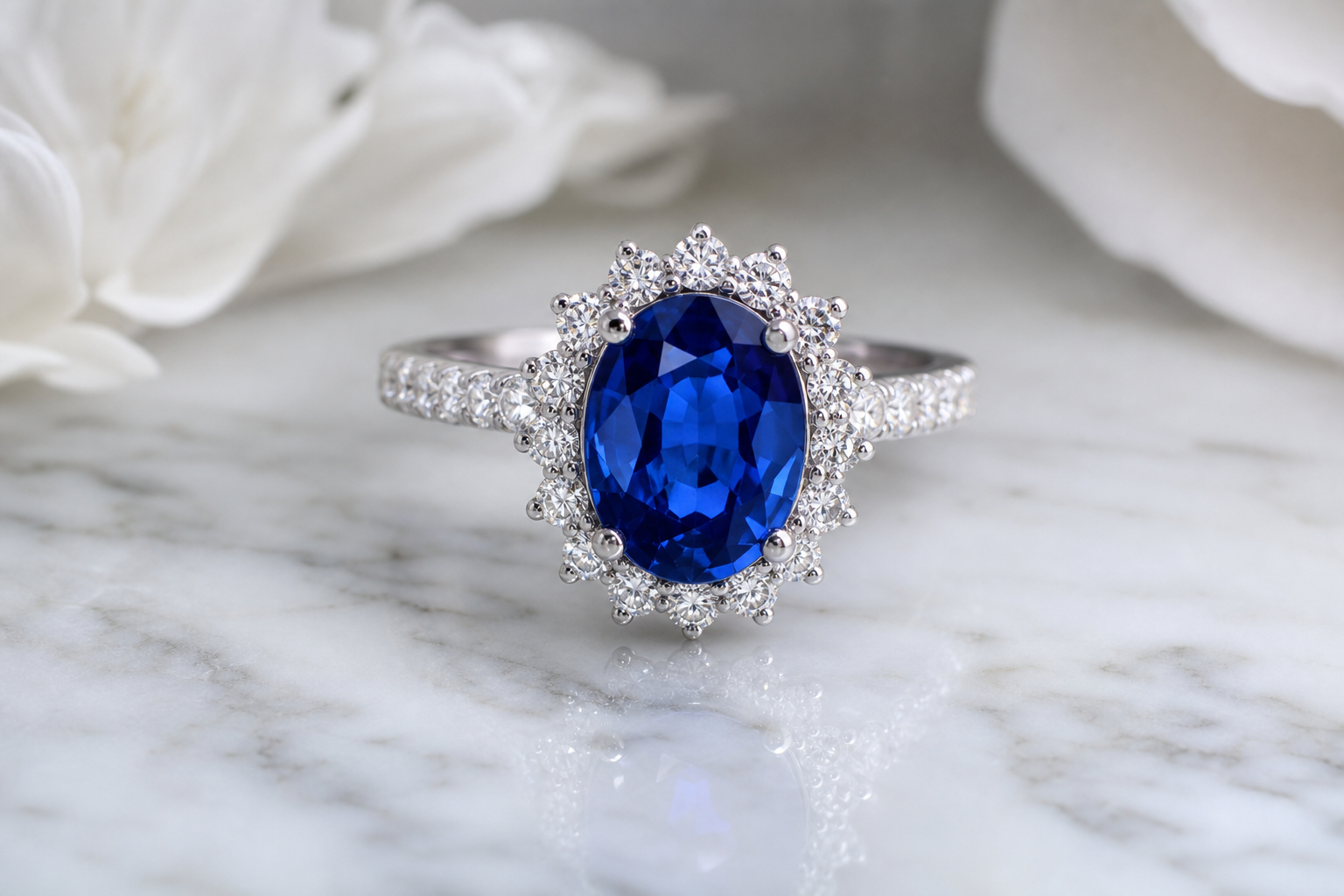
Sapphires have long been associated with royalty, wisdom, and divine favor. Ancient Persians believed the sky was painted blue by the reflection of sapphires, while medieval clergy wore them to symbolize heaven. Perhaps the most famous sapphire ring in modern times is the engagement ring worn by Princess Diana and later by Kate Middleton—a stunning 12-carat blue sapphire surrounded by diamonds.
Exceptional Durability
Ranking 9 on the Mohs hardness scale (second only to diamonds), sapphires are highly resistant to scratches, chips, and everyday wear. The Gemological Institute of America (GIA) confirms that sapphires are among the most durable gemstones available, making them an ideal choice for engagement rings that will be worn daily for a lifetime.
Timeless Beauty
Unlike trendy gemstones that may fall out of fashion, blue sapphires have maintained their desirability for thousands of years. Their deep, rich color never fades and their brilliance remains constant over decades of wear. A blue sapphire engagement ring is a truly timeless investment.
Excellent Value
Carat for carat, high-quality blue sapphires typically cost less than equivalent diamonds while offering comparable visual impact. A fine 2-carat blue sapphire might cost $3,000-$8,000, compared to $15,000-$40,000+ for a comparable diamond. This value proposition allows couples to choose larger, more impressive center stones within their budget.
Understanding Blue Sapphire Quality: The Four Factors
1. Color (Most Important)
Color is the single most important quality factor for blue sapphires, accounting for approximately 50-70% of a stone’s value. The ideal blue sapphire displays:
- Hue: Pure blue to slightly violetish-blue (the most desirable range)
- Saturation: Vivid to strong (intense color without appearing dark)
- Tone: Medium to medium-dark (approximately 75-85% tone)
The International Gem Society (IGS) describes the most prized sapphire color as “cornflower blue”—a vivid, medium-toned blue with a velvety quality. Stones that are too dark appear nearly black, while those too light lack visual impact.
2. Clarity
Unlike diamonds, sapphires are not expected to be flawless. Most natural sapphires contain some inclusions (called “silk” when they’re fine rutile needles). The key is that inclusions should not be visible to the naked eye or significantly affect the stone’s transparency and brilliance. Eye-clean sapphires command the best prices in their color grade.
3. Cut
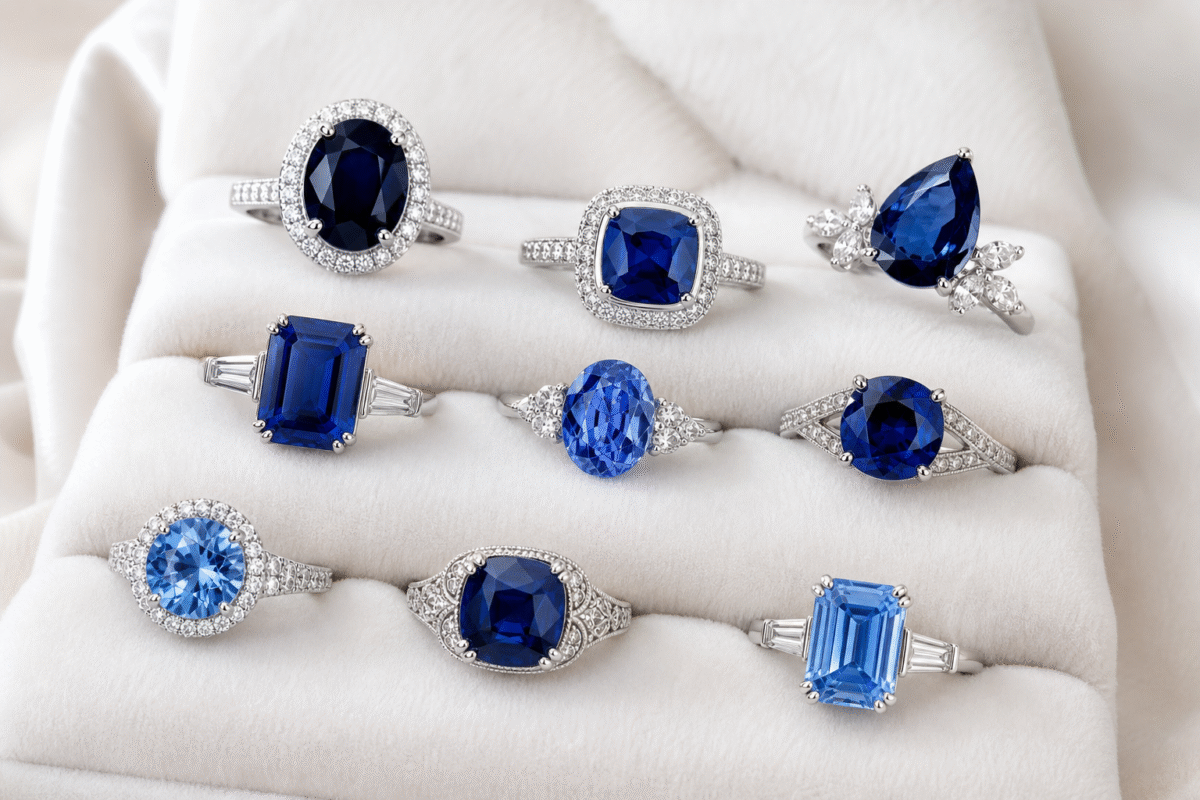
A well-cut sapphire maximizes color display and brilliance while minimizing visible inclusions. Common shapes include:
- Oval: The most popular shape, maximizes carat weight retention
- Cushion: Vintage appeal with excellent color display
- Round: Maximum brilliance, slightly higher price per carat
- Emerald cut: Elegant step-cut that showcases color clarity
- Pear: Distinctive elongated shape (see our pear-shaped ring guide)
Unlike diamonds, sapphires don’t have standardized cut grades. Instead, evaluate whether the stone displays even color, good brilliance, and pleasing proportions without a visible “window” (light area in the center) or excessive “extinction” (dark areas).
4. Carat Weight
Blue sapphires are denser than diamonds, meaning a 1-carat sapphire will appear slightly smaller than a 1-carat diamond. For engagement rings, most buyers choose sapphires between 1-3 carats, which provide excellent visual presence without excessive cost. Sapphires over 5 carats with fine color are rare and command significant premiums.
Sapphire Origins: How Location Affects Value
Kashmir Sapphires
Considered the finest sapphires ever discovered, Kashmir stones display a unique “velvety” or “sleepy” quality caused by microscopic inclusions that scatter light. Mining ceased in the early 1900s, making these stones extremely rare and valuable—often selling for $50,000-$200,000+ per carat at auction.
Myanmar (Burma) Sapphires
Burmese sapphires are prized for their rich, royal blue color with excellent saturation. They represent the second most valued origin after Kashmir and typically display a slightly more vivid, electric blue compared to other sources.
Sri Lanka (Ceylon) Sapphires
Ceylon sapphires are known for their lighter, brighter blue tones—often described as “cornflower blue.” They tend to have excellent clarity and a lively brilliance. Sri Lanka remains one of the most important sapphire sources, producing stones across a wide quality range.
Madagascar Sapphires
A relatively recent source (discovered in the 1990s), Madagascar produces sapphires that rival Ceylon and Burmese stones in quality. They offer excellent value as they don’t carry the premium associated with historical origins.
Montana (USA) Sapphires
American sapphires from Montana display unique blue-green to steel blue colors. While typically lighter in saturation than Asian sources, they appeal to buyers who value domestic origin and unique color characteristics.
Natural vs. Lab-Created Blue Sapphires
| Factor | Natural Sapphire | Lab-Created Sapphire |
|---|---|---|
| Chemical Composition | Al₂O₃ (corundum) | Al₂O₃ (identical) |
| Hardness | 9 Mohs | 9 Mohs |
| Inclusions | Natural silk, crystals, fingerprints | Curved striae, gas bubbles |
| Price (1-2 carat, fine) | $1,000-$10,000+ | $50-$500 |
| Resale Value | Retains/appreciates | Minimal |
| Ethical Concerns | Mining impact (varies) | Lower environmental impact |
| Emotional Value | Millions of years old, unique | Created in weeks |
Both natural and lab-created sapphires are genuine corundum with identical physical properties. The choice between them depends on your priorities—budget, rarity, environmental concerns, and personal values. The American Gem Society (AGS) recommends that sellers clearly disclose whether a sapphire is natural or laboratory-grown.
Understanding Sapphire Treatments
Heat Treatment (Most Common)
Approximately 90-95% of commercial sapphires undergo heat treatment to improve color and clarity. This is a permanent, stable treatment that is universally accepted in the gem trade. Heat-treated sapphires are still considered “natural” and represent excellent value.
Untreated (No-Heat) Sapphires
Unheated sapphires with fine color are rare and command premiums of 20-50% or more over comparable heated stones. Collectors and investors particularly value no-heat sapphires, and they should always come with laboratory certification confirming their untreated status.
Diffusion Treatment
Surface diffusion adds color to the outer layer of a sapphire, while lattice (beryllium) diffusion penetrates deeper. These treatments are less accepted than heat treatment and should be clearly disclosed. Diffusion-treated sapphires are significantly less valuable than heated or untreated stones.
Best Settings for Blue Sapphire Engagement Rings
Classic Solitaire
A single blue sapphire in a four or six-prong setting allows the stone’s color to take center stage. This timeless design works with any sapphire shape and never goes out of style.
Three-Stone Setting
A sapphire flanked by two diamonds (or vice versa) creates a balanced, meaningful design. The three stones can represent past, present, and future—a popular symbolic choice for engagement rings.
Halo Setting
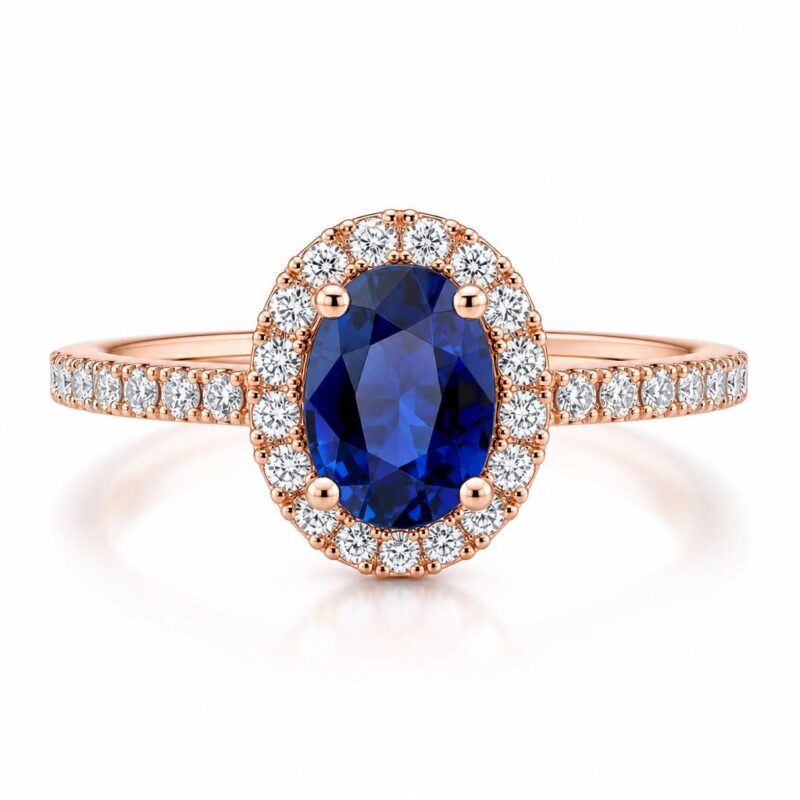
A ring of small diamonds surrounding the sapphire adds brilliance and makes the center stone appear larger. This setting is particularly effective for sapphires under 2 carats, giving them greater visual presence.
Vintage-Inspired Settings
Art Deco geometric patterns, Edwardian filigree, and Victorian cluster designs all pair beautifully with blue sapphires. These settings honor the gemstone’s long royal history while creating unique, eye-catching pieces.
Modern Tension and Bezel Settings
Contemporary designs using tension or full bezel settings create sleek, modern looks that protect the sapphire while showcasing its color. These settings are particularly practical for active lifestyles.
Blue Sapphire Ring Care and Maintenance
Cleaning at Home
Clean your sapphire ring regularly with warm water, mild soap, and a soft brush. Sapphires are safe for ultrasonic and steam cleaning (unless they contain significant fractures). Regular cleaning maintains brilliance and prevents buildup of oils and debris.
Professional Care
Annual professional inspection ensures prongs remain secure and the setting is structurally sound. A jeweler can also check for any loosening that might put your sapphire at risk.
Storage
While sapphires are extremely hard, they can scratch softer gemstones. Store your sapphire ring separately or in a compartmented jewelry box. Sapphires themselves are only vulnerable to scratching by diamonds or other corundum.
How to Buy a Blue Sapphire Engagement Ring: Step-by-Step
- Set your budget: Determine how much you’re comfortable spending. Quality sapphires are available at every price point from $500 to $50,000+
- Decide on size: Most engagement ring sapphires are 1-3 carats. Consider what looks proportional on the wearer’s hand
- Prioritize color: View stones in person or request detailed photos/videos in natural and artificial lighting
- Check certification: Request a report from GIA, AGL, or Gübelin for stones over 1 carat
- Understand treatments: Know whether the stone is heated, unheated, or otherwise treated
- Choose your setting: Select a design that protects the stone while showcasing its beauty
- Verify the seller: Purchase from reputable jewelers who offer return policies and provide full disclosure
If you’re also considering other colored gemstone engagement rings, explore our guides on emerald rings, alexandrite rings, and moss agate rings for more unique alternatives.
Shop Blue Sapphire Rings at ETYGEM
At ETYGEM, we source certified blue sapphires with exceptional color, clarity, and brilliance. Our professional gemologists personally evaluate each stone to ensure it meets our quality standards. Whether you prefer a classic solitaire or an elaborate vintage design, we offer sapphire engagement rings crafted for lasting beauty. Browse our sapphire ring collection to find your perfect blue sapphire engagement ring.
Frequently Asked Questions About Blue Sapphire Engagement Rings
Are blue sapphires good for engagement rings?
Blue sapphires are excellent for engagement rings. With a hardness of 9 on the Mohs scale (second only to diamond), they are extremely durable for daily wear. They have a centuries-long tradition as engagement stones—most famously Princess Diana’s ring now worn by Kate Middleton. Their combination of beauty, durability, symbolism, and value makes them one of the best gemstone choices for engagement rings.
How much should I spend on a blue sapphire engagement ring?
Blue sapphire engagement rings range from $500 for modest designs with smaller stones to $50,000+ for exceptional quality large sapphires in premium settings. Most buyers spend $2,000-$8,000 for a beautiful ring with a 1-2 carat sapphire of good color. Unlike diamonds, there’s no “two months’ salary” rule—spend what feels comfortable while prioritizing color quality over size.
What color blue sapphire is most valuable?
The most valuable blue sapphire color is a vivid, medium-to-medium-dark blue with strong saturation—often described as “royal blue” or “cornflower blue.” The stone should appear intensely blue without being so dark that it looks black. A slight violet secondary hue is acceptable and even desirable in some origins (particularly Kashmir and Burma). Avoid stones that appear grayish, greenish, or overly dark.
Should I buy a heated or unheated sapphire?
For most buyers, a heated sapphire offers the best value. Heat treatment is permanent, stable, and universally accepted—approximately 95% of sapphires on the market are heated. Unheated sapphires with fine color command 20-50% premiums and are primarily sought by collectors and investors. Both are genuine natural sapphires; the choice depends on your budget and whether origin purity matters to you.
How can I tell if a blue sapphire is real?
Definitive identification requires professional gemological testing. However, natural sapphires typically show some inclusions under magnification (perfectly clean stones may be synthetic), display color zoning (uneven color distribution), and feel cold to the touch. The only reliable way to confirm authenticity is through a certified gemological laboratory report from GIA, AGL, or equivalent institution. Always request certification for significant purchases.