5 Reasons Opal Rings Are Trending in 2025: Expert Gemologist’s Guide
In the ever-evolving world of fine jewelry, few gemstones have captured the collective imagination quite like the opal. Once considered a niche collector’s stone, opal rings have surged into mainstream popularity, becoming one of the most sought-after jewelry pieces of 2025. According to industry data from the Gemological Institute of America (GIA), consumer interest in opals has grown by over 40% in the past three years.
As a certified gemologist with over two decades of experience in the jewelry industry, I’ve witnessed countless trends rise and fall. What makes the current opal ring trend remarkable is its staying power—driven by a perfect storm of aesthetic appeal, cultural shifts, and evolving consumer values. This comprehensive guide explores the five core reasons behind this phenomenon and provides expert advice on selecting, caring for, and styling your perfect opal ring.
What Makes Opal Rings So Special? Understanding the Gemstone
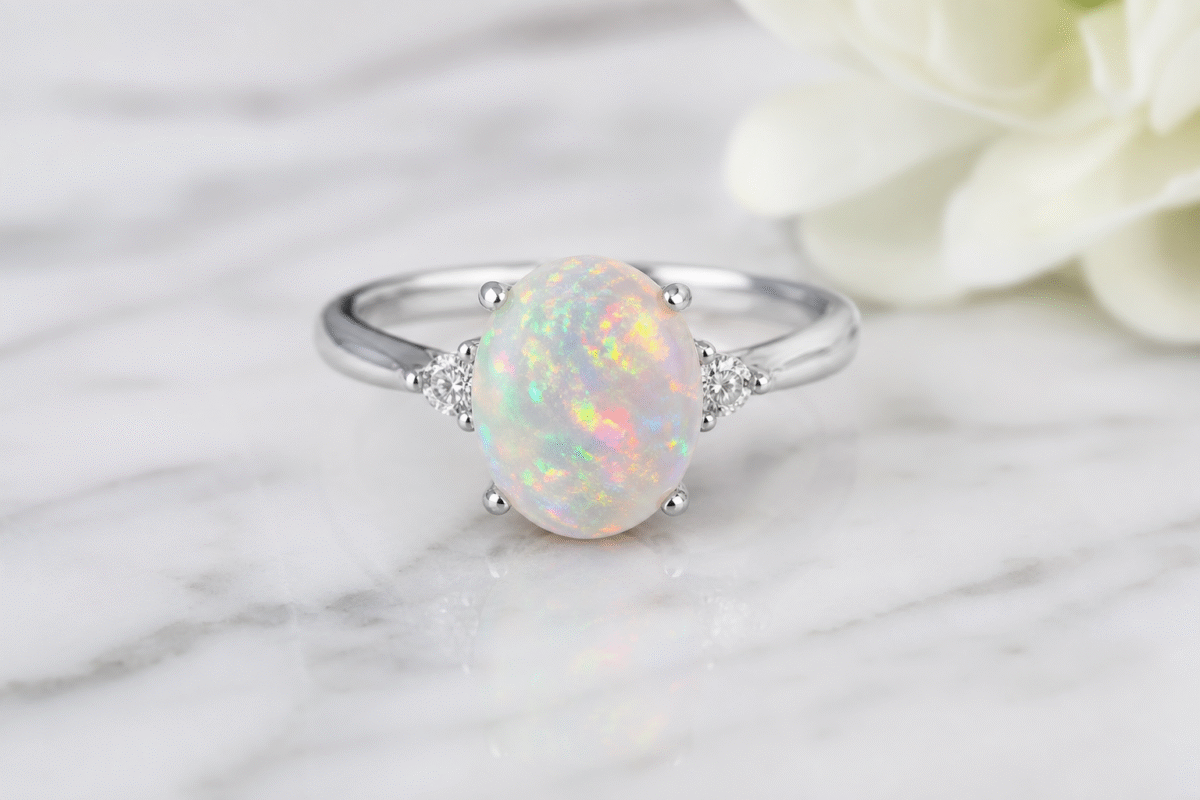
Before diving into the trend drivers, it’s essential to understand what sets opals apart from every other gemstone. Unlike diamonds or sapphires that display a single color, opals exhibit a phenomenon called play-of-color—a mesmerizing dance of spectral hues that shifts with every movement and angle of light. This optical effect occurs due to the unique internal structure of silica spheres that diffract light into rainbow colors.
The International Gem Society (IGS) classifies opals into several categories based on their body color and origin, including precious opal (with play-of-color) and common opal (without). This diversity means there’s an opal for virtually every taste and budget—a key factor in their widespread appeal.
Reason 1: The Unmatched Play-of-Color Experience
No other gemstone on Earth offers the dynamic, living fire of a high-quality opal ring. The play-of-color phenomenon creates a dazzling display of spectral colors—reds, blues, greens, purples, and oranges—that shift and dance with every subtle movement of your hand. In an era where personal expression is paramount, an opal offers a unique, ever-changing aesthetic that no two people will experience identically.
What distinguishes premium opals is the breadth and intensity of their color spectrum. A top-grade Australian Black Opal from Lightning Ridge can display the full rainbow in a single stone, making it arguably the most visually complex gemstone available. Ethiopian Welo opals, meanwhile, offer brilliant transparency with vivid flashes that seem to emerge from within the stone itself.
Opal vs. Diamond: A Visual Comparison
While diamonds are prized for their brilliance and fire, their visual output is relatively predictable. An opal ring, by contrast, offers what gemologists call a “living” display—the colors literally change as you move through different lighting environments. This dynamic quality makes opal rings conversation starters in a way that traditional gemstones simply cannot match. For those exploring alternatives, our guide on moissanite rings as a diamond alternative offers another perspective on non-traditional choices.
Reason 2: The Rise of Non-Traditional Engagement Rings
Modern couples are increasingly moving away from conventional diamond solitaires, seeking rings that reflect a more personal narrative. According to jewelry industry surveys, nearly 30% of engagement ring buyers in 2025 are choosing colored gemstones over traditional diamonds—a significant shift from just a decade ago.
Opals, with their unique beauty and array of colors, serve as a perfect centerpiece for a distinctive engagement ring or promise ring. This trend emphasizes individuality over tradition, making opal a top choice for those looking to make a personal statement. The stone’s association with love, passion, and creativity adds romantic symbolism that resonates with couples seeking deeper meaning in their jewelry choices.
If you’re considering an opal for your engagement, you might also appreciate our comprehensive opal wedding rings buying guide for pairing options and care tips specific to daily-wear opal jewelry.
Reason 3: Celebrity and Social Media Influence
High-profile celebrities and influential style icons have been spotted wearing opal statement pieces on red carpets and at major events, lending immense credibility and desirability to the gemstone. This visibility across social media platforms—particularly Instagram and TikTok—has cemented the opal’s status as a fashionable and coveted accessory for a modern audience.
The hashtag #OpalRing has accumulated over 500 million views on TikTok alone, with content creators showcasing the stone’s mesmerizing play-of-color in short-form videos that highlight its photogenic qualities. This organic social proof has introduced opals to demographics that might never have encountered them in traditional jewelry retail settings.
The Instagram Effect on Opal Popularity
Opals are inherently photogenic—their shifting colors create captivating content that performs exceptionally well on visual platforms. Jewelry influencers and gemstone enthusiasts regularly feature opal rings in their content, creating a virtuous cycle of exposure and demand that continues to drive the trend forward.
Reason 4: A Gemstone Rich with Meaning and Symbolism
Beyond its extraordinary beauty, the opal is steeped in fascinating lore and positive symbolism that spans cultures and centuries. Historically, it has been associated with hope, purity, truth, and creative inspiration. The ancient Romans considered opals the most precious of all gemstones, believing they encompassed the beauty of all other stones combined.
The American Gem Society (AGS) recognizes opal as October’s birthstone, adding personal significance for those born in that month. Many cultures believe it to be a stone of good fortune and amplified emotional states. For the contemporary consumer who values meaning in their purchases, an opal ring offers both beauty and a deeper, personal significance that transcends mere aesthetics.
For those drawn to gemstones with rich symbolism, our guides on moonstone rings and their meanings and rose quartz rings and their benefits explore similar themes of spiritual connection through jewelry.
Reason 5: Versatility in Design and Exceptional Value
Opals are incredibly versatile gemstones that adapt beautifully to virtually any jewelry design aesthetic. They can be cut into classic cabochons for vintage-inspired pieces, set in elaborate halo designs for maximum impact, or featured in sleek, modern minimalist settings that let the stone’s natural beauty speak for itself.
Furthermore, compared to traditional gemstones like diamonds, rubies, or sapphires, opal rings offer a significantly more accessible price point for a sizable, high-impact stone. A stunning 2-carat opal with excellent play-of-color can cost a fraction of what a comparable diamond would demand, allowing for greater creativity, size, and design complexity within a given budget.
Price Comparison: Opal vs. Traditional Gemstones
For a 1-2 carat center stone with good quality:
- Diamond: $5,000–$20,000+
- Ruby: $3,000–$15,000
- Sapphire: $2,000–$10,000
- Premium Opal: $500–$5,000
- Quality Ethiopian Opal: $200–$2,000
This value proposition, combined with the opal’s unmatched visual impact, makes it an intelligent choice for buyers who want maximum beauty without maximum expenditure.
Expert Guide: How to Choose the Perfect Opal Ring
Selecting an opal ring requires understanding several key factors that influence both beauty and longevity. Here’s what to evaluate:
Opal Types and Origins
- Australian Black Opal (Lightning Ridge): The most valuable variety, featuring dark body tone with vivid play-of-color. Considered the gold standard.
- Australian Boulder Opal: Formed within ironstone matrix, offering unique patterns and excellent durability.
- Ethiopian Welo Opal: Transparent to translucent with brilliant color play. More affordable but requires careful care as they can be hydrophane (water-absorbing).
- Mexican Fire Opal: Warm orange to red body color, often faceted. May or may not display play-of-color.
- White Opal: Light body tone with pastel play-of-color. The most common and affordable precious opal variety.
Setting Recommendations for Durability
Since opals rate 5.5–6.5 on the Mohs hardness scale, choosing the right setting is crucial for longevity:
- Bezel setting: Best protection—metal surrounds the entire perimeter of the stone
- Halo setting: Surrounding smaller stones add both beauty and a protective buffer
- Low-profile designs: Reduce the risk of catching and impact damage
- Prong settings: Beautiful but offer less protection—best for occasional-wear pieces
Caring for Your Opal Ring: Professional Tips
Proper care ensures your opal ring maintains its beauty for generations. Follow these expert guidelines:
Daily Care Routine
- Remove your opal ring before washing dishes, showering, or applying lotions and perfumes
- Store separately in a soft cloth pouch to prevent scratches from harder gemstones
- Clean gently with a soft, lint-free cloth dampened with lukewarm water
- Avoid ultrasonic cleaners, steam cleaners, and all chemical solutions
- Keep away from extreme temperature changes that can cause thermal shock
Long-Term Preservation
For long-term storage, some experts recommend placing a damp cotton ball near (not touching) your opal to maintain ambient humidity, particularly in dry climates. Have your opal ring professionally inspected annually to ensure the setting remains secure and the stone shows no signs of crazing or dehydration.
Where to Buy Authentic Opal Rings
When purchasing an opal ring, always buy from reputable sources that provide detailed information about the stone’s origin, treatment status, and quality characteristics. Look for sellers who offer certificates of authenticity and transparent return policies.
At ETYGEM, we curate a collection of genuine opal rings sourced directly from trusted suppliers in Australia and Ethiopia. Each piece is inspected by our gemology team to ensure it meets our quality standards for play-of-color, clarity, and craftsmanship. Browse our gemstone rings collection to discover opal rings that combine exceptional beauty with expert craftsmanship.
Styling Your Opal Ring: Expert Tips
Opal rings are remarkably versatile styling pieces. Here are professional recommendations:
- Solo statement: Let a bold opal ring stand alone as your focal piece
- Stacking: Pair with thin gold bands for a modern, layered look
- Complementary pieces: Match with opal earrings or a pendant necklace for a coordinated set
- Metal pairing: Yellow gold enhances warm-toned opals; white gold or platinum complements cool blue-green play-of-color
Frequently Asked Questions About Opal Rings
Are opal rings durable enough for everyday wear?
Opals rate 5.5–6.5 on the Mohs hardness scale, making them softer than diamonds (10) or sapphires (9). While they can be worn daily with proper care, choosing a protective bezel setting and removing the ring during strenuous activities, cleaning, or gardening will significantly extend its lifespan. Many opal ring owners wear theirs daily for decades with mindful habits.
How much does a quality opal ring cost?
Opal ring prices vary dramatically based on opal type, size, quality of play-of-color, and setting materials. Entry-level Ethiopian opal rings in sterling silver start around $100–$300. Mid-range pieces with good play-of-color in 14k gold typically range from $500–$2,000. Premium Australian Black Opal rings can command $5,000–$50,000+ depending on the stone’s rarity and color intensity.
Can opals get wet? What happens if my opal ring gets water on it?
Brief water exposure (hand washing) is generally fine for most solid opals. However, prolonged soaking should be avoided, especially for Ethiopian hydrophane opals which can temporarily absorb water and lose their play-of-color until they dry. Australian opals are more water-resistant. Never expose any opal to hot water, chlorinated pools, or chemical solutions.
What is the difference between natural opal and lab-created opal?
Natural opals form over millions of years through geological processes, while lab-created (synthetic) opals are manufactured to replicate the same chemical composition and optical properties. Natural opals are more valuable and display more complex, irregular color patterns. Lab-created opals offer affordability but lack the unique character and investment value of natural stones. Always ask your jeweler to disclose whether an opal is natural or synthetic.
Which opal type is best for an engagement ring?
For engagement rings that will be worn daily, Australian Boulder Opal or Australian Black Opal are the most durable choices due to their natural ironstone backing or solid structure. Set in a protective bezel with 14k or 18k gold for the best combination of beauty and longevity. Ethiopian opals, while stunning, require more careful handling for daily wear due to their hydrophane nature.